. 2014 May 15;192(10):4620-7.
doi: 10.4049/jimmunol.1302374. Epub 2014 Apr 11.

A silencer-proximal intronic region is required for sustained CD4 expression in postselection thymocytes

Affiliations

A silencer-proximal intronic region is required for sustained CD4 expression in postselection thymocytes

David M Henson et al. J Immunol. .

Abstract

It has been proposed that differential kinetics of CD4/CD8 coreceptors regulate fate choice of selected thymocytes. Sustained signals by interaction between MHC class II and TCR/CD4 is required for commitment to the CD4 helper lineage. Although prematurely terminated MHC-TCR/CD4 interaction in transgenic mouse models results in lineage redirection, it is unclear whether CD4 expression is actively maintained by endogenous cis-elements to facilitate prolonged signaling under physiological conditions. In this article, we show that sustained CD4 expression in postselection thymocytes requires an intronic sequence containing an uncharacterized DNase I hypersensitivity (DHS) site located 3' to the silencer. Despite normal CD4 expression before selection, thymocytes lacking a 1.5-kb sequence in intron 1 including the 0.4-kb silencer and the DHS, but not the 0.4-kb silencer alone, failed to maintain CD4 expression upon positive selection and are redirected to the CD8 lineage after MHC class II-restricted selection. Furthermore, CpG dinucleotides adjacent to the DHS are hypermethylated in CD8(+) T cells. These results indicate that the 1.5-kb cis-element is required in postselection thymocytes for helper lineage commitment, presumably mediating the maintenance of CD4 expression, and suggest that inactivation of the cis-element by DNA methylation may contribute to epigenetic Cd4 silencing.


Conflict of interest statement

Disclosure

The authors have no financial conflicts of interest.

Figures
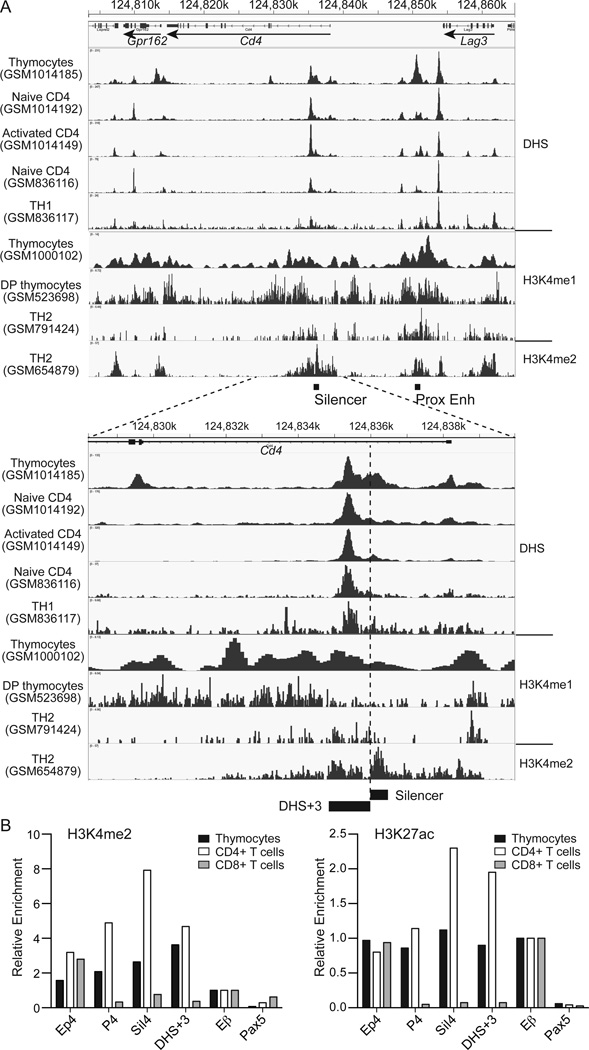
Figure 1
Figure 1. DNase I hypersensitivity and permissive histone modifications at the Cd4 locus in thymocytes and mature T cells
(A) DNase I hypersensitivity sites (DHS) and permissive histone modifications from publicly available datasets were analyzed and shown in the IGV browser. Nucleotide positions on chromosome 6 of the mm9 assembly of mouse genome and locations and orientations of Cd4, Lag3 and Gpr162 genes are shown. (B) Chromatin immunoprecipitation analysis of H3K4me2 and H3K27ac modifications at Ep4, Cd4 promoter, Cd4 silencer and DHS+3. Primers for Tcrb enhancer (Eβ) and Pax5 promoter were used as positive and negative control, respectively. Values were calculated relative to input DNA and normalized against enrichment at Eβ. Data represent three experiments with similar results.
Figure 2
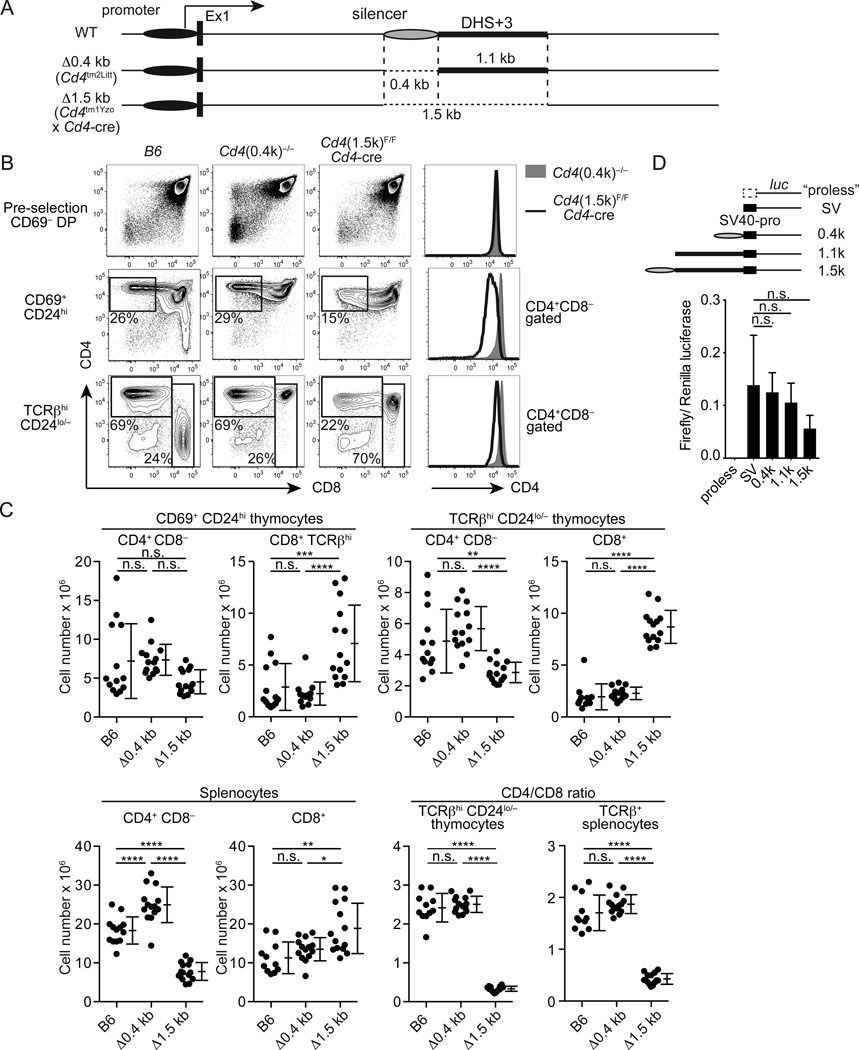
Figure 2. A 1.5 kb intronic sequence containing the silencer and DHS+3 is essential for sustained CD4 expression in post-selection thymocytes and mature CD4+ T cells
(A) A genomic configuration of Δ0.4kb and Δ1.5kb mutant alleles of Cd4. (B) CD4 and CD8 expression in pre-selection thymocytes (CD69), post-selection intermediate (CD69+ CD24hi) and mature (TCRβhi CD24lo/−) thymocytes from control B6, Δ0.4kb and Δ1.5kb mice. Histogram overlays for CD4 expression at each developmental stage are shown on right. (C) Statistical analysis of absolute numbers of CD4+ CD8 and CD8+ cells and CD4/CD8 ratios in thymi and spleens of control B6, Δ0.4kb and Δ1.5kb mice. N=9–12. (D) Luciferase reporter assays to test enhancer activities of the 0.4 kb silencer and DHS+3 containing sequences. SV40 promoter-driven firefly luciferase expression constructs with the 0.4 kb, 1.1 kb or 1.5 kb intronic sequence were transfected into Jurkat cells. A construct lacking the SV40 promoter (“proless”) was used as negative control. Firefly luciferase activities were normalized against CMV promoter-driven Renilla luciferase activities used as internal control. Experiments were performed in triplicate and data from two independent experiments were combined. Data are shown with means and SD. Statistical difference was assessed by one-way ANOVA and the Tukey test.
Figure 3
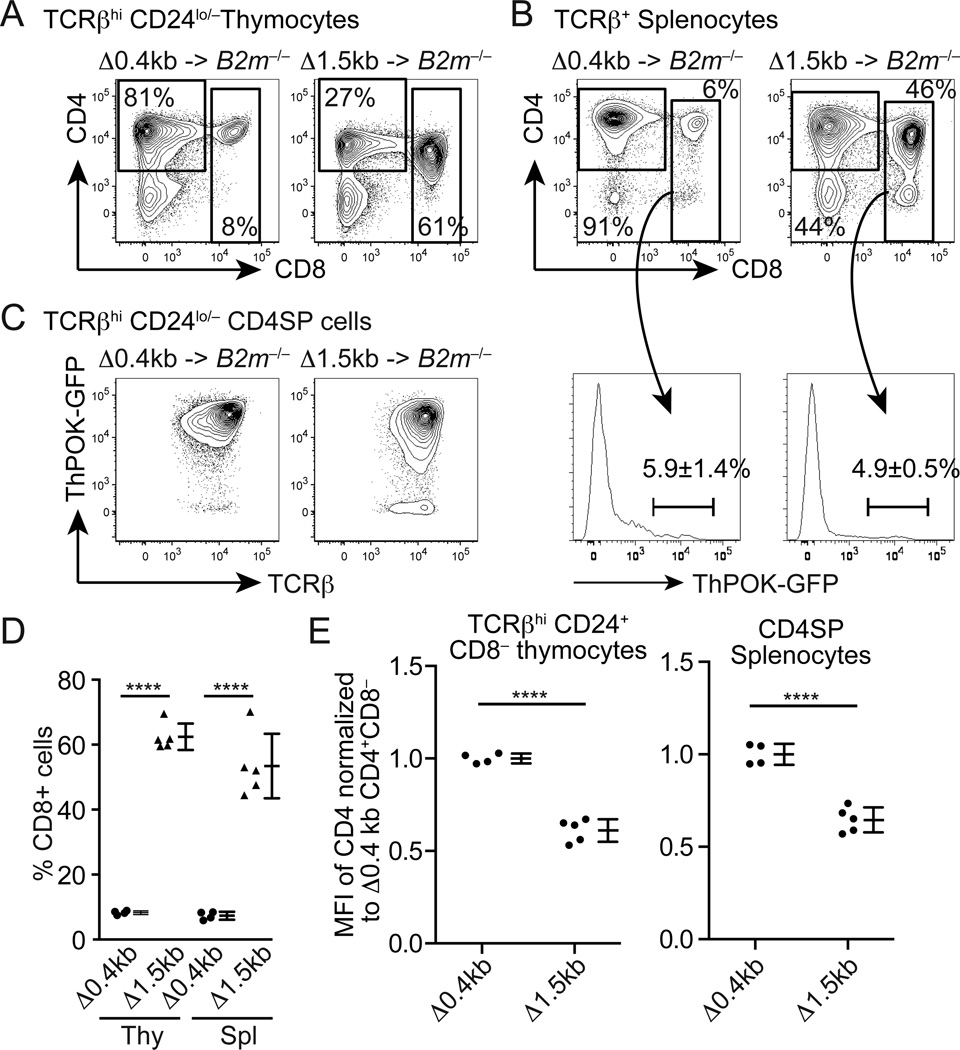
Figure 3. Deletion of the 1.5 kb intronic sequence results in lineage redirection of MHCII-restricted thymocytes
(A and B) CD4 and CD8 expression in TCRβhi CD24lo/− mature thymocytes (A) and TCRβ+ splenic T cells (B) from B2m−/− mice reconstituted with bone marrow cells from Δ0.4kb × ThPOKGFP/+ (N=4) or Δ1.5kb × ThPOKGFP/+(N=5) mice. Frequencies of ThPOK-GFP+ CD8+ T cells are shown with means and SD. (C) ThPOK-GFP reporter expression in CD4+ CD8 thymocytes in the B2m−/− chimeras. (D) Statistical analysis of percentages of CD8+ cells in TCRβhi CD24lo/− thymocytes (Thy) and TCRβ+ splenic T cells (Spl) shown as mean and SD. (E) Comparison of CD4 expression between Δ0.4kb and Δ1.5kb CD4+ CD8 cells as defined in (A) and (B). Mean florescence intensity (MFI) of CD4 staining of each sample was normalized against average MFI of Δ0.4kb cells and shown as means and SD. Statistical significance was tested by unpaired two–tailed Student’s t-test.
Figure 4
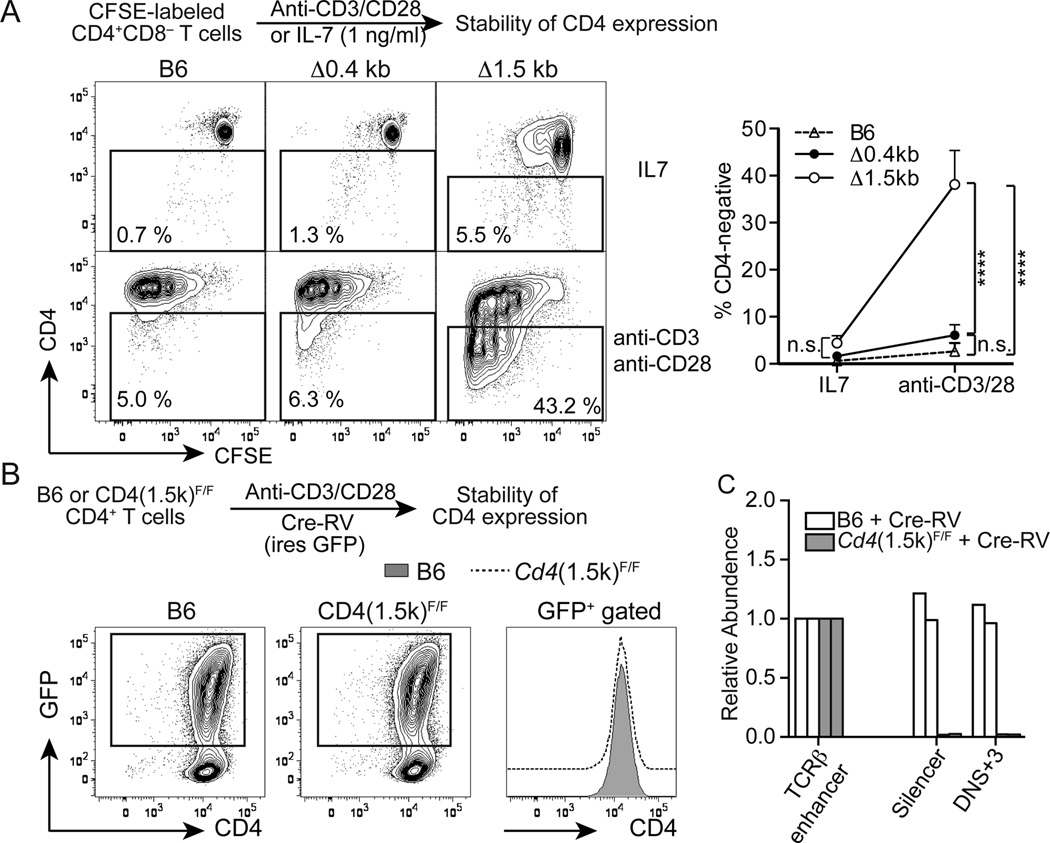
Figure 4. The 1.5 kb intronic sequence is essential for establishment of stable CD4 expression during development but dispensable for maintenance of CD4 expression in activated T cells
(A) CD4 expression in CFSE-labeled CD4+ CD8 T cells from control B6, Δ0.4kb and Δ1.5kb under non/slowly dividing (IL-7) and rapidly dividing (anti-CD3 and anti-CD28) conditions. Percentages of CD4 cells under either condition after 4 days of culture are shown with means and SD. Statistical differences were assessed by two-way ANOVA and the Tukey test. N=4.(B) CD4 and GFP expression in Cre-expressing retrovirus (Cre-RV)-transduced B6 and Cd4(1.5k)F/F CD4+ CD8 T cells on day 4 after transduction and a histogram overlay of CD4 expression in GFP+ gated cells are shown. N=3. (C) Efficiency of Cre-mediated deletion of DHS+3 was assessed by real-time PCR using the same primers as those used in Fig. 1 and shown as relative abundance to the Eβ sequence. N=4.
Figure 5
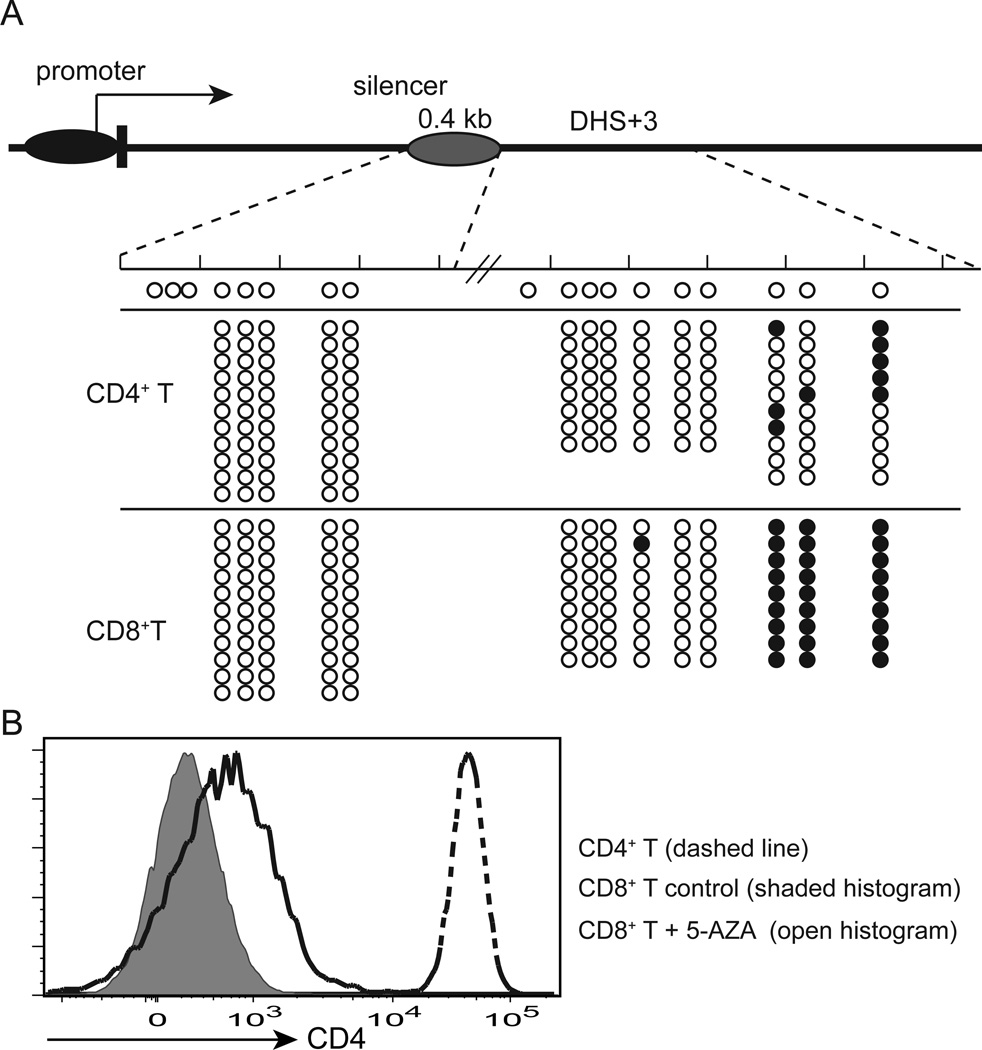
Figure 5. CpG dinucleotides adjacent to DHS+3 are hypermethylated in CD8+ T cells
(A) Bisulfite sequencing analysis of CpG methylation in the Cd4 silencer and DHS+3 in CD4+ and CD8+ T cells from B6 mice. Data are pooled from three experiments. Open and closed circles indicate unmethylated (converted) and methylated CpG dinucleotides, respectively. (B) Epigenetic Cd4 silencing in CD8+ T cells was partially reversed by inhibition of DNA methyltransferase activity. CD4 expression in 5-AZA treated CD8+ T cells and control5-AZA-treated CD4+ and untreated CD8+ T cells is shown as a histogram overlay. N=4.

References

    1. Kappes DJ, He X, He X. CD4-CD8 lineage commitment: an inside view. Nature immunology. 2005;6:761–766. - PubMed
    1. Singer A, Adoro S, Park JH. Lineage fate and intense debate: myths, models and mechanisms of CD4- versus CD8-lineage choice. Nature reviews. Immunology. 2008;8:788–801. - PMC - PubMed
    1. Collins A, Littman DR, Taniuchi I. RUNX proteins in transcription factor networks that regulate T-cell lineage choice. Nature reviews. Immunology. 2009;9:106–115. - PMC - PubMed
    1. Brugnera E, Bhandoola A, Cibotti R, Yu Q, Guinter TI, Yamashita Y, Sharrow SO, Singer A. Coreceptor reversal in the thymus: signaled CD4+8+ thymocytes initially terminate CD8 transcription even when differentiating into CD8+ T cells. Immunity. 2000;13:59–71. - PubMed
    1. Kioussis D, Ellmeier W. Chromatin and CD4, CD8A and CD8B gene expression during thymic differentiation. Nature reviews. Immunology. 2002;2:909–919. - PubMed

Publication types

MeSH terms