


Urological chronic pelvic pain syndrome symptom flares: characterisation of the full range of flares at two sites in the Multidisciplinary Approach to the Study of Chronic Pelvic Pain (MAPP) Research Network
- PMID: 24730356
- PMCID: PMC4198521
- DOI: 10.1111/bju.12778
Urological chronic pelvic pain syndrome symptom flares: characterisation of the full range of flares at two sites in the Multidisciplinary Approach to the Study of Chronic Pelvic Pain (MAPP) Research Network
Abstract
Objectives: To describe the full range of symptom exacerbations defined by people with interstitial cystitis/bladder pain syndrome and chronic prostatitis/chronic pelvic pain syndrome as 'flares', and to investigate their associated healthcare utilization and bother at two sites of the Multidisciplinary Approach to the Study of Chronic Pelvic Pain (MAPP) Epidemiology and Phenotyping study.
Subjects and methods: Participants completed a flare survey that asked them: 1) whether they had ever had flares ('symptoms that are much worse than usual') that lasted <1 h, >1 h and <1 day, and >1 day; and 2) for each duration of flare, to report: their average length and frequency; their typical levels of urological and pelvic pain symptoms; and their levels of healthcare utilization and bother. We compared participants' responses to their non-flare MAPP values and by duration of flare using generalized linear mixed models.
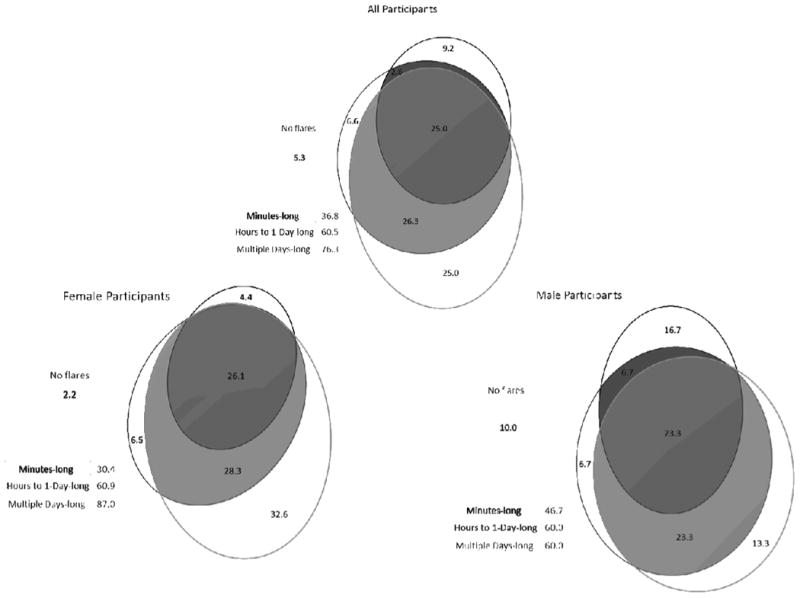
Results: Of 85 participants, 76 (89.4%) completed the flare survey, 72 (94.7%) of whom reported experiencing flares. Flares varied widely in terms of their duration (seconds to months), frequency (several times per day to once per year or less), and intensity and type of symptoms (e.g. pelvic pain vs urological symptoms). Flares of all durations were associated with greater pelvic pain, urological symptoms, disruption to participants' activities and bother, with increasing severity of each of these factors as the duration of flares increased. Days-long flares were also associated with greater healthcare utilization. In addition to duration, symptoms (pelvic pain, in particular) were also significant determinants of flare-related bother.
Conclusions: Our findings suggest that flares are common and associated with greater symptoms, healthcare utilization, disruption and bother. Our findings also show the characteristics of flares most bothersome to patients (i.e. increased pelvic pain and duration), and thus of greatest importance to consider in future research on flare prevention and treatment.
Keywords: bladder pain syndrome; chronic pelvic pain syndrome; chronic prostatitis; flare; interstitial cystitis; symptom exacerbation.
© 2014 The Authors. BJU International © 2014 BJU International.
Figures
References
-
- Whitmore KE. Self-care regimens for patients with interstitial cystitis. Urol Clin North Am. 1994;21(1):121–30. - PubMed
-
- Metts JF. Interstitial cystitis: urgency and frequency syndrome. Am Fam Physician. 2001;64(7):1199–206. - PubMed
-
- Propert KJ, et al. A prospective study of interstitial cystitis: results of longitudinal followup of the interstitial cystitis data base cohort. The Interstitial Cystitis Data Base Study Group. J Urol. 2000;163(5):1434–9. - PubMed
-
- Alexander RB, Trissel D. Chronic prostatitis: results of an Internet survey. Urology. 1996;48(4):568–74. - PubMed
Publication types
MeSH terms
Grants and funding
LinkOut - more resources
Full Text Sources
Other Literature Sources
Medical
