


A cohort study of a tailored web intervention for preconception care
- PMID: 24731520
- PMCID: PMC4021543
- DOI: 10.1186/1472-6947-14-33
A cohort study of a tailored web intervention for preconception care
Abstract
Background: Preconception care may be an efficacious tool to reduce risk factors for adverse pregnancy outcomes that are associated with lifestyles and health status before pregnancy. We conducted a web-based cohort study in Italian women planning a pregnancy to assess whether a tailored web intervention may change knowledge and behaviours associated with risks for adverse pregnancy outcomes.
Methods: The study was entirely conducted on the web on a cohort of Italian women of childbearing age. Data collected at baseline on health status, lifestyles and knowledge of risk factors for adverse pregnancy outcomes were used for generating a tailored document including recommendations for folic acid supplementation, obesity and underweight, smoking, alcohol consumption, vaccinations, chronic and genetic diseases, exposure to medications. Prevalence of risk factors and knowledge was assessed 6 months after the intervention. Logistic regression models were used to explore the factors associated with risk factors after the intervention.
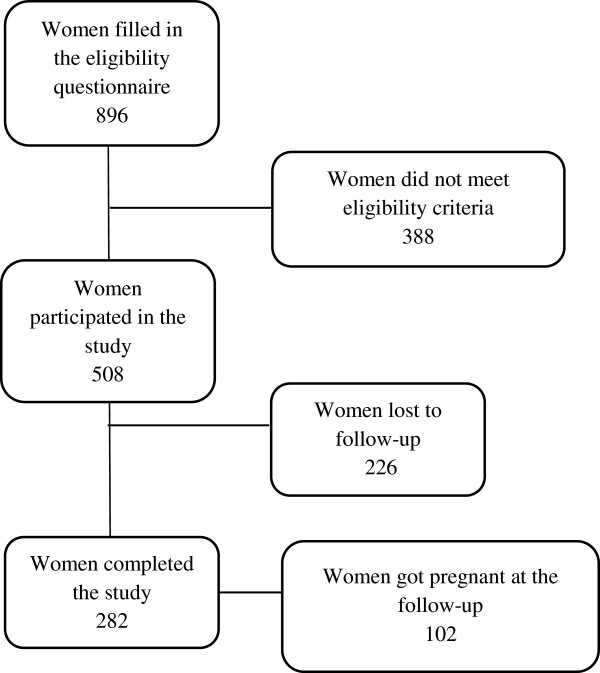
Results: Of the 508 enrolled women, 282 (55.5%) completed the study after 6 months since the delivery of tailored recommendations. At baseline, 48% of the participants took folic acid supplementation (95% CI 43.2; 51.9) and 69% consumed alcohol (95% CI 64.7; 72.9). At the follow up 71% of the participants had a preconception visit with a physician. Moreover we observed a decrease of alcohol consumption (-46.5% 95% CI -53.28; -38.75) and of the proportion of women not taking folic acid supplementation (-23.4% 95% CI -31.0; 15.36). We observed an improvement in knowledge of the information about the preconception behaviours to prevent adverse pregnancy outcomes (20.9% 95% CI 14.6%; 27.1%). Having a preconception visit during follow up was significally associated to an increase in folic acid supplementation (OR 2.53 95% CI 1.40; 4.60).
Conclusions: Our results suggest that a tailored web intervention may improve general preconception health in women planning a pregnancy. A web preconception intervention may be integrated with classic preconception care by health professionals. Clinical trials should be conducted to confirm these findings.
Figures
References
-
- Walfisch A, Koren G. Preconception counseling: rational, practice and challenges. Minerva Ginecol. 2011;63(5):411–419. - PubMed
-
- Atrash H, Jack BW, Johnson K, Coonrod DV, Moos MK, Stubblefield PG, Cefalo R, Damus K, Reddy UM. Where is the “W”oman in MCH? Am J Obstet Gynecol. 2008;199(6 Suppl 2):S259–S265. - PubMed
-
- Jack BW, Atrash H, Coonrod DV, Moos MK, O’Donnell J, Johnson K. The clinical content of preconception care: an overview and preparation of this supplement. Am J Obstet Gynecol. 2008;199(6 Suppl 2):S266–S279. - PubMed
Publication types
MeSH terms
Substances
LinkOut - more resources
Full Text Sources
Other Literature Sources
Medical
