


Management and outcomes of pneumonia among children with complex chronic conditions
- PMID: 24732445
- PMCID: PMC4760109
- DOI: 10.1097/INF.0000000000000317
Management and outcomes of pneumonia among children with complex chronic conditions
Abstract
Introduction: Although pneumonia is a common reason for pediatric hospitalization among children with complex chronic conditions (CCC), treatment and outcomes have not been well-described. We characterized the presentation, management and outcomes of pneumonia in children with and without CCC and described how antibiotic management and outcomes vary among subgroups of children with CCC.
Methods: We conducted a cohort study of children <18 years with pneumonia across a large sample of US hospitals. Children were grouped according to CCC subgroups. Differences in disease management and outcomes were assessed using multivariable regression.
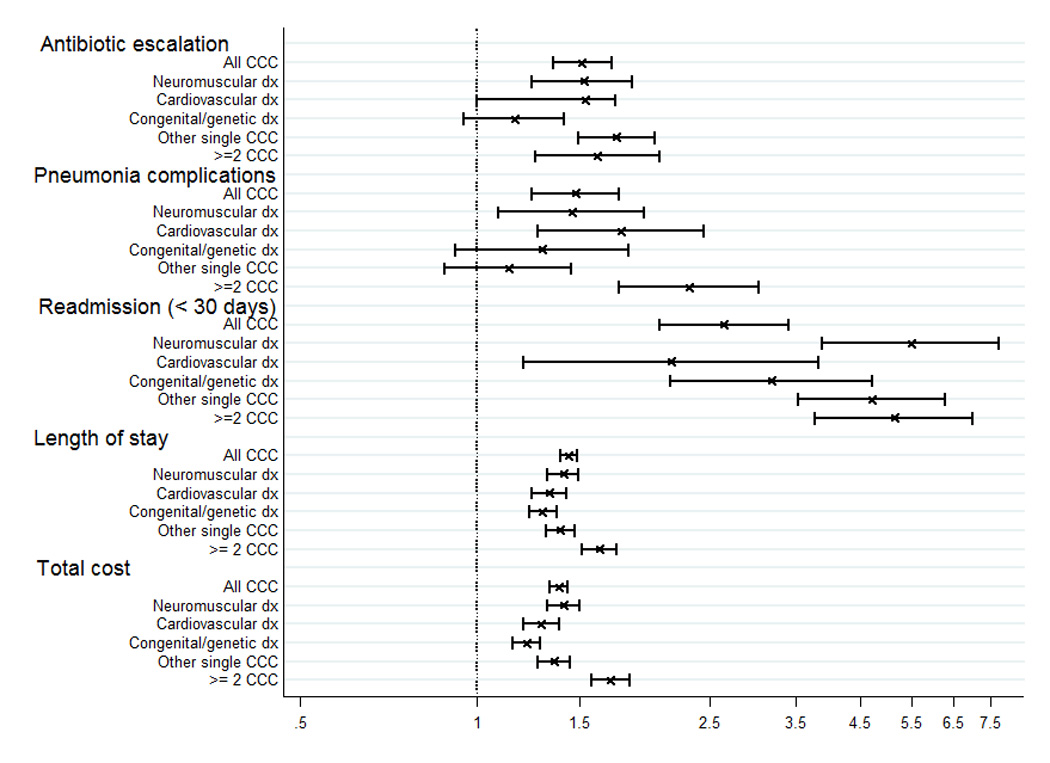
Results: Of the 31,684 children in our cohort, 11.9% had CCC. Children with CCC were more likely to receive intensive investigations and therapies, were less likely to receive aminopenicillins or third generation cephalosporins and were more likely to receive antibiotics against methicillin-resistant Staphylococcus aureus, Pseudomonas aeruginosa and anaerobes. Compared with children without these conditions, children with CCC had significantly increased length of stay [relative risk 1.43, 95% confidence interval (CI) 1.39-1.48] and hospital costs (relative risk 1.38, 95% CI 1.33-1.43), with increased odds of antibiotic escalation (odds ratio 1.51, 95% CI 1.35-1.70), pneumonia complications (odds ratio 1.47, 95% CI 1.24-1.75) and readmission (odds ratio 4.0, 95% CI 3.2-5.0).
Discussion: Children with CCC comprise a significant proportion of children hospitalized for pneumonia and are at substantially increased risk of adverse outcomes. They have high rates of treatment with broad spectrum antibiotics, both at the time of hospitalization and subsequently. Research is needed to inform decision-making and guideline development, with goals of reducing adverse outcomes and unnecessary variation in management among children with CCC.
Conflict of interest statement
Figures
References
Publication types
MeSH terms
Substances
Grants and funding
LinkOut - more resources
Full Text Sources
Other Literature Sources
Medical
