


Estrogen protects against intracranial aneurysm rupture in ovariectomized mice
- PMID: 24732889
- PMCID: PMC4034536
- DOI: 10.1161/HYPERTENSIONAHA.114.03300
Estrogen protects against intracranial aneurysm rupture in ovariectomized mice
Abstract
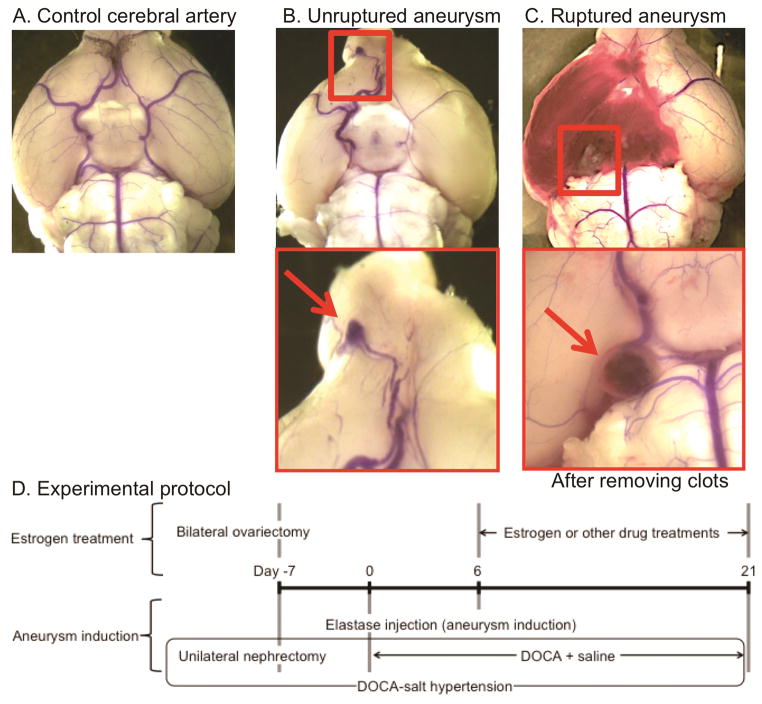
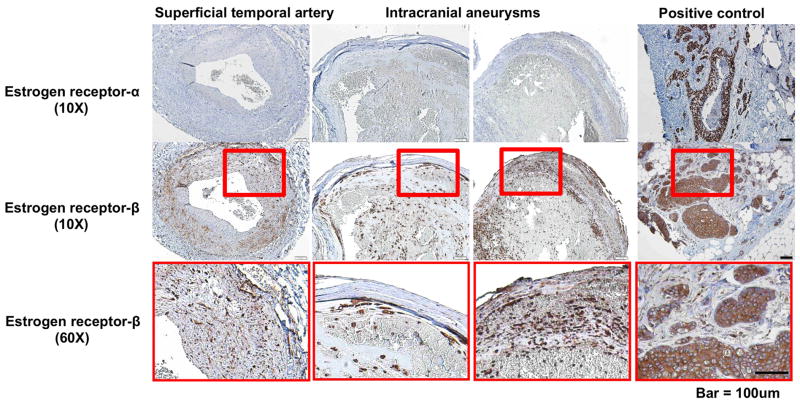
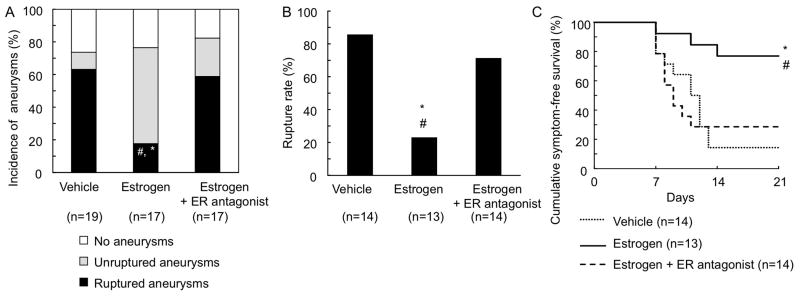
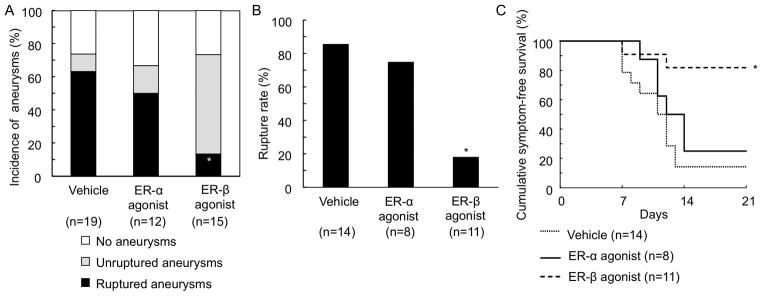
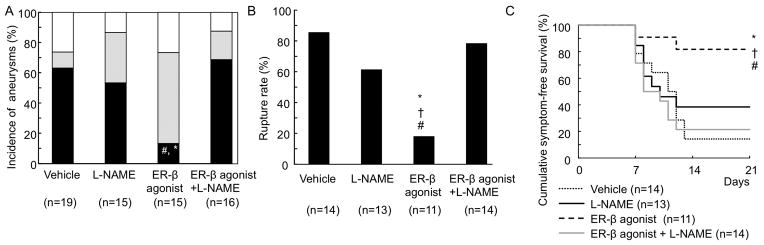
Clinical observations suggest that postmenopausal women have a higher incidence of aneurysmal rupture than premenopausal women. We hypothesize that a relative deficiency in estrogen may increase the risks of aneurysmal growth and subarachnoid hemorrhage in postmenopausal women. We assessed the effects of estrogen and selective estrogen receptor subtype agonists on the development of aneurysmal rupture in ovariectomized female mice. We used an intracranial aneurysm mouse model that recapitulates the key features of human intracranial aneurysms, including spontaneous rupture. Ten- to 12-week-old ovariectomized female mice received treatment with estrogen, nonselective estrogen receptor antagonist, estrogen receptor-α agonist, or estrogen receptor-β agonist starting 6 days after aneurysm induction so that the treatments affected the development of aneurysmal rupture without affecting aneurysmal formation. Estrogen significantly reduced the incidence of ruptured aneurysms and rupture rates in ovariectomized mice. Nonselective estrogen receptor antagonist abolished the protective effect of estrogen. Although estrogen receptor-α agonist did not affect the incidence of ruptured aneurysms or rupture rates, estrogen receptor-β agonist prevented aneurysmal rupture without affecting the formation of aneurysms. The protective role of estrogen receptor-β agonist was abolished by the inhibition of nitric oxide synthase. We showed that estrogen prevented aneurysmal rupture in ovariectomized female mice. The protective effect of estrogen seemed to occur through the activation of estrogen receptor-β, a predominant subtype of estrogen receptor in human intracranial aneurysms and cerebral arteries.
Keywords: estrogens; menopause; models, animal.
Conflict of interest statement
None
Figures
References
-
- Mhurchu CN, Anderson C, Jamrozik K, Hankey G, Dunbabin D Australasian Cooperative Research on Subarachnoid Hemorrhage Study G. Hormonal factors and risk of aneurysmal subarachnoid hemorrhage: An international population-based, case-control study. Stroke. 2001;32:606–612. - PubMed
-
- Andreasen TH, Bartek J, Jr, Andresen M, Springborg JB, Romner B. Modifiable risk factors for aneurysmal subarachnoid hemorrhage. Stroke. 2013;44:3607–3612. - PubMed
-
- Tamura T, Jamous MA, Kitazato KT, Yagi K, Tada Y, Uno M, Nagahiro S. Endothelial damage due to impaired nitric oxide bioavailability triggers cerebral aneurysm formation in female rats. J Hypertens. 2009;27:1284–1292. - PubMed
-
- Jamous MA, Nagahiro S, Kitazato KT, Tamura T, Kuwayama K, Satoh K. Role of estrogen deficiency in the formation and progression of cerebral aneurysms. Part ii: Experimental study of the effects of hormone replacement therapy in rats. J Neurosurg. 2005;103:1052–1057. - PubMed
Publication types
MeSH terms
Substances
Grants and funding
LinkOut - more resources
Full Text Sources
Other Literature Sources
Medical
