


Completely ES cell-derived mice produced by tetraploid complementation using inner cell mass (ICM) deficient blastocysts
- PMID: 24733255
- PMCID: PMC3986396
- DOI: 10.1371/journal.pone.0094730
Completely ES cell-derived mice produced by tetraploid complementation using inner cell mass (ICM) deficient blastocysts
Abstract
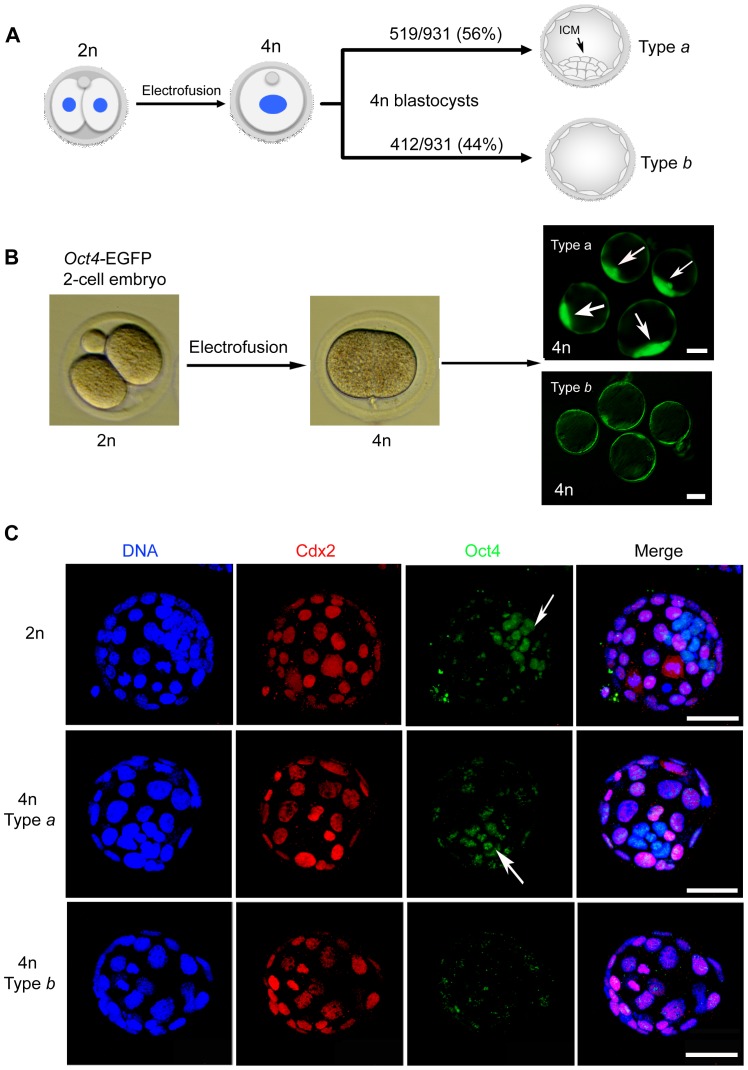
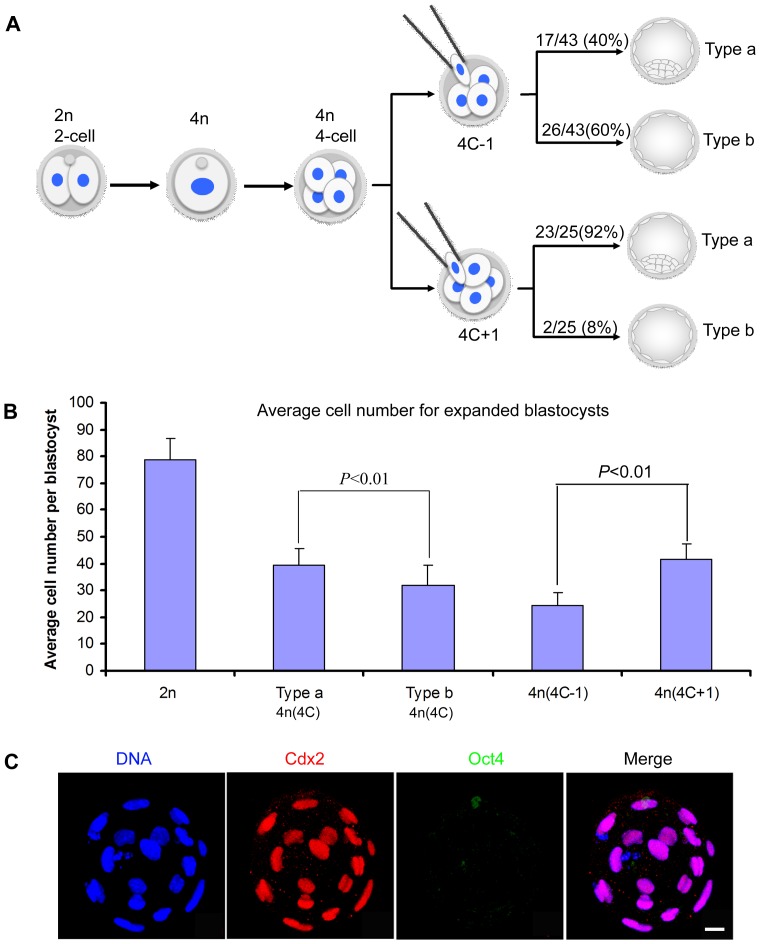
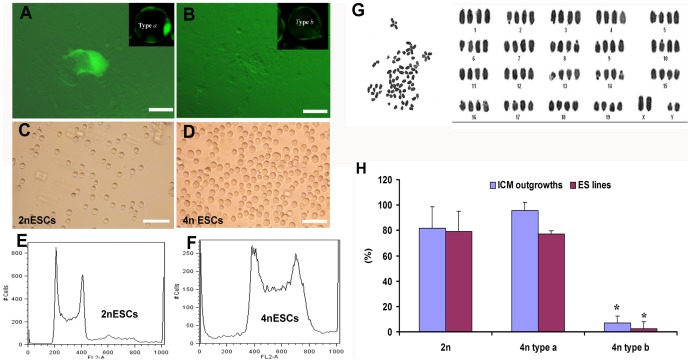
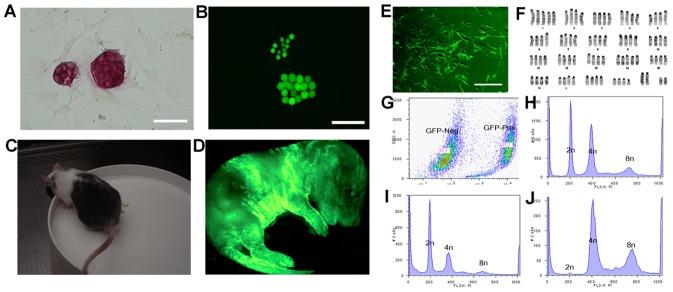
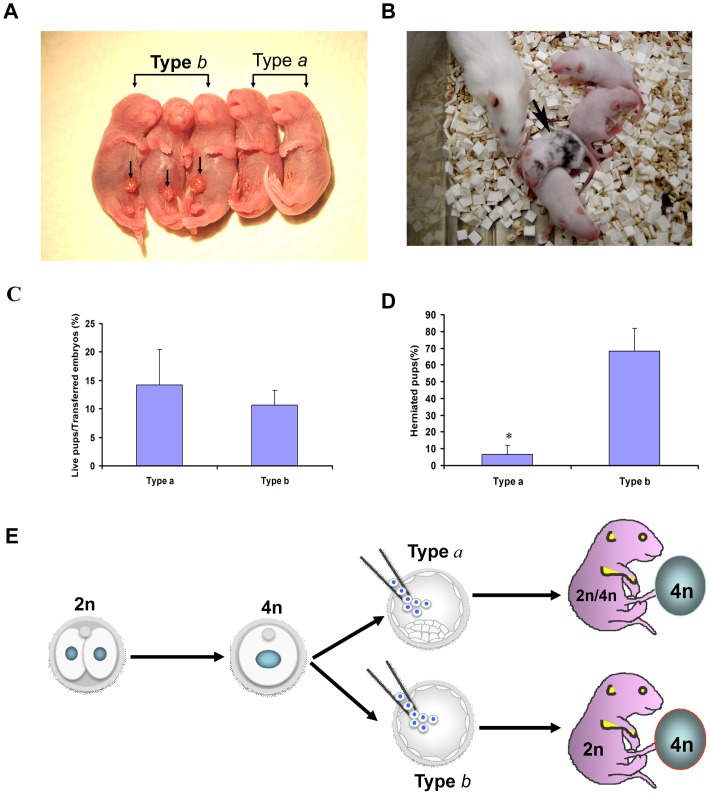
Tetraploid complementation is often used to produce mice from embryonic stem cells (ESCs) by injection of diploid (2n) ESCs into tetraploid (4n) blastocysts (ESC-derived mice). This method has also been adapted to mouse cloning and the derivation of mice from induced pluripotent stem (iPS) cells. However, the underlying mechanism(s) of the tetraploid complementation remains largely unclear. Whether this approach can give rise to completely ES cell-derived mice is an open question, and has not yet been unambiguously proven. Here, we show that mouse tetraploid blastocysts can be classified into two groups, according to the presence or absence of an inner cell mass (ICM). We designate these as type a (presence of ICM at blastocyst stage) or type b (absence of ICM). ESC lines were readily derived from type a blastocysts, suggesting that these embryos retain a pluripotent epiblast compartment; whereas the type b blastocysts possessed very low potential to give rise to ESC lines, suggesting that they had lost the pluripotent epiblast. When the type a blastocysts were used for tetraploid complementation, some of the resulting mice were found to be 2n/4n chimeric; whereas when type b blastocysts were used as hosts, the resulting mice are all completely ES cell-derived, with the newborn pups displaying a high frequency of abdominal hernias. Our results demonstrate that completely ES cell-derived mice can be produced using ICM-deficient 4n blastocysts, and provide evidence that the exclusion of tetraploid cells from the fetus in 2n/4n chimeras can largely be attributed to the formation of ICM-deficient blastocysts.
Conflict of interest statement
Figures
References
-
- Eakin GS, Behringer RR (2003) Tetraploid development in the mouse. Dev Dyn 228: 751–766. - PubMed
-
- Henery CC, Kaufman MH (1992) Relationship between cell size and nuclear volume in nucleated red blood cells of developmentally matched diploid and tetraploid mouse embryos. J Exp Zool 261: 472–478. - PubMed
-
- Eakin GS, Hadjantonakis AK, Papaioannou VE, Behringer RR (2005) Developmental potential and behavior of tetraploid cells in the mouse embryo. Dev Biol 288: 150–159. - PubMed
Publication types
MeSH terms
Grants and funding
LinkOut - more resources
Full Text Sources
Other Literature Sources
Medical
Molecular Biology Databases
