


Polished trays reduce backside wear independent of post location in posterior-stabilized TKAs
- PMID: 24733449
- PMCID: PMC4079893
- DOI: 10.1007/s11999-014-3621-y
Polished trays reduce backside wear independent of post location in posterior-stabilized TKAs
Abstract
Background: Backside damage of the polyethylene in TKA is a potential source of debris. The location of the tibial post in posterior-stabilized implants may influence micromotion, and thus affect backside damage, as may surface roughness.
Questions: We used implant retrieval analysis to (1) examine if there were differences in backside damage among three modern posterior-stabilized implants attributable to variable surface roughness; (2) determine if the location of damage on the tibial post affected the pattern of backside damage; and (3) determine if demographics influenced backside damage.
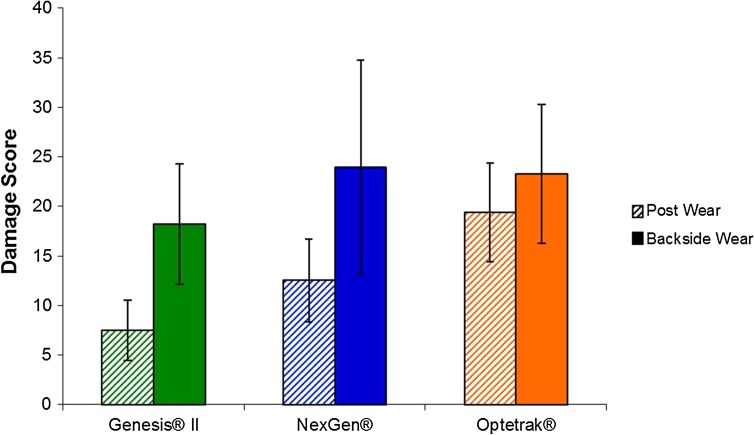
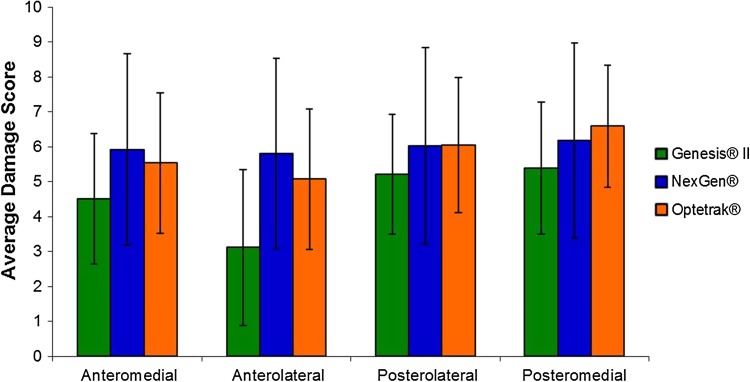
Methods: We identified 403 posterior-stabilized tibial retrieved inserts (147 NexGen(®), 152 Optetrak(®), 104 Genesis(®) II). The damage on the surfaces of the tibial posts was previously graded. The backside of the inserts (divided into quadrants) were scored for evidence of damage. The total quadrant damage was compared for each implant group, the relationship between post face damage and location of damage on the backside was determined for each implant group, and total backside damage was compared among the three implant groups.
Results: No correlation was found between the location of damage on the post and location of damage on the backside of the implant for any of the three groups. The Genesis(®) II polyethylene implants, which articulate with a highly polished tibial tray, showed a significantly lower total backside damage score (p < 0.01) when compared with the other two implant groups. The Genesis(®) II and Optetrak(®) showed significantly more damage in the posterior quadrants of the implants (p < 0.01) when compared with the anterior quadrants. A linear regression analysis revealed that lower tibial tray surface roughness was correlated with decreased damage.
Conclusions: An implant design with a highly polished tibial tray was associated with decreased backside damage. However, tibial post design and location did not influence the location of backside damage.
Clinical relevance: Our study showed that a highly polished tibial tray was associated with decreased damage to the backside of polyethylene inserts independent of post design and location. These findings should be taken into consideration when new generations of implants are designed.
Figures
References
-
- Barrack RL. Modularity of Prosthetic Implants. J Am Acad Orthop Surg. 1994;2:16–25. - PubMed
-
- Bartel DL, Burstein AH, Santavicca EA, Insall JN. Performance of the tibial component in total knee replacement. J Bone Joint Surg Am. 1982;64:1026–1033. - PubMed
-
- Conditt MA, Ismaily SK, Alexander JW, Noble PC. Backside wear of modular ultra-high molecular weight polyethylene tibial inserts. J Bone Joint Surg Am. 2004;86:1031–1037. - PubMed
Publication types
MeSH terms
Substances
LinkOut - more resources
Full Text Sources
Other Literature Sources
Medical
