Effect of addition of chin strap on PAP compliance, nightly duration of use, and other factors
- PMID: 24733982
- PMCID: PMC3960379
- DOI: 10.5664/jcsm.3608
Effect of addition of chin strap on PAP compliance, nightly duration of use, and other factors
Abstract
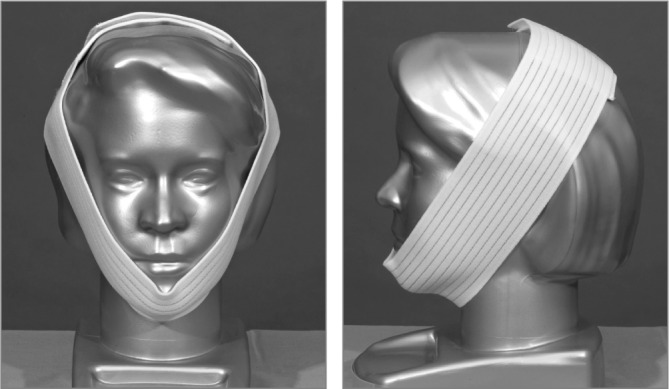
Study objectives: A chinstrap is potentially useful to reduce unintentional air leak by preventing mouth opening during PAP treatment. This study examines whether the addition of a chinstrap to PAP therapy has any effect on adherence, nightly duration of use, air leak, and residual AHI.
Methods: This was a retrospective study performed at an AASM-accredited VAMC sleep center. Clinical sleep data of veterans (n = 124) prescribed PAP therapy for sleep apnea was evaluated, and the effect of chinstrap use vs non-use on the above parameters was assessed.
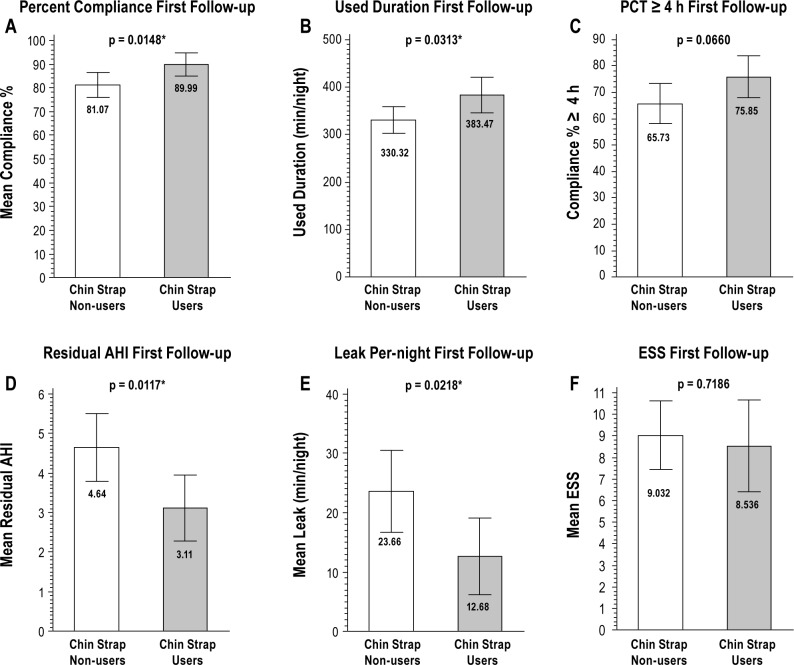
Results: Chinstrap users had significantly greater PAP adherence, longer nightly duration of PAP use, lower residual AHI and lower leak compared to chinstrap non-users at first follow up visit.
Conclusions: The addition of a chin strap to PAP therapy is a simple and inexpensive method of increasing PAP adherence.
Keywords: AHI; Chin strap; adherence; air leak; compliance; positive airway pressure; sleep apnea.
Figures
References
-
- Martinez-Garcia MA, Campos-Rodriguez F, Catalán-Serra P, et al. Cardiovascular mortality in obstructive sleep apnea in the elderly. Role of long-term CPAP treatment: a prospective observational trial. Am J Respir Crit Care Med. 2012;186:909–16. - PubMed
-
- Martínez-García MA, Soler-Cataluña JJ, Ejarque-Martínez L, et al. Continuous positive airway pressure treatment reduces mortality in patients with ischemic stroke and obstructive sleep apnea: a 5-year follow-up study. Am J Respir Crit Care Med. 2009;180:36–41. - PubMed
-
- Marin JM, Carrizo SJ, Vicente E, Agusti AG. Long-term cardiovascular outcomes in men with obstructive sleep apnoea-hypopnoea with or without treatment with continuous positive airway pressure: an observational study. Lancet. 2005;365:1046–53. - PubMed
-
- Beecroft J, Zanon S, Lukic D, Hanly P. Oral continuous positive airway pressure for sleep apnea: effectiveness, patient preference, and adherence. Chest. 2003;124:2200–8. - PubMed
MeSH terms
LinkOut - more resources
Full Text Sources
Other Literature Sources
Medical
Research Materials