


Waterpipe cafes in Baltimore, Maryland: Carbon monoxide, particulate matter, and nicotine exposure
- PMID: 24736103
- PMCID: PMC4333110
- DOI: 10.1038/jes.2014.19
Waterpipe cafes in Baltimore, Maryland: Carbon monoxide, particulate matter, and nicotine exposure
Abstract
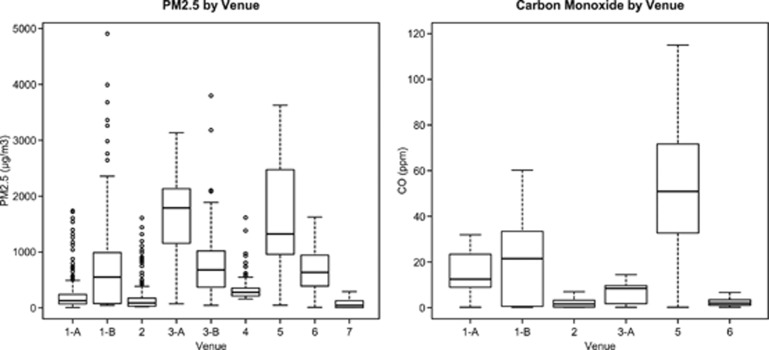
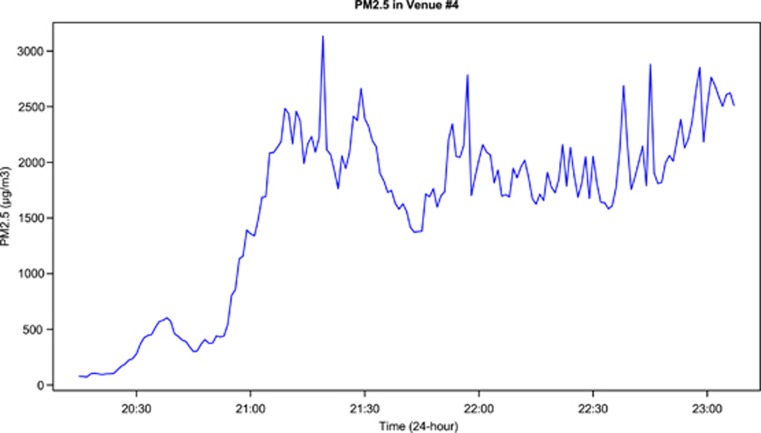
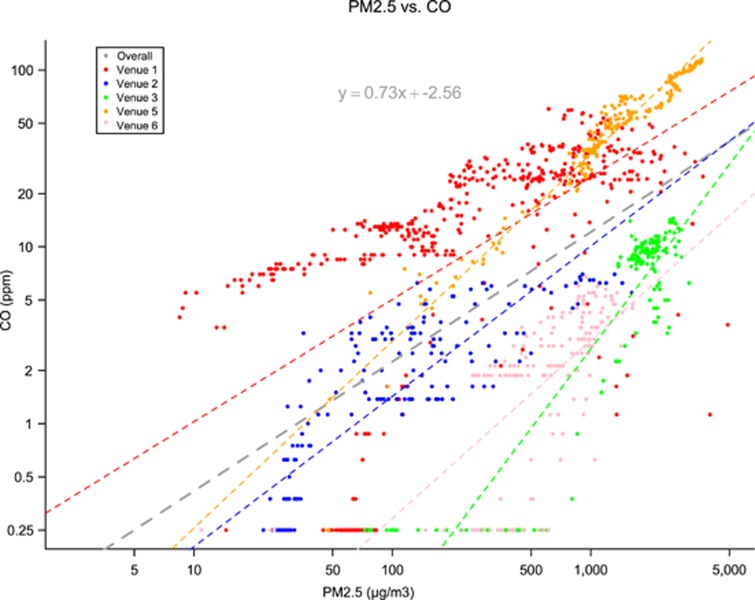
Waterpipe smoking has been growing in popularity in the United States and worldwide. Most tobacco control regulations remain limited to cigarettes. Few studies have investigated waterpipe tobacco smoke exposures in a real world setting. We measured carbon monoxide (CO), particulate matter (PM)2.5, and airborne nicotine concentrations in seven waterpipe cafes in the greater Baltimore area. Area air samples were collected between two and five hours, with an average sampling duration of three hours. Waterpipe smoking behaviors were observed at each venue. Indoor air samplers for CO, PM2.5, and airborne nicotine were placed in the main seating area 1-2 m above the floor. Indoor airborne concentrations of PM2.5 and CO were markedly elevated in waterpipe cafes and exceeded concentrations that were observed in cigarette smoking bars. Air nicotine concentrations, although not as high as in venues that allow cigarette smoking, were markedly higher than in smoke-free bars and restaurants. Concentrations of PM approached occupational exposure limits and CO exceeded occupational exposure guidelines suggesting that worker protection measures need to be considered. This study adds to the literature indicating that both employees and patrons of waterpipe venues are at increased risk from complex exposures to secondhand waterpipe smoke.
Figures
References
-
- Noonan D. Exemptions for hookah bars in clean indoor air legislation: a public health concern. Public Health Nurs. 2010;27:49–53. - PubMed
Publication types
MeSH terms
Substances
Grants and funding
LinkOut - more resources
Full Text Sources
Other Literature Sources
Medical
