


L-arginine supplementation protects exercise performance and structural integrity of muscle fibers after a single bout of eccentric exercise in rats
- PMID: 24736629
- PMCID: PMC3988069
- DOI: 10.1371/journal.pone.0094448
L-arginine supplementation protects exercise performance and structural integrity of muscle fibers after a single bout of eccentric exercise in rats
Abstract
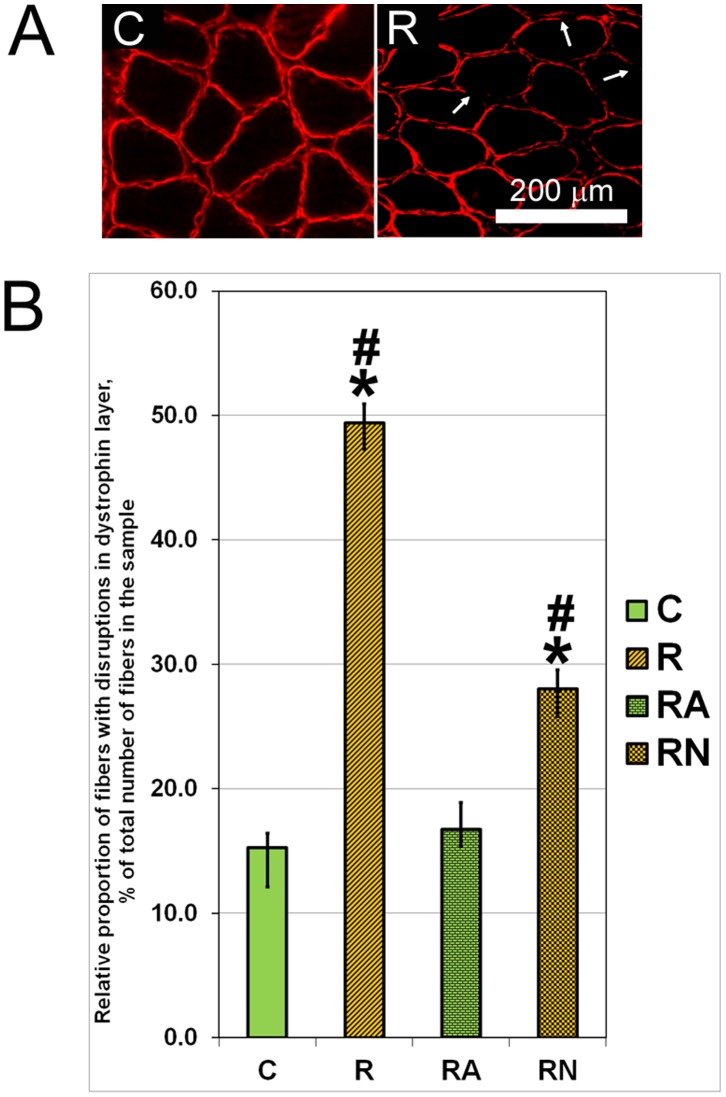
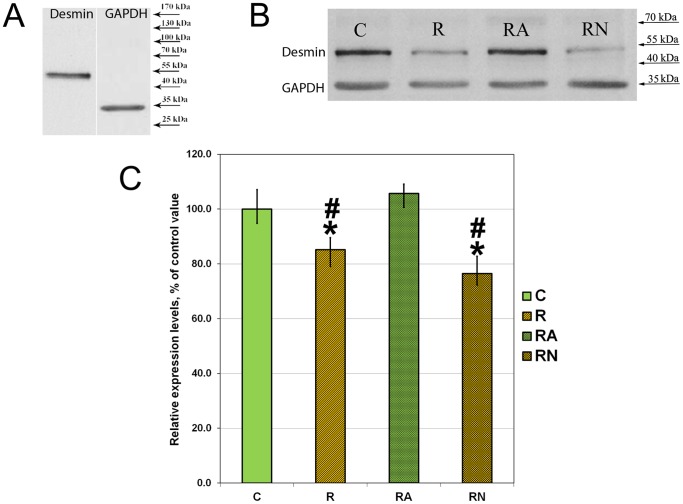
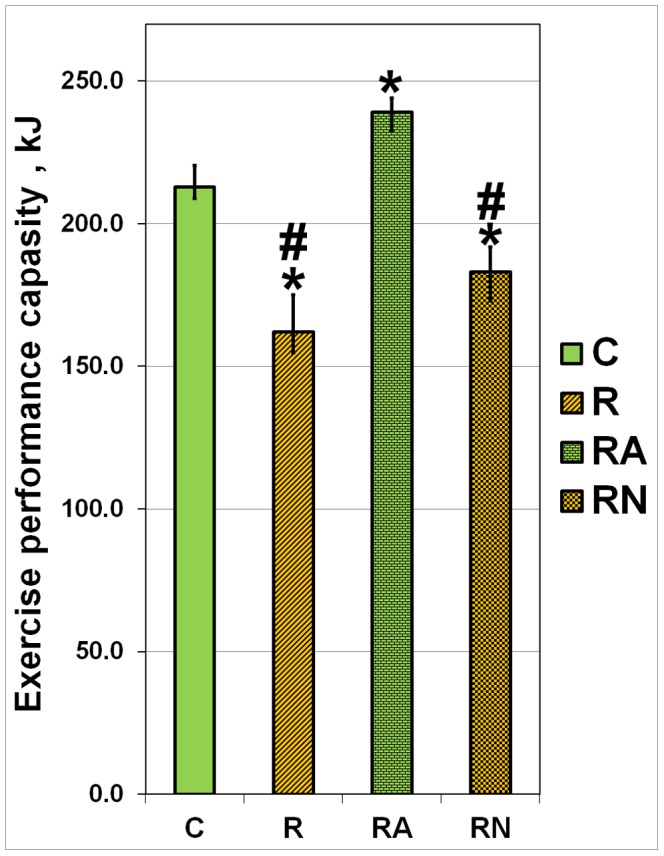
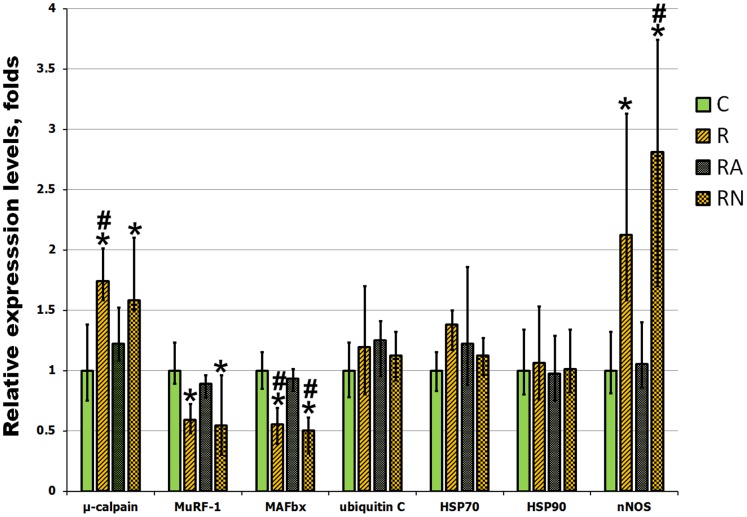
Eccentric exercise is known to disrupt sarcolemmal integrity and induce damage of skeletal muscle fibers. We hypothesized that L-arginine (L-Arg; nitric oxide synthase (NOS) substrate) supplementation prior to a single bout of eccentric exercise would diminish exercise-induced damage. In addition, we used N-nitro-L-arginine methyl ester hydrochloride (L-NAME; NOS inhibitor) to clarify the role of native NOS activity in the development of exercise-induced muscle damage. Rats were divided into four groups: non-treated control (C), downhill running with (RA) or without (R) L-Arg supplementation and downhill running with L-NAME supplementation (RN). Twenty four hours following eccentric exercise seven rats in each group were sacrificed and soleus muscles were dissected and frozen for further analysis. The remaining seven rats in each group were subjected to the exercise performance test. Our experiments showed that L-Arg supplementation prior to a single bout of eccentric exercise improved subsequent exercise performance capacity tests in RA rats when compared with R, RN and C rats by 37%, 27% and 13%, respectively. This outcome is mediated by L-Arg protection against post-exercise damage of sarcolemma (2.26- and 0.87-fold less than R and RN groups, respectively), reduced numbers of damaged muscle fibers indicated by the reduced loss of desmin content in the muscle (15% and 25% less than R and RN groups, respectively), and diminished µ-calpain mRNA up-regulation (42% and 30% less than R and RN groups, respectively). In conclusion, our study indicates that L-Arg supplementation prior to a single bout of eccentric exercise alleviates muscle fiber damage and preserves exercise performance capacity.
Conflict of interest statement
Figures
References
-
- Armstrong RB, Warren GL, Warren JA (1991) Mechanisms of exercise-induced muscle fibre injury. Sports Med 12: 184–207. - PubMed
-
- Knoblauch MA, O’Connor DP, Clarke MS (2013) Obese mice incur greater myofiber membrane disruption in response to mechanical load compared with lean mice. Obesity (Silver Spring) 21: 135–143. - PubMed
-
- Biral D, Jakubiec-Puka A, Ciechomska I, Sandri M, Rossini K, et al. (2000) Loss of dystrophin and some dystrophin-associated proteins with concomitant signs of apoptosis in rat leg muscle overworked in extension. Acta Neuropathol 100: 618–626. - PubMed
-
- Brussee V, Tardif F, Tremblay JP (1997) Muscle fibers of mdx mice are more vulnerable to exercise than those of normal mice. Neuromuscul Disord 7: 487–492. - PubMed
-
- Carter GT, Kikuchi N, Horasek SJ, Walsh SA (1994) The use of fluorescent dextrans as a marker of sarcolemmal injury. Histol Histopathol 9: 443–447. - PubMed
Publication types
MeSH terms
Substances
LinkOut - more resources
Full Text Sources
Other Literature Sources
Medical
