


Isolation and characterization of broad spectrum coaggregating bacteria from different water systems for potential use in bioaugmentation
- PMID: 24736645
- PMCID: PMC3988075
- DOI: 10.1371/journal.pone.0094220
Isolation and characterization of broad spectrum coaggregating bacteria from different water systems for potential use in bioaugmentation
Abstract
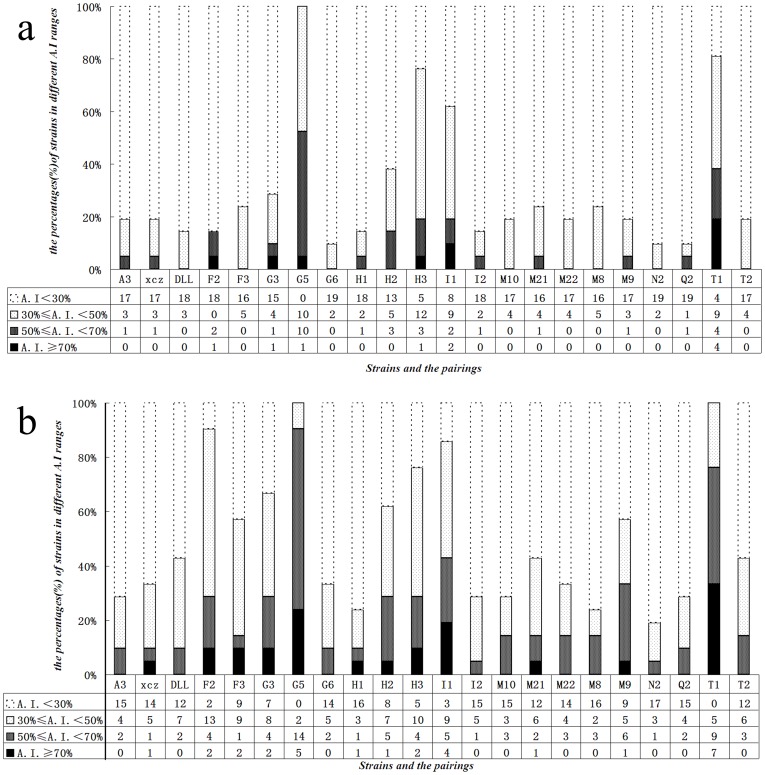
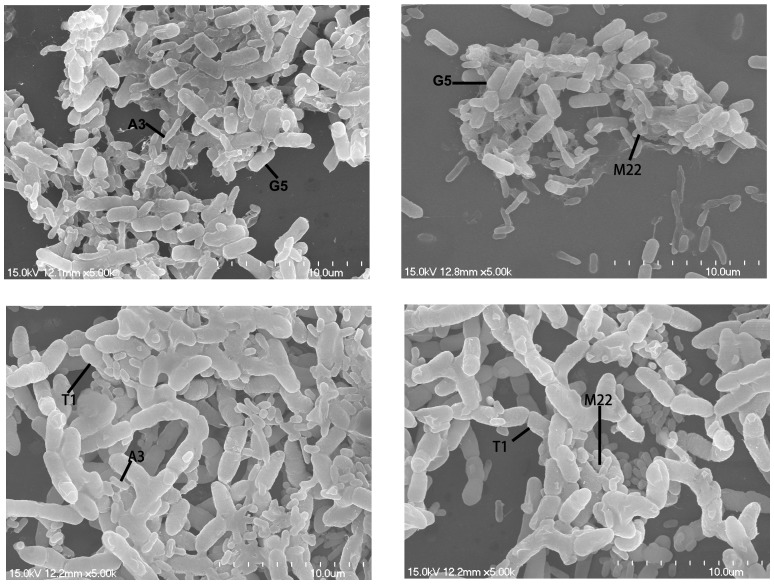
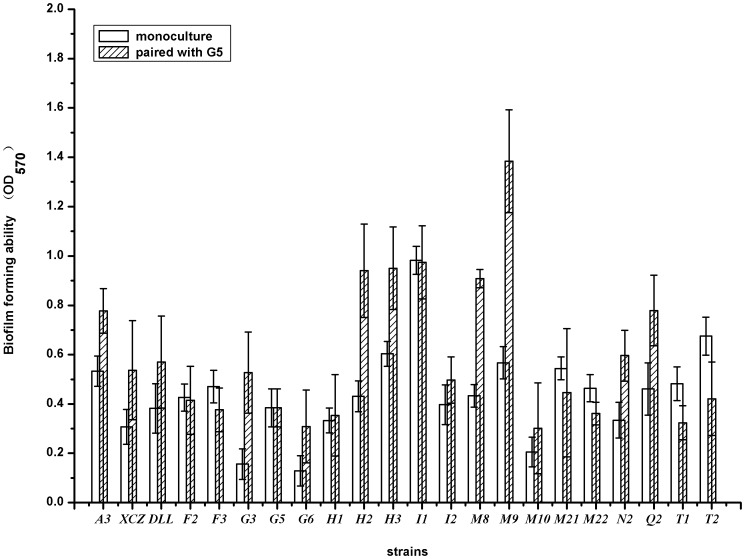
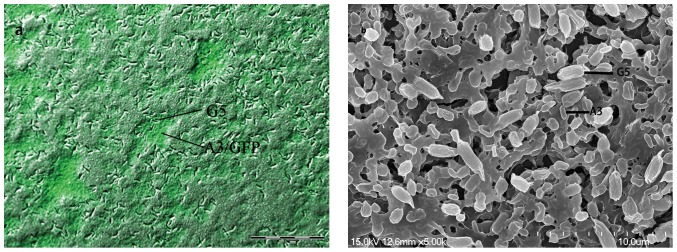
The bridging bacteria with broad-spectrum coaggregation ability play an important role during multispecies-biofilm development. In this study, through a visual and semi-quantitative assay, twenty-two bacterial strains with aggregation ability were obtained from 8 different water environments, and these strains were assigned to 7 genera according to their 16S rDNA and they were Aeromonas, Bacillus, Comamonas, Exiguobacterium, Pseudomonas, Shewanella and Comamonas. Furthermore, all possible 231 pairwise combinations among these 22 strains were explored for coaggregation ability by spectrophotometric assay. Among all these strains, it was found that Bacillus cereus G5 and Bacillus megaterium T1 coaggregated with themajority of assayed other strains, 90.5% (19 of 21 strains) and 76.2% respectively (17 of 21 strains) at a higher coaggregation rates (A.I. greater than 50%), indicating they have a broad-spectrum coaggregation property. The images of coaggregates also confirmed the coexistence of G5 and T1 with their partner strains. Biofilm biomass development of G5 cocultured with each of its partner strains were further evaluateded. The results showed that 15 of 21 strains, when paired with G5, developed greater biofilm biomass than the monocultures. Furthermore, the images from both fluorescence microscopy and scanning electron microscopy (SEM) demonstrated that G5 and A3-GFP (a 3,5-dinitrobenzoic acid-degrading strain, staining with gfp),could develop a typical spatial structure of dual-species biofilm when cocultured. These results suggested that bridging-bacteria with a broad spectrum coaggregating ability, such as G5,could mediate the integration of exogenous degrading bacteria into biofilms and contribute to the bioaugmentation treatment.
Conflict of interest statement
Figures
References
-
- Rickard AH, Gilbert P, High NJ, Kolenbrander PE, Handley PS (2003) Bacterial coaggregation: an integral process in the development of multi-species biofilms. Trends in microbiology 11: 94–100. - PubMed
-
- Buswell C, Herlihy Y, Marsh P, Keevil C, Leach S (1997) Coaggregation amongst aquatic biofilm bacteria. J Appl Microbiol 83: 477–484.
-
- Ramalingam B, Sekar R, Boxall JB, Biggs CA (2013) Aggregation and biofilm formation of bacteria isolated from domestic drinking water. Water Science & Technology: Water Supply 13: 1016.
Publication types
MeSH terms
LinkOut - more resources
Full Text Sources
Other Literature Sources
