


Insulin-like growth factor 1 predicts post-load hypoglycemia following bariatric surgery: a prospective cohort study
- PMID: 24736741
- PMCID: PMC3988194
- DOI: 10.1371/journal.pone.0094613
Insulin-like growth factor 1 predicts post-load hypoglycemia following bariatric surgery: a prospective cohort study
Abstract
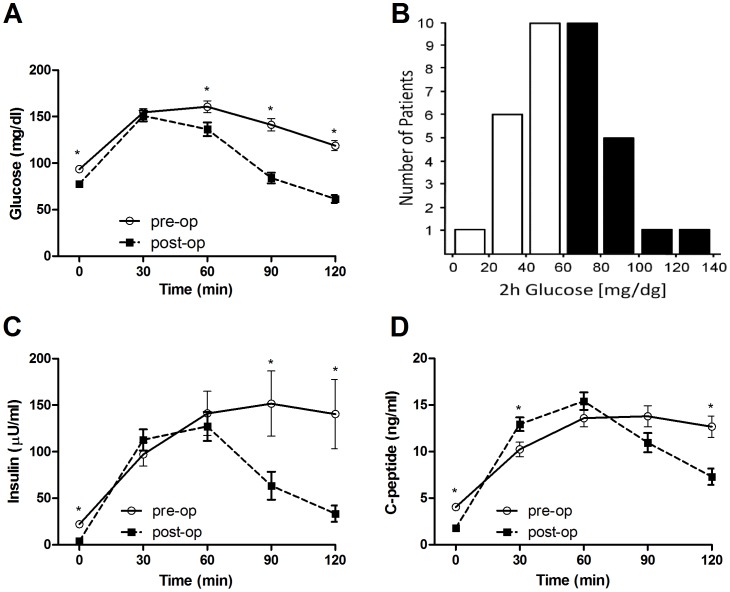
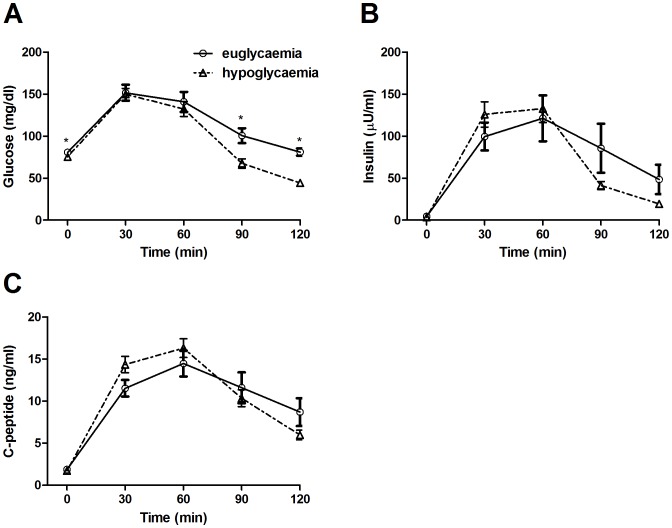
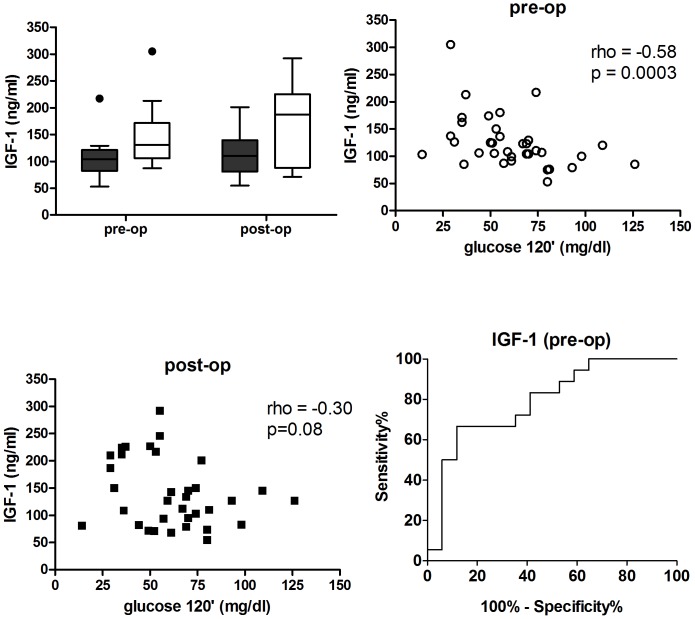
Postprandial hypoglycemia is a complication following gastric bypass surgery, which frequently remains undetected. Severe hypoglycemic episodes, however, put patients at risk, e.g., for syncope. A major cause of hypoglycemia following gastric bypass is hyperinsulinemic nesidioblastosis. Since pancreatic islets in nesidioblastosis overexpress insulin-like growth factor 1 (IGF-1) receptor α and administration of recombinant IGF-1 provokes hypoglycemia, our main objective was to investigate the occurrence of post-load hypoglycemia one year after bariatric surgery and its relation to pre- and post-operative IGF-1 serum concentrations. We evaluated metabolic parameters including 2 h 75 g oral glucose tolerance test (OGTT) and measured IGF-1 serum concentration in thirty-six non-diabetic patients (29 f/7 m), aged 41.3±2.0 y with a median (IQR) BMI of 30.9 kg/m2 (27.5-34.3 kg/m2), who underwent elective bariatric surgery (predominantly gastric bypass, 83%) at our hospital. Post-load hypoglycemia as defined by a 2 h glucose concentration <60 mg/dl was detected in 50% of patients. Serum insulin and C-peptide concentration during the OGTT and HOMA-IR (homeostatic model assessment-insulin resistance) were similar in hypoglycemic and euglycemic patients. Strikingly, pre- and post-operative serum IGF-1 concentrations were significantly higher in hypoglycemic patients (p = 0.012 and p = 0.007 respectively). IGF-1 serum concentration before surgery negatively correlated with 2 h glucose concentration during the OGTT (rho = -0.58, p = 0.0003). Finally, IGF-1 serum concentrations before and after surgery significantly predicted post-load hypoglycemia with odds ratios of 1.28 (95%CI:1.03-1.55, p = 0.029) and 1.18 (95%CI:1.03-1.33, p = 0.015), respectively, for each 10 ng/ml increment. IGF-1 serum concentration could be a valuable biomarker to identify patients at risk for hypoglycemia following bariatric surgery independently of a diagnostic OGTT. Thus, IGF-1 testing could help to prevent a significant complication of gastric bypass surgery.
Conflict of interest statement
Figures
References
-
- Karlsson J, Taft C, Ryden A, Sjostrom L, Sullivan M (2007) Ten-year trends in health-related quality of life after surgical and conventional treatment for severe obesity: the SOS intervention study. International journal of obesity 31: 1248–1261. - PubMed
-
- Adams TD, Gress RE, Smith SC, Halverson RC, Simper SC, et al. (2007) Long-term mortality after gastric bypass surgery. The New England journal of medicine 357: 753–761. - PubMed
-
- Service GJ, Thompson GB, Service FJ, Andrews JC, Collazo-Clavell ML, et al (2005) Hyperinsulinemic hypoglycemia with nesidioblastosis after gastric-bypass surgery. The New England journal of medicine 353: 249–254. - PubMed
-
- Kim SH, Liu TC, Abbasi F, Lamendola C, Morton JM, et al. (2009) Plasma glucose and insulin regulation is abnormal following gastric bypass surgery with or without neuroglycopenia. Obesity surgery 19: 1550–1556. - PubMed
Publication types
MeSH terms
Substances
LinkOut - more resources
Full Text Sources
Other Literature Sources
Medical
Miscellaneous
