Human papilloma virus, DNA methylation and microRNA expression in cervical cancer (Review)
- PMID: 24737381
- PMCID: PMC4055305
- DOI: 10.3892/or.2014.3142
Human papilloma virus, DNA methylation and microRNA expression in cervical cancer (Review)
Abstract
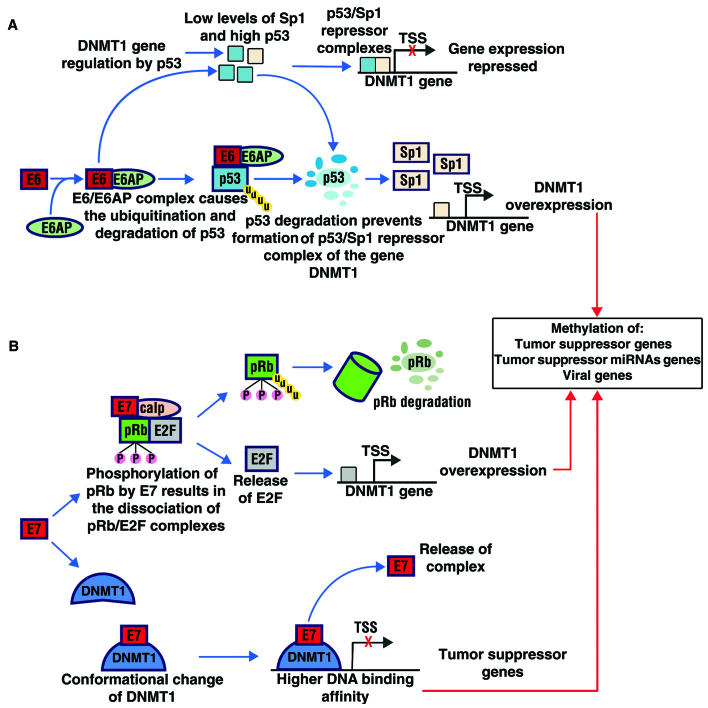
Cancer is a complex disease caused by genetic and epigenetic abnormalities that affect gene expression. The progression from precursor lesions to invasive cervical cancer is influenced by persistent human papilloma virus (HPV) infection, which induces changes in the host genome and epigenome. Epigenetic alterations, such as aberrant miRNA expression and changes in DNA methylation status, favor the expression of oncogenes and the silencing of tumor-suppressor genes. Given that some miRNA genes can be regulated through epigenetic mechanisms, it has been proposed that alterations in the methylation status of miRNA promoters could be the driving mechanism behind their aberrant expression in cervical cancer. For these reasons, we assessed the relationship among HPV infection, cellular DNA methylation and miRNA expression. We conclude that alterations in the methylation status of protein-coding genes and various miRNA genes are influenced by HPV infection, the viral genotype, the physical state of the viral DNA, and viral oncogenic risk. Furthermore, HPV induces deregulation of miRNA expression, particularly at loci near fragile sites. This deregulation occurs through the E6 and E7 proteins, which target miRNA transcription factors such as p53.
Figures
References
-
- Lui WO, Pourmand N, Patterson BK, Fire A. Patterns of known and novel small RNAs in human cervical cancer. Cancer Res. 2007;67:6031–6043. - PubMed
Publication types
MeSH terms
Substances
LinkOut - more resources
Full Text Sources
Other Literature Sources
Medical
Research Materials
Miscellaneous