


Chocolate milk consequences: a pilot study evaluating the consequences of banning chocolate milk in school cafeterias
- PMID: 24740451
- PMCID: PMC3989166
- DOI: 10.1371/journal.pone.0091022
Chocolate milk consequences: a pilot study evaluating the consequences of banning chocolate milk in school cafeterias
Abstract
Objectives: Currently, 68.3% of the milk available in schools is flavored, with chocolate being the most popular (61.6% of all milk). If chocolate milk is removed from a school cafeteria, what will happen to overall milk selection and consumption?
Methods: In a before-after study in 11 Oregon elementary schools, flavored milk-which will be referred to as chocolate milk-was banned from the cafeteria. Milk sales, school enrollment, and data for daily participation in the National School Lunch Program (NSLP) were compared year to date.
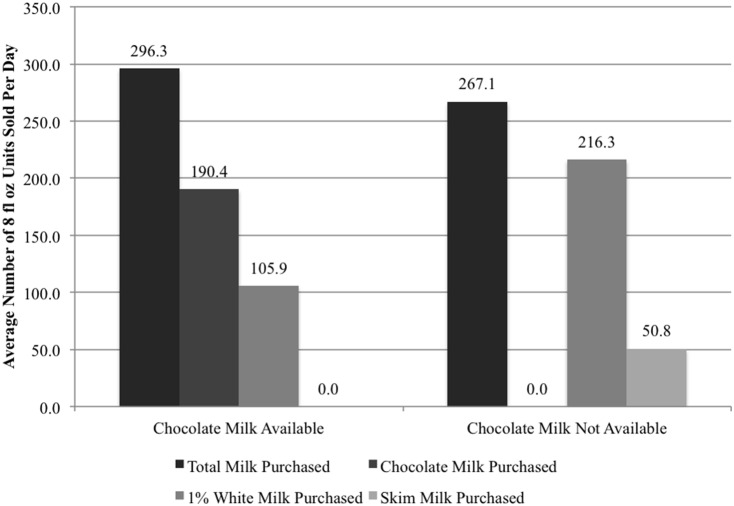
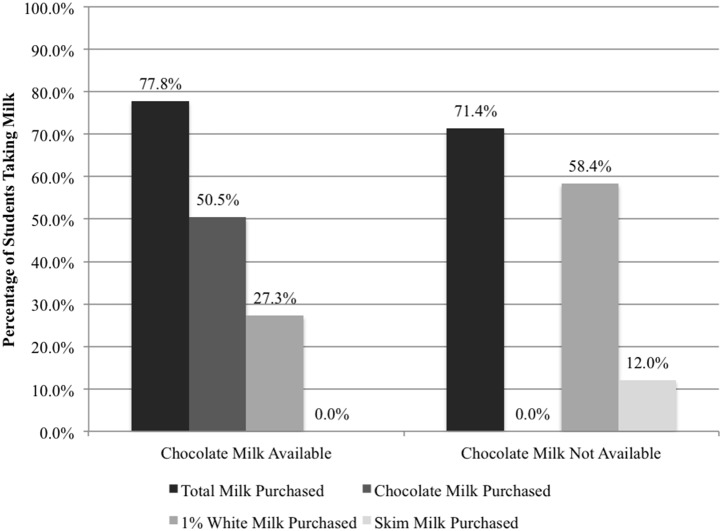
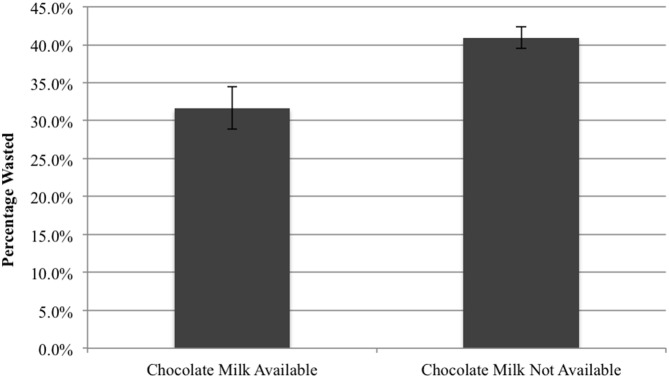
Results: Total daily milk sales declined by 9.9% (p<0.01). Although white milk increased by 161.2 cartons per day (p<0.001), 29.4% of this milk was thrown away. Eliminating chocolate milk was also associated with 6.8% fewer students eating school lunches, and although other factors were also involved, this is consistent with the notion of psychological reactance.
Conclusions: Removing chocolate milk from school cafeterias may reduce calorie and sugar consumption, but it may also lead students to take less milk overall, drink less (waste more) of the white milk they do take, and no longer purchase school lunch. Food service managers need to carefully weigh the costs and benefits of eliminating chocolate milk and should consider alternative options that make white milk more convenient, attractive, and normal to choose.
Conflict of interest statement
Figures
References
-
- Goto K, Waite A, Wolff C, Chan K, Giovanni M (2013) Do Environmental Interventions Impact Elementary School Students’ Lunchtime Milk Selection? Appl Econ Perspect Policy 35(2): 360–376.
-
- Black R, Williams S, Jones I, Goulding A (2002) Students who avoid drinking cow milk have low dietary calcium intakes and poor bone health. Am J Clin Nutr 76 (3): 675–80. - PubMed
-
- Heaney RP (2009) Dairy and bone health. J Am Coll Nutr 28 Supplement 182S–90S. - PubMed
-
- Wells A (2000) Drinks for young students: the dental and nutritional benefits of milk. Nutr Food Sci 30(2): 76–80.
-
- Goulding A, Rockell JE, Black RE, Grant AM, Jones IE, et al. (2004) Students who avoid drinking cow’s milk are at increased risk for prepubertal bone fractures. J Am Diet Assoc 104(2): 250–253. - PubMed
Publication types
MeSH terms
LinkOut - more resources
Full Text Sources
Other Literature Sources
