


A randomized comparative effectiveness trial of using cable television to deliver diabetes prevention programming
- PMID: 24740868
- PMCID: PMC4238734
- DOI: 10.1002/oby.20762
A randomized comparative effectiveness trial of using cable television to deliver diabetes prevention programming
Abstract
Objective: To evaluate the use and effectiveness of two "in-home" strategies for delivering diabetes prevention programming using cable television.
Methods: An individually randomized, two-arm intervention trial including adults with diabetes risk factors living in two US cities. Interventions involved a 16-session lifestyle intervention delivered via "video-on-demand" cable television, offered alone versus in combination with web-based lifestyle support tools. Repeated measures longitudinal linear regression with imputation of missing observations was used to compare changes in body weight.
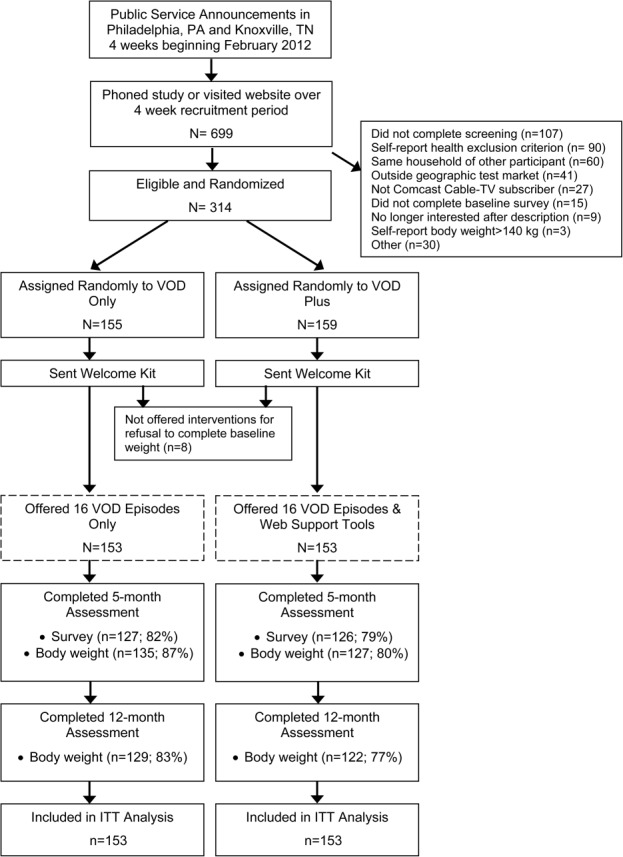
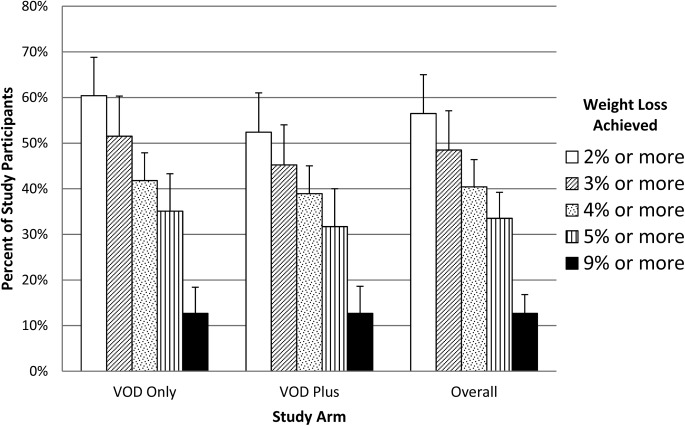
Results: A total of 306 individuals were randomized and offered the interventions. After 5 months, 265 (87%) participants viewed at least 1, and 110 (36%) viewed ≥9 of the video episodes. A total of 262 (86%) participants completed a 5-month weight measurement. In intention-to-treat analysis with imputation of missing observations, mean weight loss at 5 months for both treatment groups combined was 3.3% (95% CI 0.7-5.0%), regardless of intervention participation (with no differences between randomized groups (P = 0.19)), and was 4.9% (95% CI 2.1-6.5%) for participants who viewed ≥9 episodes.
Conclusions: In-home delivery of evidence-based diabetes prevention programming in a reality television format, offered with or without online behavioral support tools, can achieve modest weight losses consistent with past implementation studies of face-to-face programs using similar content.
© 2014 The Authors Obesity published by Wiley Periodicals, Inc. on behalf of The Obesity Society (TOS).
Figures
References
-
- Gregg EW, Cheng YJ, Cadwell BL, Imperatore G, Williams DE, Flegal KM, et al. Secular trends in cardiovascular disease risk factors according to body mass index in US adults. JAMA. 2005;293:1868–1874. - PubMed
-
- Centers for Disease Control and Prevention. National Diabetes Fact Sheet, 2011. Atlanta, GA, USA: Department of Health and Human Services; Centers for Disease Control and Prevention; 2011. Available from: http://www.cdc.gov/diabetes/pubs/factsheet11.htm [accessed 22 February 2013]
-
- Narayan KM, Boyle JP, Thompson TJ, Sorensen SW, Williamson DF. Lifetime risk for diabetes mellitus in the United States. JAMA. 2003;290:1884–1890. - PubMed
Publication types
MeSH terms
LinkOut - more resources
Full Text Sources
Other Literature Sources
Medical
Miscellaneous
