


The centrality of laboratory services in the HIV treatment and prevention cascade: The need for effective linkages and referrals in resource-limited settings
- PMID: 24742299
- PMCID: PMC4826026
- DOI: 10.1089/apc.2013.0356
The centrality of laboratory services in the HIV treatment and prevention cascade: The need for effective linkages and referrals in resource-limited settings
Abstract
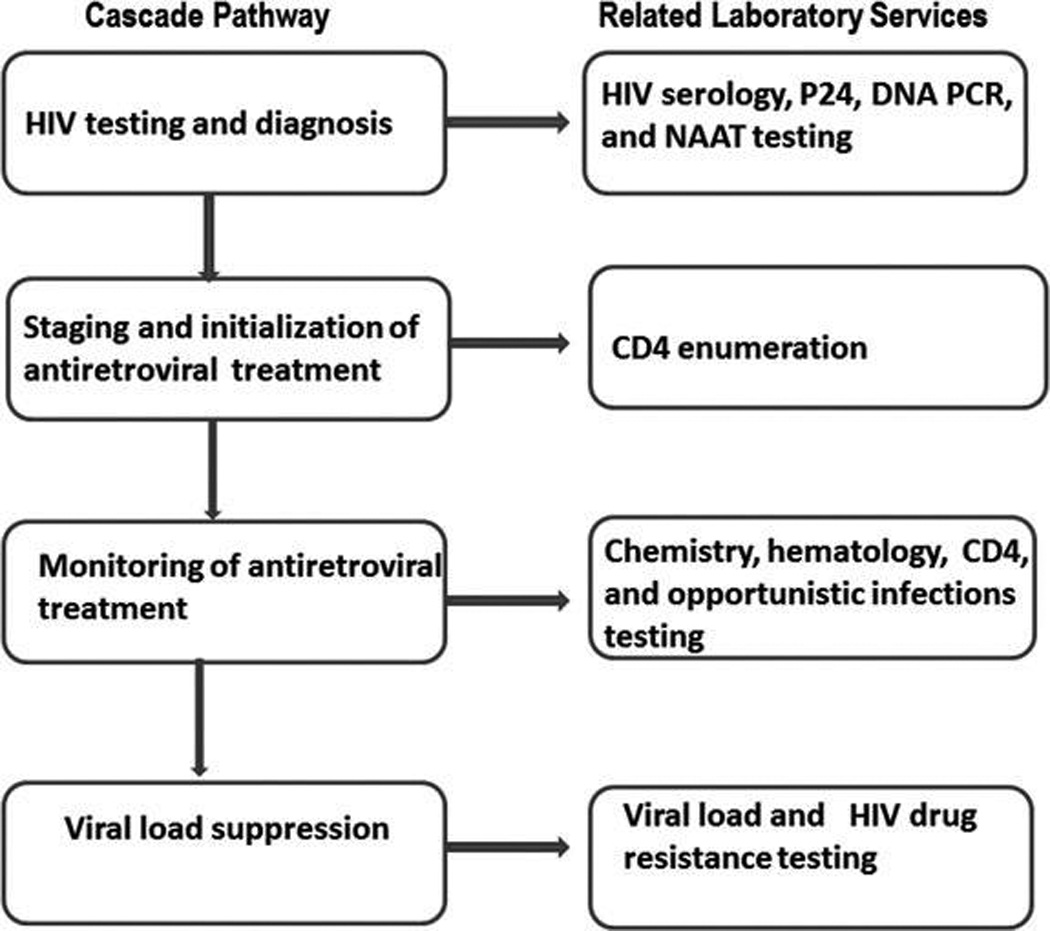
Strong laboratory services and systems are critical for delivering timely and quality health services that are vital to reduce patient attrition in the HIV treatment and prevention cascade. However, challenges exist in ensuring effective laboratory health systems strengthening and linkages. In particular, linkages and referrals between laboratory testing and other services need to be considered in the context of an integrated health system that includes prevention, treatment, and strategic information. Key components of laboratory health systems that are essential for effective linkages include an adequate workforce, appropriate point-of-care (POC) technology, available financing, supply chain management systems, and quality systems improvement, including accreditation. In this review, we highlight weaknesses of and gaps between laboratory testing and other program services. We propose a model for strengthening these systems to ensure effective linkages of laboratory services for improved access and retention in care of HIV/AIDS patients, particularly in low- and middle-income countries.
Figures
References
-
- WHO HIV/AIDS. Fact sheet No 360. [Accessed August 26, 2013]; Available at: http://www.who.int/mediacentre/factsheets/fs360/en/index.html.
-
- UNAIDS. World AIDS day report 2012: results. [Accessed June 24, 2013]; Available at: http://www.unaids.org/en/media/unaids/contentassets/documents/epidemiolo....
-
- Marum E, Taegtmeyer M, Parekh B, et al. “What took you so long?” The impact of PEPFAR on the expansion of HIV testing and counseling services in Africa. J Acquir Immune Defic Syndr. 2012;60:S63–S69. - PubMed
Publication types
MeSH terms
Substances
Grants and funding
LinkOut - more resources
Full Text Sources
Other Literature Sources
Medical
