


Context matters: measuring implementation climate among individuals and groups
- PMID: 24742308
- PMCID: PMC4012549
- DOI: 10.1186/1748-5908-9-46
Context matters: measuring implementation climate among individuals and groups
Abstract
Background: It has been noted that implementation climate is positively associated with implementation effectiveness. However, issues surrounding the measurement of implementation climate, or the extent to which organizational members perceive that innovation use is expected, supported and rewarded by their organization remain. Specifically, it is unclear whether implementation climate can be measured as a global construct, whether individual or group-referenced items should be used, and whether implementation climate can be assessed at the group or organizational level.
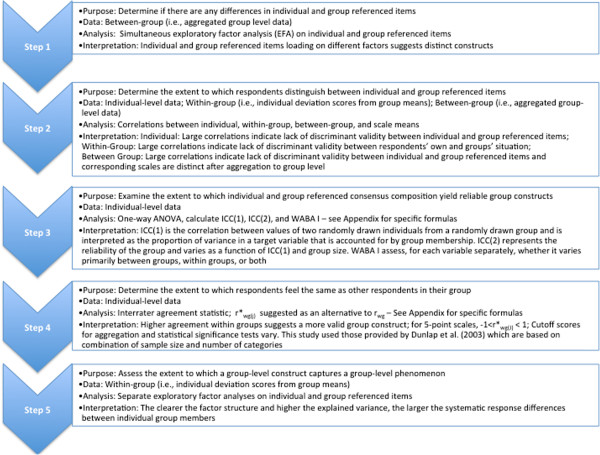
Methods: This research includes two cross-sectional studies with data collected via surveys at the individual level. The first study assessed the implementation climate perceptions of physicians participating in the National Cancer Institute's (NCI) Community Clinical Oncology Program (CCOP), and the second study assessed the perceptions of children's behavioral health clinicians implementing a treatment innovation. To address if implementation climate is a global construct, we used confirmatory factor analysis. To address how implementation climate should be measured and at what level, we followed a five-step framework outlined by van Mierlo and colleagues. This framework includes exploratory factor analysis and correlations to assess differences between individual and group-referenced items and intraclass correlations, interrater agreements, and exploratory factor analysis to determine if implementation climate can be assessed at the organizational level.
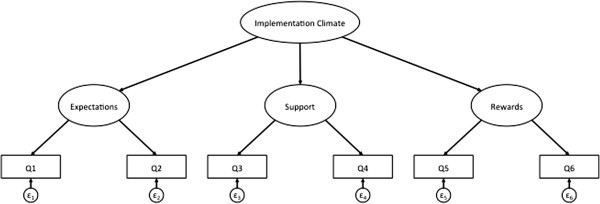
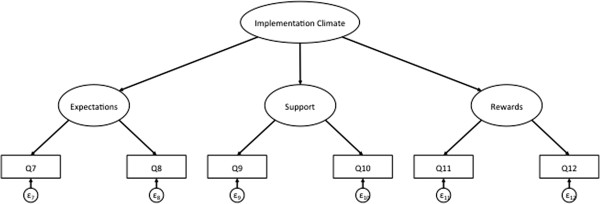
Results: The confirmatory factor analysis demonstrated that implementation climate is a global construct consisting of items related to expectations, support and rewards. There are mixed results, however, as to whether implementation climate should be measured using individual or group-referenced items. In our first study, where physicians were geographically dispersed and practice independently, there were no differences based on the type of items used, and implementation climate was an individual level construct. However, in the second study, in which clinicians practice in a central location and interact more frequently, group-referenced items may be appropriate. In addition, implementation climate could be considered an organizational level construct.
Conclusions: The results are context-specific. Researchers should carefully consider the study setting when measuring implementation climate. In addition, more opportunities are needed to validate this measure and understand how well it predicts and explains implementation effectiveness.
Figures
References
-
- Klein KJ, Sorra JS. The challenge of innovation implementation. Acad Manage Rev. 1996;21:1055–1080.
-
- Greenhalgh T. Diffusion of innovations in health service organisations: a systematic literature review. Malden, Mass: BMJ Books/Blackwell Pub; 2005.
-
- Holahan PJ, Aronson ZH, Jurkat MP, Schoorman FD. Implementing computer technology: a multiorganizational test of Klein and Sorra’s model. J Eng Technol Manag. 2004;21:31–50. doi: 10.1016/j.jengtecman.2003.12.003. - DOI
-
- Dong LY, Neufeld DJ, Higgins C. Testing Klein and Sorra’s innovation implementation model: an empirical examination. J Eng Technol Manag. 2008;25:237–255. doi: 10.1016/j.jengtecman.2008.10.006. - DOI
Publication types
MeSH terms
Grants and funding
LinkOut - more resources
Full Text Sources
Other Literature Sources
Medical
