


Shared sanitation versus individual household latrines: a systematic review of health outcomes
- PMID: 24743336
- PMCID: PMC3990518
- DOI: 10.1371/journal.pone.0093300
Shared sanitation versus individual household latrines: a systematic review of health outcomes
Abstract
Background: More than 761 million people rely on shared sanitation facilities. These have historically been excluded from international sanitation targets, regardless of the service level, due to concerns about acceptability, hygiene and access. In connection with a proposed change in such policy, we undertook this review to identify and summarize existing evidence that compares health outcomes associated with shared sanitation versus individual household latrines.
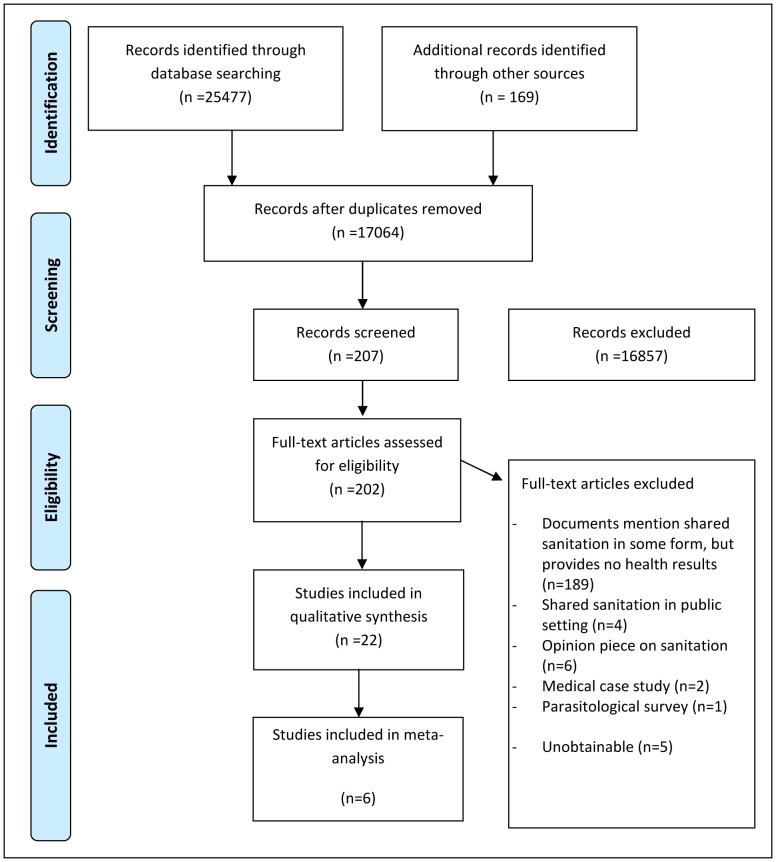
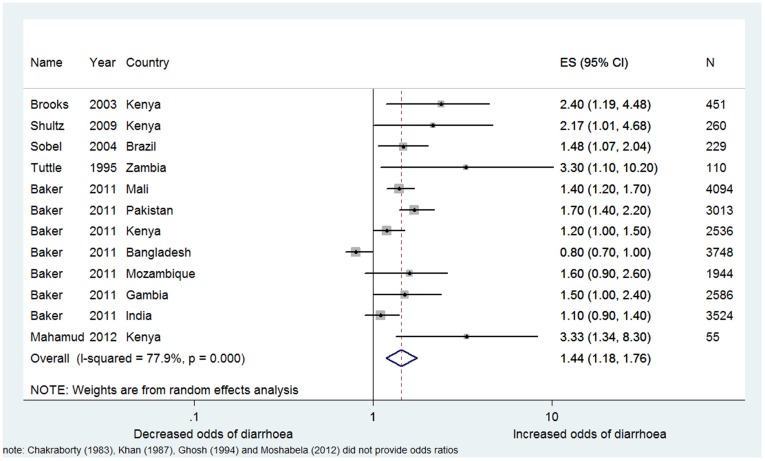
Methods and findings: Shared sanitation included any type of facilities intended for the containment of human faeces and used by more than one household, but excluded public facilities. Health outcomes included diarrhoea, helminth infections, enteric fevers, other faecal-oral diseases, trachoma and adverse maternal or birth outcomes. Studies were included regardless of design, location, language or publication status. Studies were assessed for methodological quality using the STROBE guidelines. Twenty-two studies conducted in 21 countries met the inclusion criteria. Studies show a pattern of increased risk of adverse health outcomes associated with shared sanitation compared to individual household latrines. A meta-analysis of 12 studies reporting on diarrhoea found increased odds of disease associated with reliance on shared sanitation (odds ratio (OR) 1.44, 95% CI: 1.18-1.76).
Conclusion: Evidence to date does not support a change of existing policy of excluding shared sanitation from the definition of improved sanitation used in international monitoring and targets. However, such evidence is limited, does not adequately address likely confounding, and does not identify potentially important distinctions among types of shared facilities. As reliance on shared sanitation is increasing, further research is necessary to determine the circumstances, if any, under which shared sanitation can offer a safe, appropriate and acceptable alternative to individual household latrines.
Conflict of interest statement
Figures
References
-
- Prüss-Üstün A, Bos R, Gore F, Bartram J (2008) Safer water, Better health- Costs, benefits and sustainability of interventions to protect and promote health. Geneva.
-
- Lim SS, Vos T, Flaxman AD, Danaei G, Shibuya K, et al. (2012) A comparative risk assessment of burden of disease and injury attributable to 67 risk factors and risk factor clusters in 21 regions, 1990–2010: a systematic analysis for the Global Burden of Disease Study 2010. Lancet 380: 2224–2260. - PMC - PubMed
-
- Amnesty International (2010) Kenya: Insecurity and indignity: Women's experience in the slums of Nairobi, Kenya.
-
- Joint Monitoring Programme (2013) Progress on Drinking Water and Sanitation: 2013 Update. WHO/UNICEF.
Publication types
MeSH terms
LinkOut - more resources
Full Text Sources
Other Literature Sources
Research Materials
Miscellaneous
