


Thyroglobulin measurement using highly sensitive assays in patients with differentiated thyroid cancer: a clinical position paper
- PMID: 24743400
- PMCID: PMC4076114
- DOI: 10.1530/EJE-14-0148
Thyroglobulin measurement using highly sensitive assays in patients with differentiated thyroid cancer: a clinical position paper
Abstract
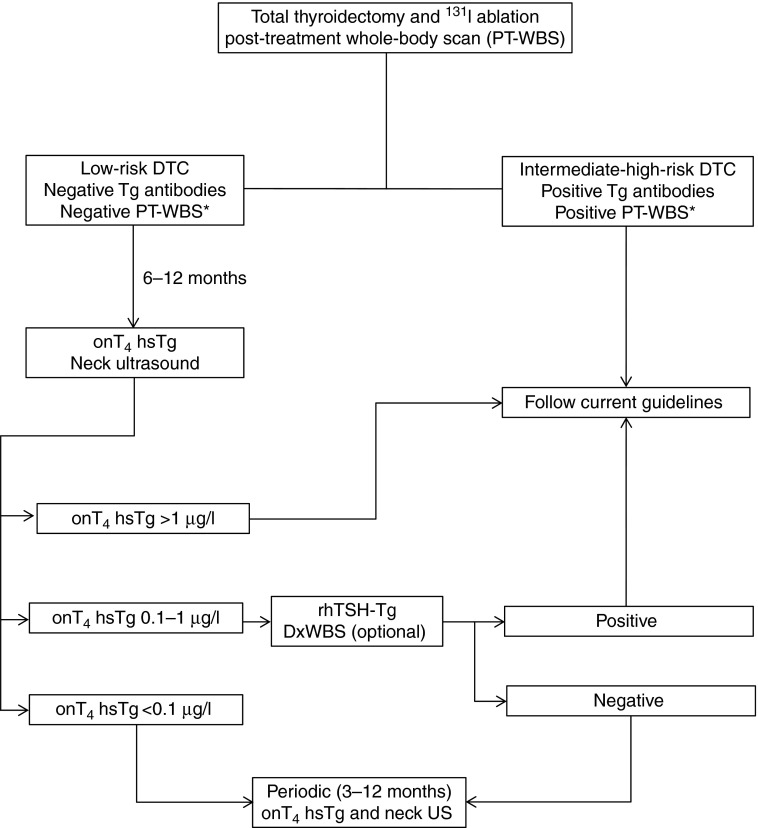
Differentiated thyroid cancer (DTC) is the most common endocrine cancer and its incidence has increased in recent decades. Initial treatment usually consists of total thyroidectomy followed by ablation of thyroid remnants by iodine-131. As thyroid cells are assumed to be the only source of thyroglobulin (Tg) in the human body, circulating Tg serves as a biochemical marker of persistent or recurrent disease in DTC follow-up. Currently, standard follow-up for DTC comprises Tg measurement and neck ultrasound combined, when indicated, with an additional radioiodine scan. Measurement of Tg after stimulation by endogenous or exogenous TSH is recommended by current clinical guidelines to detect occult disease with a maximum sensitivity due to the suboptimal sensitivity of older Tg assays. However, the development of new highly sensitive Tg assays with improved analytical sensitivity and precision at low concentrations now allows detection of very low Tg concentrations reflecting minimal amounts of thyroid tissue without the need for TSH stimulation. Use of these highly sensitive Tg assays has not yet been incorporated into clinical guidelines but they will, we believe, be used by physicians caring for patients with DTC. The aim of this clinical position paper is, therefore, to offer advice on the various aspects and implications of using these highly sensitive Tg assays in the clinical care of patients with DTC.
© 2014 The authors.
Figures
References
-
- Pacini F, Schlumberger M, Dralle H, Elisei R, Smit JW, Wiersinga W, European Thyroid Cancer Taskforce European consensus for the management of patients with differentiated thyroid carcinoma of the follicular epithelium. European Journal of Endocrinology. 2006;154:787–803. doi: 10.1530/eje.1.02158. - DOI - PubMed
-
- American Thyroid Association (ATA) Guidelines Taskforce on Thyroid Nodules and Differentiated Thyroid Cancer , Cooper DS, Doherty GM, Haugen BR, Kloos RT, Lee SL, Mandel SJ, Mazzaferri EL, McIver B, Pacini F, et al. Revised American Thyroid Association management guidelines for patients with thyroid nodules and differentiated thyroid cancer. Thyroid. 2009;19:1167–1214. doi: 10.1089/thy.2009.0110. - DOI - PubMed
Publication types
MeSH terms
Substances
LinkOut - more resources
Full Text Sources
Other Literature Sources
Medical
Research Materials
Miscellaneous
