


STOP!: a randomised, double-blind, placebo-controlled study of the efficacy and safety of methoxyflurane for the treatment of acute pain
- PMID: 24743584
- PMCID: PMC4112448
- DOI: 10.1136/emermed-2013-202909
STOP!: a randomised, double-blind, placebo-controlled study of the efficacy and safety of methoxyflurane for the treatment of acute pain
Abstract
Objective: To evaluate the short-term efficacy and safety of methoxyflurane for the treatment of acute pain in patients presenting to an emergency department (ED) with minor trauma.
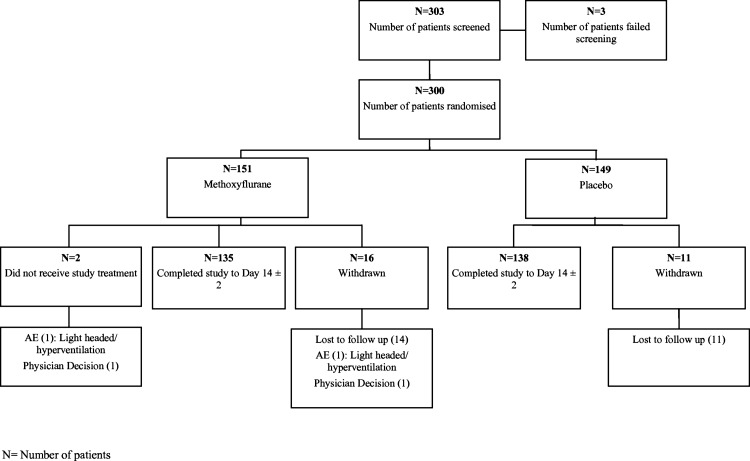
Methods: STOP! was a randomised, double-blind, multicentre, placebo-controlled study conducted at six sites in the UK. A total of 300 patients, 90 of whom were adolescent patients (age 12-17 years), were randomised 150:150 to receive either methoxyflurane via a Penthrox inhaler or placebo. The primary end point of the study was the change in pain intensity as measured using the visual analogue scale (VAS) from baseline to 5, 10, 15 and 20 min after the start of study drug inhalation. Patients were supplied with one inhaler containing 3 mL methoxyflurane or 5 mL placebo after enrolment and initial assessments. Age group (adolescent/adult) and baseline VAS score were controlled for in the statistical analyses.
Results: A total of 149 patients received methoxyflurane, and 149 patients received placebo. Demographic and baseline characteristics were comparable between the groups. Methoxyflurane reduced pain severity significantly more than placebo (p<0.0001) at all time points tested, with the greatest estimated treatment effect of -18.5 mm (adjusted change from baseline) seen at 15 min after the start of treatment. Methoxyflurane was well tolerated, with the majority of adverse reactions being mild, transient and in line with anticipated pharmacological action.
Conclusion: The results of this study suggest that methoxyflurane administered via the Penthrox inhaler is an efficacious, safe, and rapidly acting analgesic.
Trial registration number: NCT01420159.
Keywords: Analgesia/Pain Control; Emergency Department; Research, Clinical.
Published by the BMJ Publishing Group Limited. For permission to use (where not already granted under a licence) please go to http://group.bmj.com/group/rights-licensing/permissions.
Figures
References
-
- Stephen CR. Clinical applications of methoxyflurane. Acta Anaesthesiol Scand Suppl 1966;24:215–22 - PubMed
-
- Tomi KT, Mashimo T, Tashiro C, et al. Alterations in pain threshold and psychomotor response associated with subanaesthetic concentrations of inhalation anaesthetics in humans. Br J Anaesth 1993;70:684–6 - PubMed
-
- Crandell WB, Pappas SG, Macdonald A. Nephrotoxicity associated with methoxyflurane anaesthesia. Anesthesiology 1966;27:591–607 - PubMed
-
- Mazze R, Cousins M. Biotransformation of methoxyflurane. Int Anesthesiol Clin 1974;12:93–105 - PubMed
-
- Bergsjo P, Lindbaek E. Comparison between nitrous oxide and methoxyflurane for obstetrical analgesia. Acta Obstet Gynecol Scand 1971;50:285–90 - PubMed
Publication types
MeSH terms
Substances
Associated data
LinkOut - more resources
Full Text Sources
Other Literature Sources
Medical
