


Transcription Factor STAT3 as a Novel Molecular Target for Cancer Prevention
- PMID: 24743778
- PMCID: PMC4074810
- DOI: 10.3390/cancers6020926
Transcription Factor STAT3 as a Novel Molecular Target for Cancer Prevention
Abstract
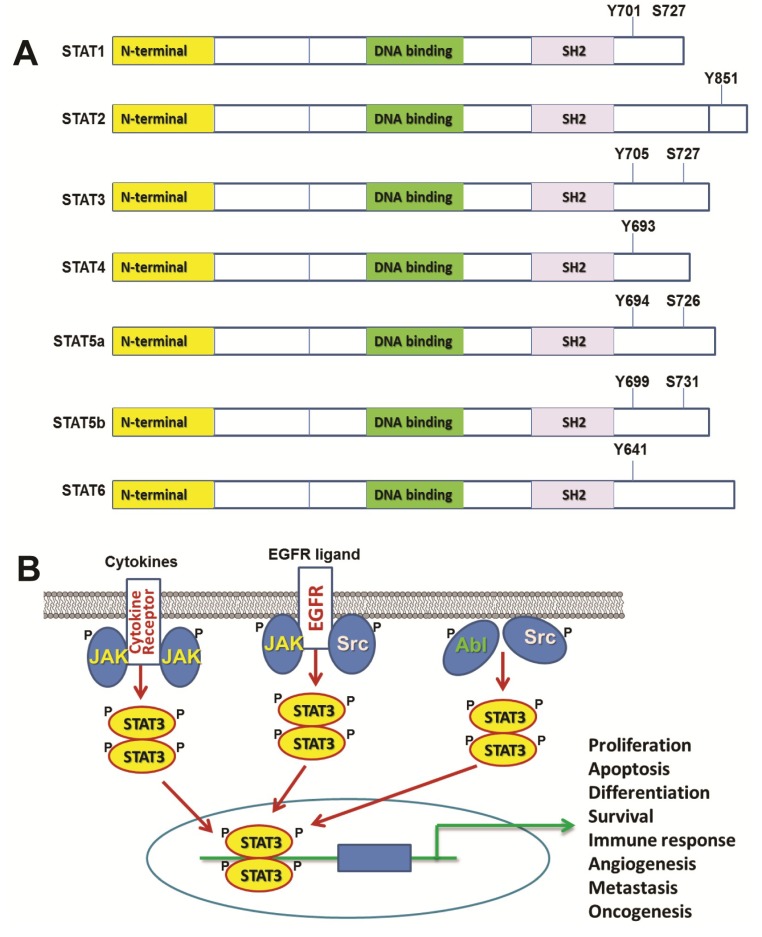
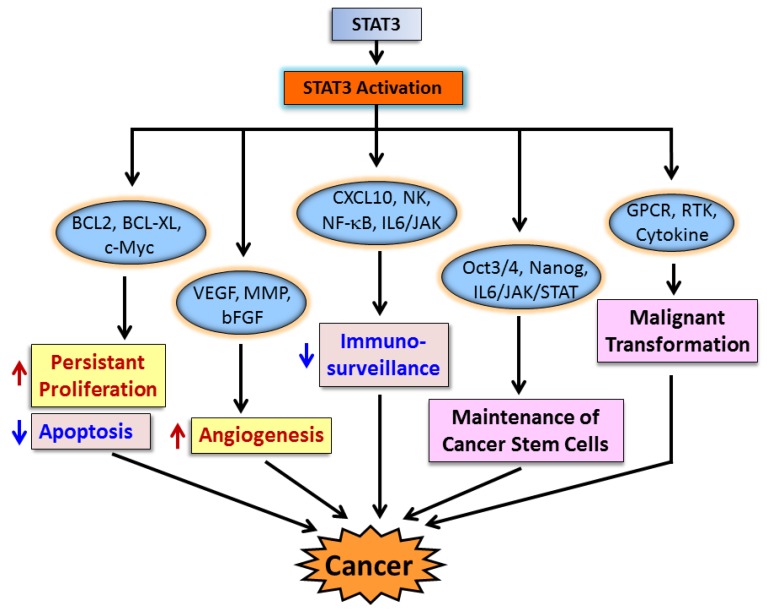
Signal Transducers and Activators of Transcription (STATs) are a family of transcription factors that regulate cell proliferation, differentiation, apoptosis, immune and inflammatory responses, and angiogenesis. Cumulative evidence has established that STAT3 has a critical role in the development of multiple cancer types. Because it is constitutively activated during disease progression and metastasis in a variety of cancers, STAT3 has promise as a drug target for cancer therapeutics. Recently, STAT3 was found to have an important role in maintaining cancer stem cells in vitro and in mouse tumor models, suggesting STAT3 is integrally involved in tumor initiation, progression and maintenance. STAT3 has been traditionally considered as nontargetable or undruggable, and the lag in developing effective STAT3 inhibitors contributes to the current lack of FDA-approved STAT3 inhibitors. Recent advances in cancer biology and drug discovery efforts have shed light on targeting STAT3 globally and/or specifically for cancer therapy. In this review, we summarize current literature and discuss the potential importance of STAT3 as a novel target for cancer prevention and of STAT3 inhibitors as effective chemopreventive agents.
Figures
References
Grants and funding
LinkOut - more resources
Full Text Sources
Other Literature Sources
Miscellaneous
