


Can an integrated orthotic and rehabilitation program decrease pain and improve function after lower extremity trauma?
- PMID: 24744130
- PMCID: PMC4160498
- DOI: 10.1007/s11999-014-3609-7
Can an integrated orthotic and rehabilitation program decrease pain and improve function after lower extremity trauma?
Abstract
Background: Patients with severe lower extremity trauma have significant disability 2 years after injury that worsens by 7 years. Up to 15% seek late amputation. Recently, an energy-storing orthosis demonstrated improved function compared with standard orthoses; however, the effect when integrated with rehabilitation over time is unknown.
Questions/purposes: (1) Does an 8-week integrated orthotic and rehabilitation initiative improve physical performance, pain, and outcomes in patients with lower extremity functional deficits or pain? (2) Is the magnitude of recovery different if enrolled more than 2 years after their injury versus earlier? (3) Does participation decrease the number considering late amputation?
Methods: We prospectively evaluated 84 service members (53 less than and 31 > 2 years after injury) who enrolled in the initiative. Fifty-eight sustained fractures, 53 sustained nerve injuries with weakness, and six had arthritis (there was some overlap in the patients with fractures and nerve injuries, which resulted in a total of > 84). They completed 4 weeks of physical therapy without the orthosis followed by 4 weeks with it. Testing was conducted at Weeks 0, 4, and 8. Validated physical performance tests and patient-reported outcome surveys were used as well as questions pertaining to whether patients were considering an amputation.
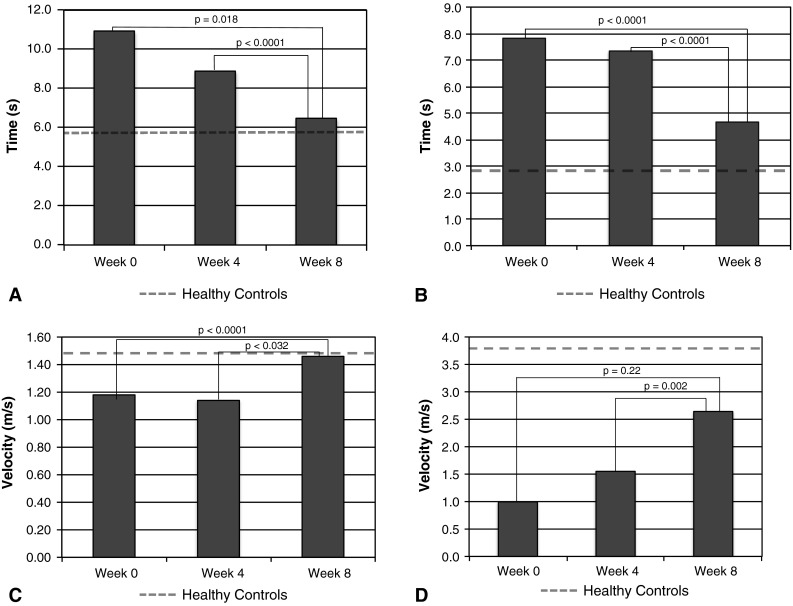
Results: By 8 weeks, patients improved in all physical performance measures and all relevant patient-reported outcomes. Patients less than and greater than 2 years after injury improved similarly. Forty-one of 50 patients initially considering amputation favored limb salvage at the end of 8 weeks.
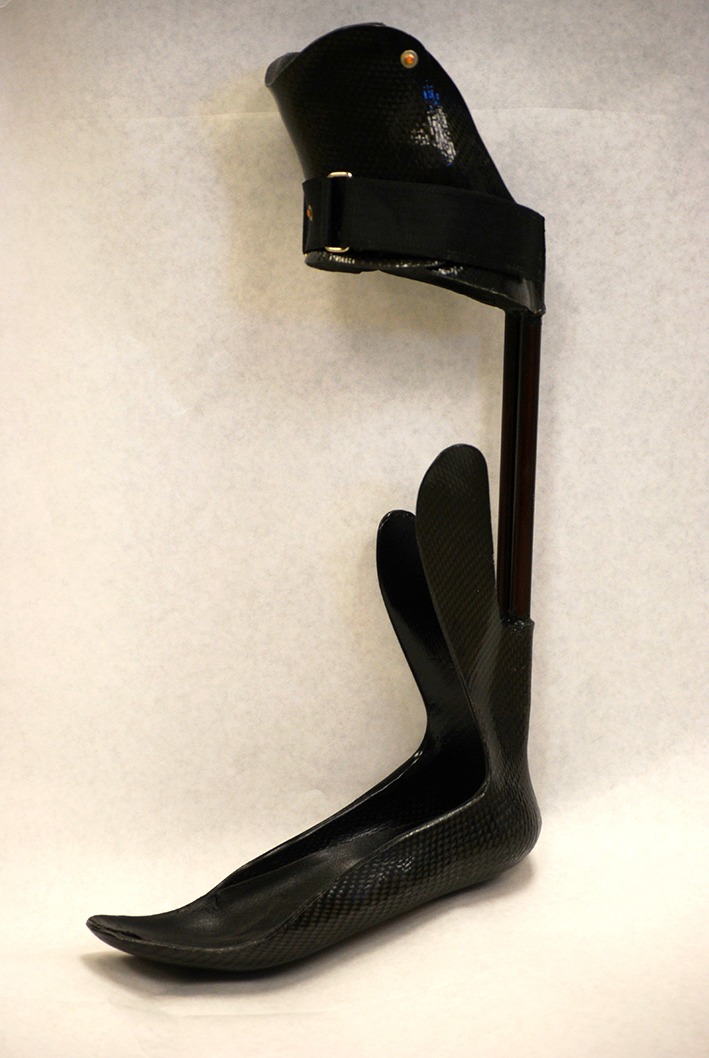
Conclusions: We found this integrated orthotic and rehabilitation initiative improved physical performance, pain, and patient-reported outcomes in patients with severe, traumatic lower extremity deficits and that these improvements were sustained for > 2 years after injury. Efforts are underway to determine whether the Return to Run clinical pathway with the Intrepid Dynamic Exoskeletal Orthosis (IDEO) can be successfully implemented at additional military centers in patients > 2 years from injury while sustaining similar improvements in patient outcomes. The ability to translate this integrated orthotic and rehabilitation program into the civilian setting is unknown and warrants further investigation.
Figures
References
-
- Blair JA, Patzkowski JC, Blanck RV, Owens JG, Hsu JR, Skeletal Trauma Research Consortium (STReC). Return to duty after integrated orthotic and rehabilitation initiative. J Orthop Trauma. 2013 Oct 10 [Epub ahead of print]. - PubMed
-
- Bosse MJ, MacKenzie EJ, Kellam JF, Burgess AR, Webb LX, Swiontkowski MF, Sanders RW, Jones AL, McAndrew MP, Patterson BM, McCarthy ML, Travison TG, Castillo RC. An analysis of outcomes of reconstruction or amputation after leg-threatening injuries. N Engl J Med. 2002;347:1924–1931. doi: 10.1056/NEJMoa012604. - DOI - PubMed
-
- Cross JD, Ficke JR, Hsu JR, Masini BD, Wenke JC. Battlefield orthopaedic injuries cause the majority of long-term disabilities. J Am Acad Orthop Surg. 2011;19(Suppl 1):S1–S7. - PubMed
-
- Doukas WC, Hayda RA, Frisch HM, Andersen RC, Mazurek MT, Ficke JR, Keeling JJ, Pasquina PF, Wain HJ, Carlini AR, MacKenzie EJ. The Military Extremity Trauma Amputation/Limb Salvage (METALS) study: outcomes of amputation versus limb salvage following major lower-extremity trauma. J Bone Joint Surg Am. 2013;95:138–145. doi: 10.2106/JBJS.K.00734. - DOI - PubMed
Publication types
MeSH terms
LinkOut - more resources
Full Text Sources
Other Literature Sources
Medical
