


The evaluation of fibrin sealants and tissue adhesives in oral surgery among patients with bleeding disorders
- PMID: 24744622
- PMCID: PMC3986767
- DOI: 10.5505/tjh.2012.07769
The evaluation of fibrin sealants and tissue adhesives in oral surgery among patients with bleeding disorders
Abstract
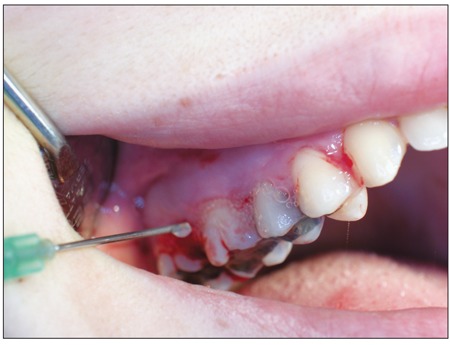
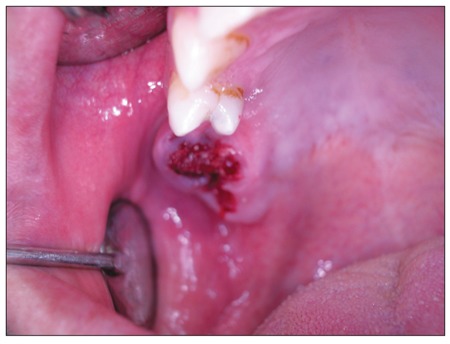
Objective: The aim of this study was to evaluate the efficiency of two local hemostatic agents administered with apreoperative dose of replacement therapy in patients with bleeding disorders undergoing oral surgery.
Material and methods: The study included 21 patients that were randomly divided into 3 groups. Patients in Group1 (n = 7) received preoperative replacement therapy and postoperative fibrin sealant applied to the surgical site. Patientsin Group 2 (n = 7) received preoperative replacement therapy and postoperative tissue adhesive applied to the surgicalsite. Patients in Group 3 (n = 7) were given replacement therapy pre- and postoperatively.
Results: Postoperative bleeding was not observed in 17 of the 21 patients, including 5 in Group 1 (71.42%), 6 in Group2 (85.71%), and 6 in Group 3 (85.71%). Hemorrhagic complications occurred in only 4 of the 21 patients.
Conclusion: The use of fibrin sealant and tissue adhesive was beneficial, as they reduced the level of factor concentratesused for replacement therapy and resulted in rapid hemostasis at the surgical site, facilitating the ability to performserial surgical procedures concurrently.
Amaç: Bu çalışmanın amacı kanama bozukluğu olan hastalarda, oral cerrahi girişimlerde replasman tedavisinin yalnızca preoperatif dozu uygulanarak cerrahi alana lokal doku yapıştırıcı veya fibrin sealant uygulamasının hemostaz üzerindeki etkinliğini değerlendirmektir. Gereç ve Yöntemler: Kanama bozukluğu olan 21 hasta randomize olarak üç farklı gruba ayrılmıştır. Grup 1’deki hastalara (n=7) preoperatif replasman tedavisi ile fibrin sealant uygulanmıştır. Grup 2’deki hastalara (n=7) preoperatif replasman tedavisi ile doku yapıştırıcısı uygulanmıştır. Grup 3’deki hastalara preoperatif ve postoperatif replasman tedavisi uygulanmıştır. Bulgular: Grup 1’de beş hasta (%71,42), Grup 2’de altı hasta (%85,71) ve Grup 3’de altı hasta (%85,71) olmak üzere toplam 17 hastada hiçbir postoperatif komplikasyon gözlenmemiştir. Bütün gruplardan olmak üzere sadece dört hastada hemorajik komplikasyon gözlenmiştir. Sonuç: Bu klinik çalışmanın sonuçlarına dayanarak, fibrin sealant ve doku yapıştırıcılarının oral cerrahi işlemlerde uygulanmasının replasman tedavisinde kullanılan faktör konsantresi miktarının azaltılması ve operasyon alanında hemostaz sağlanarak aynı anda çok sayıda işlemin yapılabilmesine olanak vermesi açısından faydalı olduğu görüşündeyiz.
Keywords: Bleeding disorders; Fibrin sealants; Hemophilia; Tissue adhesive; Tooth extraction.
Figures
References
-
- Katz JO, Terezhalmy GT. Dental management of the patient with haemophilia. Oral Surg Oral Med Oral Pathol. 1988;66:139–144. - PubMed
-
- Martinowitz U, Varon D, Heim H. The role of fibrin tissue adhesives in surgery of haemophilia patients. Haemophilia. 1998;4:443–448. - PubMed
-
- Tock B, Drohan W, Hess J, Pusatery A, Holcomb J, Machpee M. Haemophilia and advanced fibrin sealant technologies. Haemophilia. 1998;4:449–455. - PubMed
-
- Sponitz WD, Prabhu R. Fibrin sealant tissue adhesivereview and update. J Long Term Eff Med Implants. 2005;15:245–270. - PubMed
-
- Jackson MR. Fibrin sealants in surgical practice: An overview. Am J Surg. 2001;182:1–7. - PubMed
LinkOut - more resources
Full Text Sources
