


Sleep-wake misperception in sleep apnea patients undergoing diagnostic versus titration polysomnography
- PMID: 24745776
- PMCID: PMC4405154
- DOI: 10.1016/j.jpsychores.2014.03.001
Sleep-wake misperception in sleep apnea patients undergoing diagnostic versus titration polysomnography
Abstract
Objective: Insomnia is commonly co-morbid with obstructive sleep apnea. Among patients reporting insomnia symptoms, sleep misperception occurs when self-reported sleep duration under-estimates objective measures. Misperception represents a clinical challenge since insomnia management is based entirely on patient self-report. We tested the hypothesis that misperception occurring in sleep apnea patients would improve with subsequent treatment.
Methods: We compared subjective sleep-wake reports with objective sleep in adults with obstructive sleep apnea (n=405) in two nights of polysomnography (diagnostic and treatment) within a median interval of 92 days.
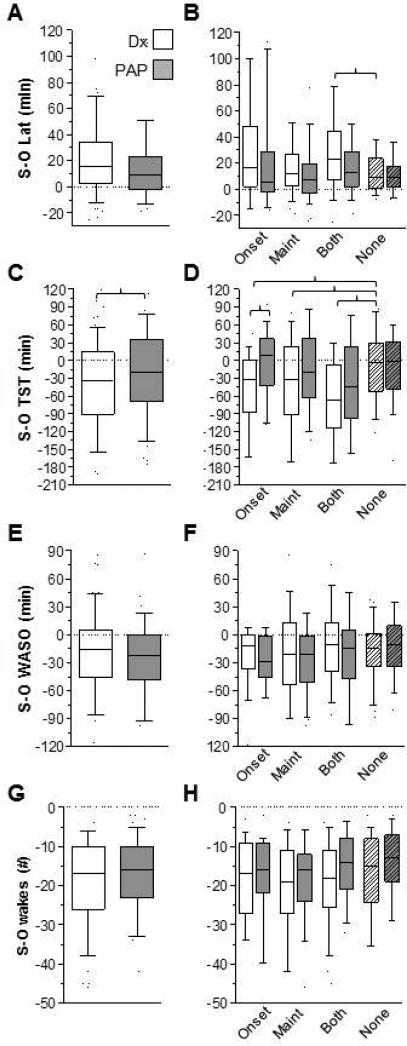
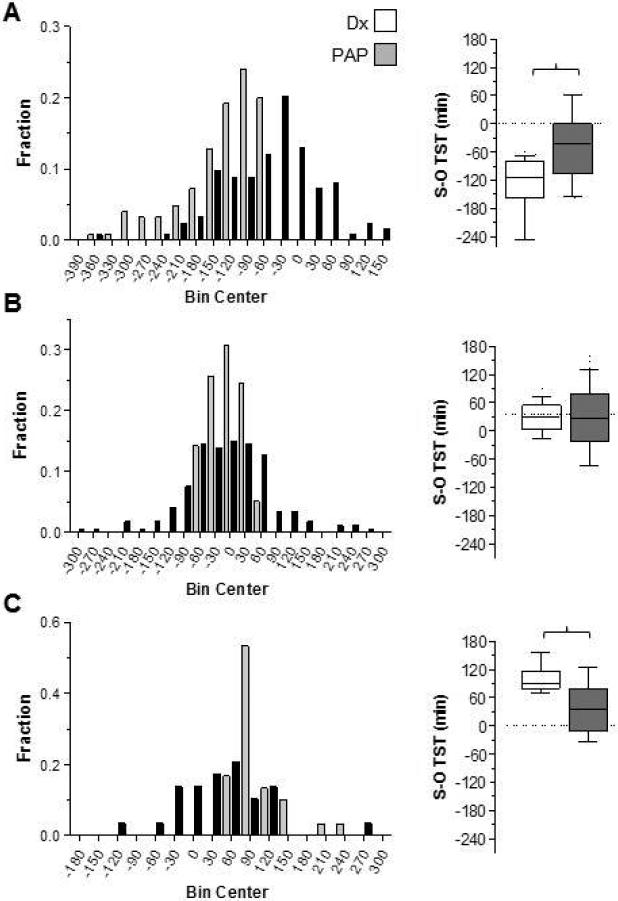
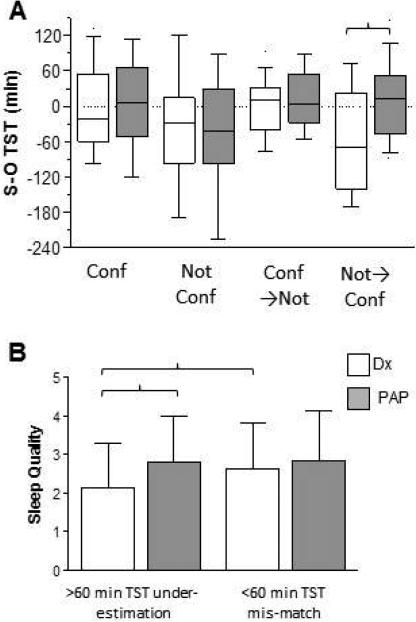
Results: Sleep latency was generally over-estimated, while wake after sleep onset and number of awakenings were under-estimated. None of these estimations differed between diagnostic and treatment polysomnograms. We observed a large spectrum of total sleep time misperception values during the diagnostic polysomnogram, with one third of the cohort under-estimating their total sleep time by at least 60 min. Of those with >60 minute misperception, we observed improved total sleep time perception during treatment polysomnography. Improved perception correlated with improvements in self-reported sleep quality and response confidence. We found no polysomnogram or demographic predictors of total sleep time misperception for the diagnostic polysomnogram, nor did we find objective correlates of improved perception during titration.
Conclusion: Our results suggest that misperception may improve with treatment of obstructive sleep apnea in patients who also exhibit misperception. Within subject changes in misperception are consistent with misperception being, at least to some extent, a state characteristic, which has implications for management of patients with comorbid insomnia and sleep apnea.
Keywords: Paradoxical insomnia; Self-report; Subjective.
Copyright © 2014 Elsevier Inc. All rights reserved.
Figures
References
-
- McCall WV, et al. Subjective estimates of sleep differ from polysomnographic measurements in obstructive sleep apnea patients. Sleep. 1995;18(8):646–50. - PubMed
-
- International Classification of Sleep Disorders: Diagnostic & Coding Manual. Second ed. American Academy of Sleep Medicine; Westchester: 2005.
-
- Bianchi MT, et al. The subjective-objective mismatch in sleep perception among those with insomnia and sleep apnea. J Sleep Res. 2013 - PubMed
-
- Vanable PA, et al. Sleep latency and duration estimates among sleep disorder patients: variability as a function of sleep disorder diagnosis, sleep history, and psychological characteristics. Sleep. 2000;23(1):71–9. - PubMed
Publication types
MeSH terms
Grants and funding
LinkOut - more resources
Full Text Sources
Other Literature Sources
Medical
