


Molecular mechanism and therapeutic modulation of high mobility group box 1 release and action: an updated review
- PMID: 24746113
- PMCID: PMC4056343
- DOI: 10.1586/1744666X.2014.909730
Molecular mechanism and therapeutic modulation of high mobility group box 1 release and action: an updated review
Abstract
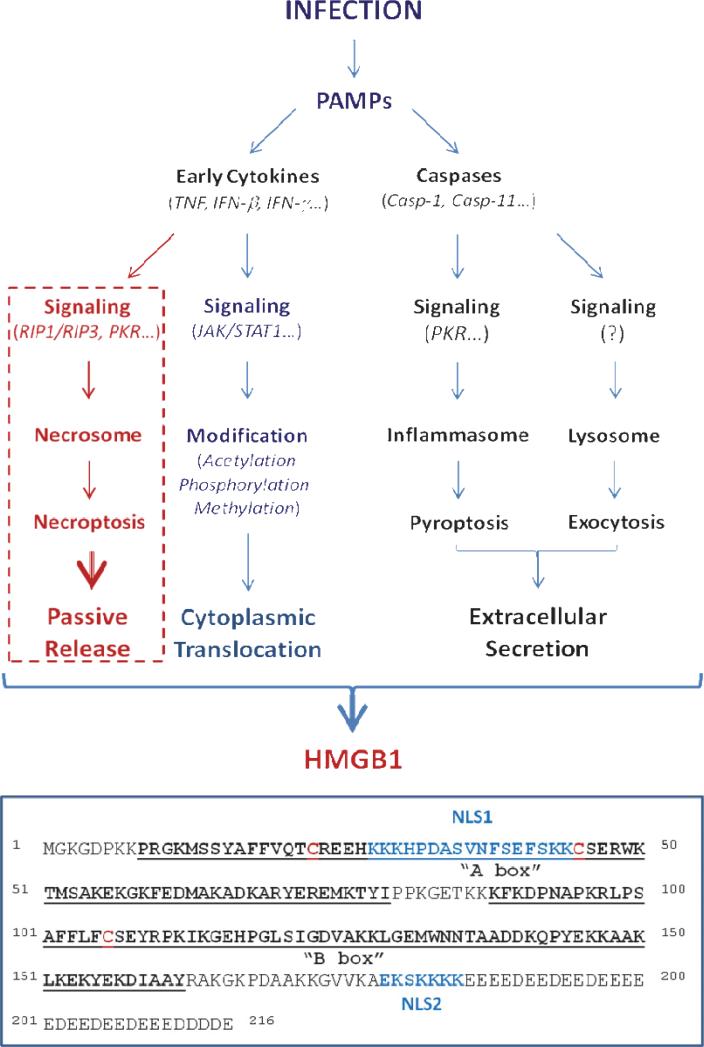
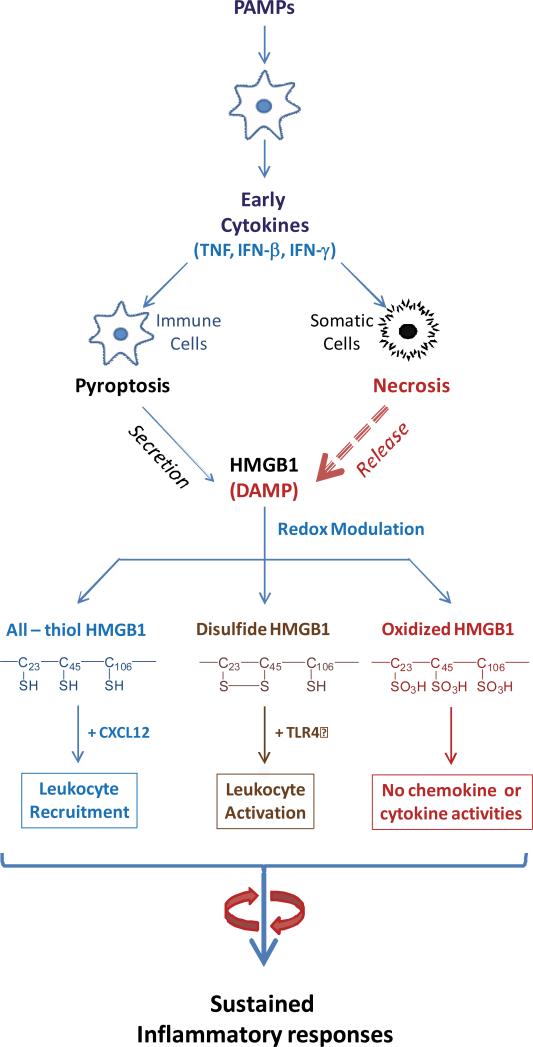
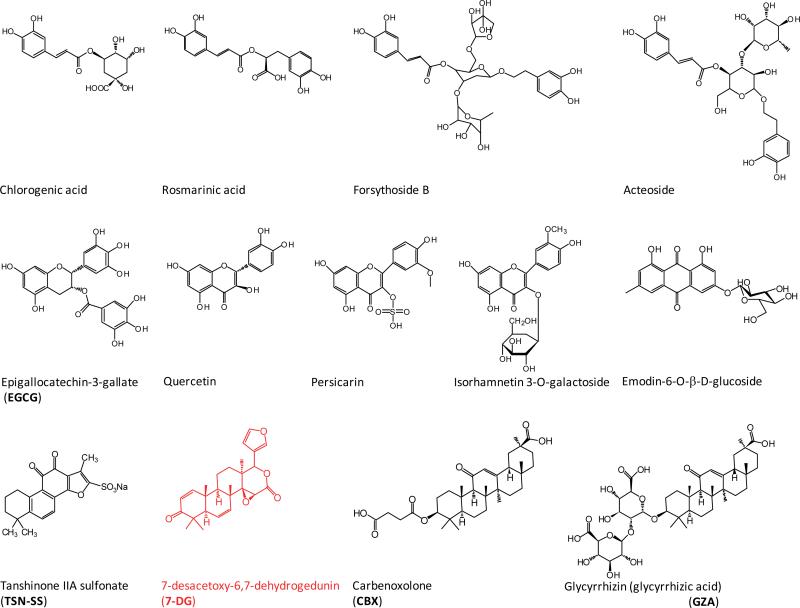
High mobility group box 1 (HMGB1) is an evolutionarily conserved protein, and is constitutively expressed in virtually all types of cells. Infection and injury converge on common inflammatory responses that are mediated by HMGB1 secreted from immunologically activated immune cells or passively released from pathologically damaged cells. Herein we review the emerging molecular mechanisms underlying the regulation of pathogen-associated molecular patterns (PAMPs)-induced HMGB1 secretion, and summarize many HMGB1-targeting therapeutic strategies for the treatment of infection- and injury-elicited inflammatory diseases. It may well be possible to develop strategies that specifically attenuate damage-associated molecular patterns (DAMPs)-mediated inflammatory responses without compromising the PAMPs-mediated innate immunity for the clinical management of infection- and injury-elicited inflammatory diseases.
Keywords: damage-associated molecular patterns; herbal components; high mobility group box 1; infection; injury; pathogen-associated molecular patterns; signaling.
Figures
References
-
- Wang H, Bloom O, Zhang M, et al. HMG-1 as a late mediator of endotoxin lethality in mice. Science. 1999;285:248–251. [These authors made the seminal discovery on the extracellular role of HMG-1 (now called HMGB1) as a late mediator of lethal systemic inflammation.] - PubMed
Publication types
MeSH terms
Substances
Grants and funding
LinkOut - more resources
Full Text Sources
Other Literature Sources
