


A new lncRNA, APTR, associates with and represses the CDKN1A/p21 promoter by recruiting polycomb proteins
- PMID: 24748121
- PMCID: PMC3991591
- DOI: 10.1371/journal.pone.0095216
A new lncRNA, APTR, associates with and represses the CDKN1A/p21 promoter by recruiting polycomb proteins
Abstract
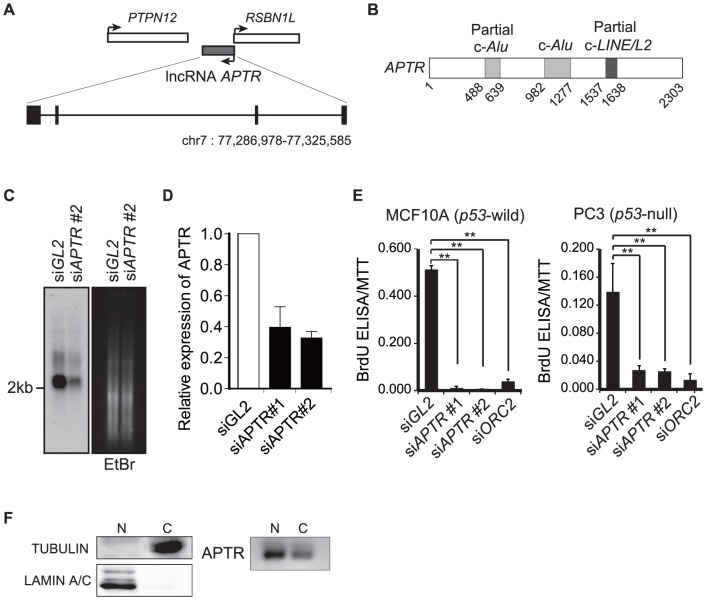
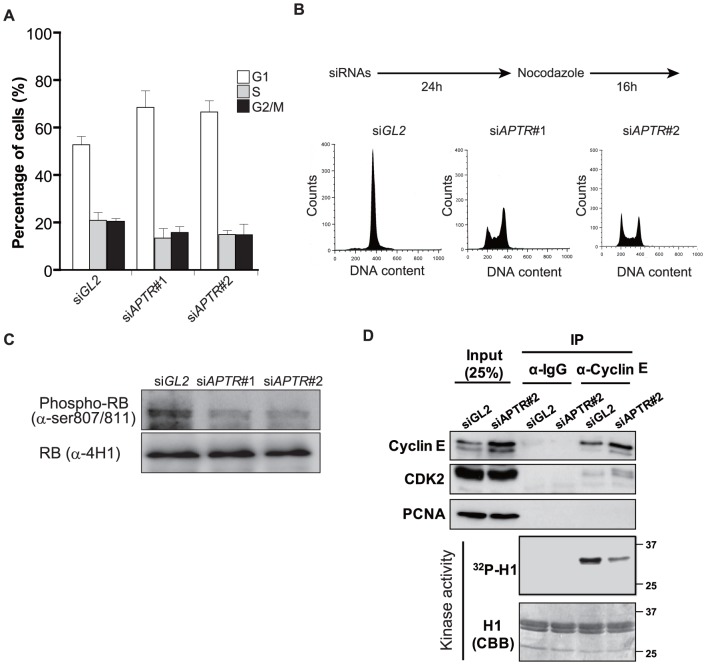
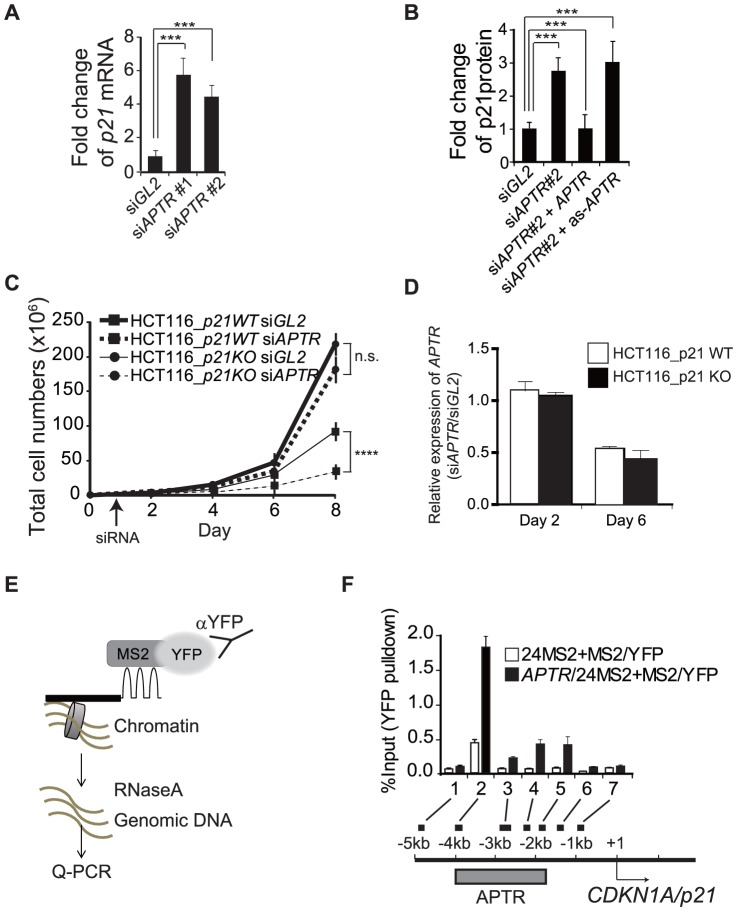
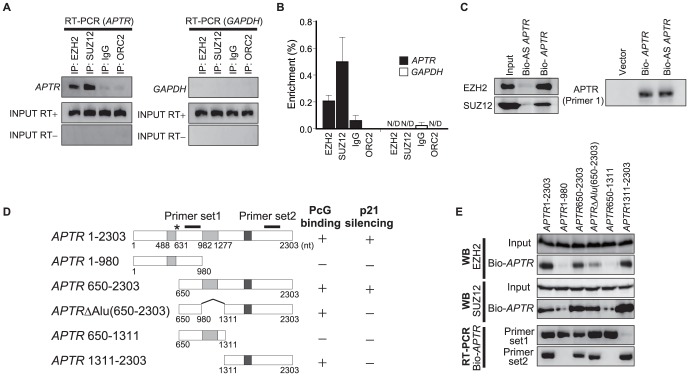
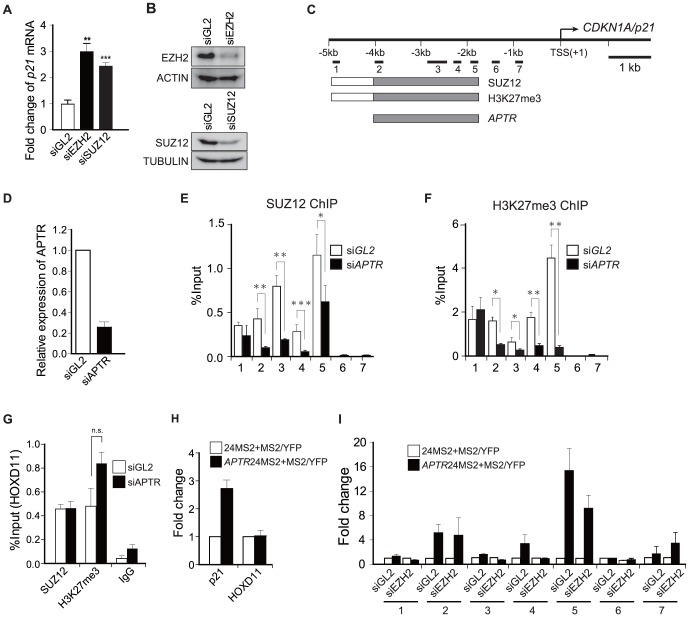
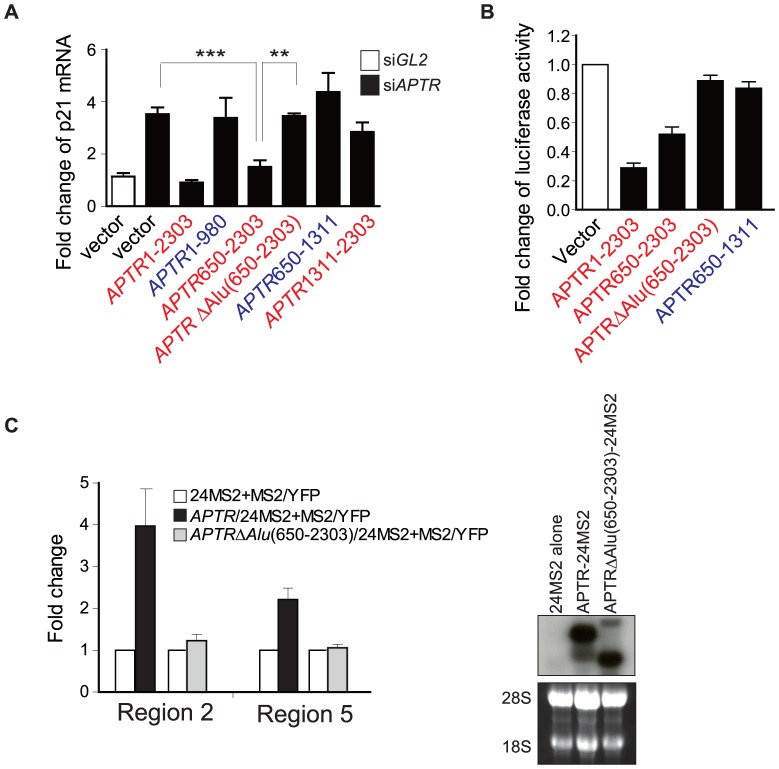
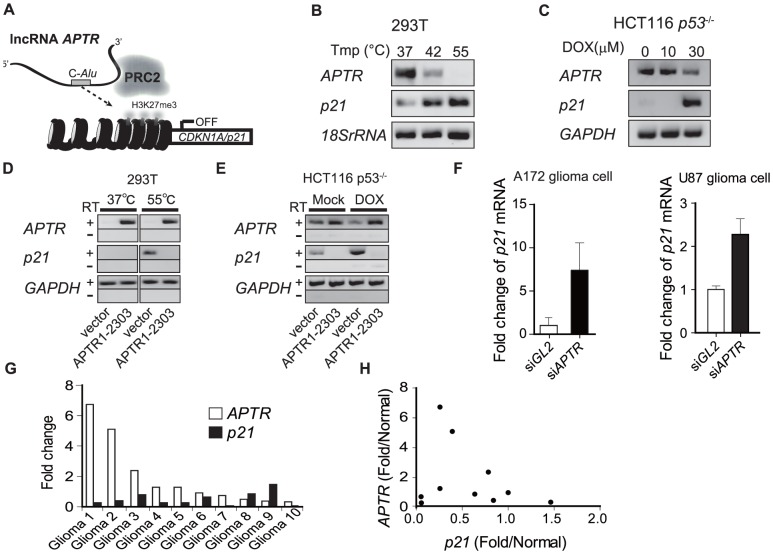
Long noncoding RNAs (lncRNAs) have emerged as a major regulator of cell physiology, but many of which have no known function. CDKN1A/p21 is an important inhibitor of the cell-cycle, regulator of the DNA damage response and effector of the tumor suppressor p53, playing a crucial role in tumor development and prevention. In order to identify a regulator for tumor progression, we performed an siRNA screen of human lncRNAs required for cell proliferation, and identified a novel lncRNA, APTR, that acts in trans to repress the CDKN1A/p21 promoter independent of p53 to promote cell proliferation. APTR associates with the promoter of CDKN1A/p21 and this association requires a complementary-Alu sequence encoded in APTR. A different module of APTR associates with and recruits the Polycomb repressive complex 2 (PRC2) to epigenetically repress the p21 promoter. A decrease in APTR is necessary for the induction of p21 after heat stress and DNA damage by doxorubicin, and the levels of APTR and p21 are anti-correlated in human glioblastomas. Our data identify a new regulator of the cell-cycle inhibitor CDKN1A/p21 that acts as a proliferative factor in cancer cell lines and in glioblastomas and demonstrate that Alu elements present in lncRNAs can contribute to targeting regulatory lncRNAs to promoters.
Conflict of interest statement
Figures
References
-
- Bracken AP, Helin K (2009) Polycomb group proteins: navigators of lineage pathways led astray in cancer. Nat Rev Cancer 9: 773–784. - PubMed
Publication types
MeSH terms
Substances
Grants and funding
LinkOut - more resources
Full Text Sources
Other Literature Sources
Research Materials
Miscellaneous
