


Diagnosis and management of eosinophilic asthma: a US perspective
- PMID: 24748808
- PMCID: PMC3990389
- DOI: 10.2147/JAA.S39119
Diagnosis and management of eosinophilic asthma: a US perspective
Abstract
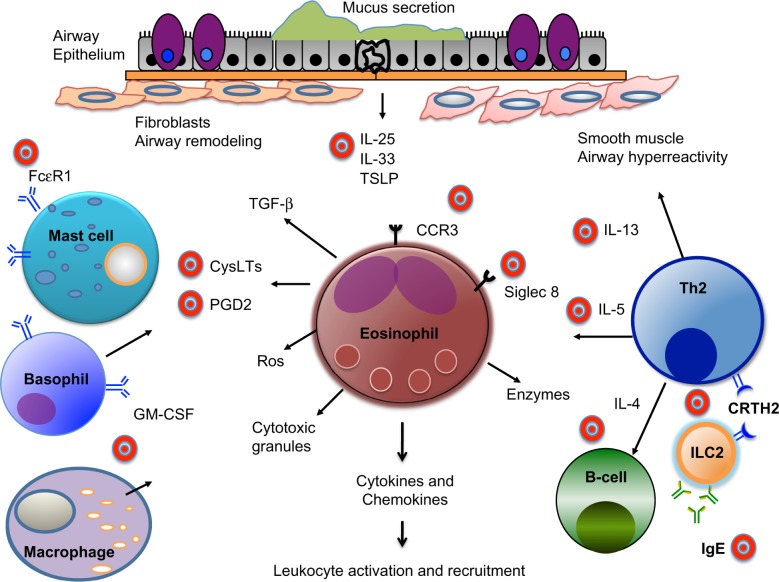
Eosinophilic asthma is now recognized as an important subphenotype of asthma based on the pattern of inflammatory cellular infiltrate in the airway. Eosinophilic asthma can be associated with increased asthma severity, atopy, late-onset disease, and steroid refractoriness. Induced sputum cell count is the gold standard for identifying eosinophilic inflammation in asthma although several noninvasive biomarkers, including fractional exhaled nitric oxide and periostin, are emerging as potential surrogates. As novel therapies and biologic agents become increasingly available, there is an increased need for specific phenotype-directed treatment strategies. Greater recognition and understanding of the unique immunopathology of this asthma phenotype has important implications for management of the disease and the potential to improve patient outcomes. The present review provides a summary of the clinical features, pathogenesis, diagnosis, and management of eosinophilic asthma.
Keywords: IL-13; IL-4; Th2; allergy; asthma; eosinophil.
Figures
References
-
- Bateman ED, Boushey HA, Bousquet J, et al. GOAL Inverstigators Group Can guideline-defined asthma control be achieved? The Gaining Optimal Asthma Control study. Am J Respir Crit Care Med. 2004;170(8):836–844. - PubMed
-
- Centers for Disease Control and Prevention Vital signs: asthma prevalence, disease characteristics, and self-management education: United States, 2001–2009. MMWR Morb Mortal Wkly Rep. 2011;60(17):547–552. - PubMed
-
- Cisternas MG, Blanc PD, Yen IH, et al. A comprehensive study of the direct and indirect costs of adult asthma. J Allergy Clin Immunol. 2003;111:1212–1218. - PubMed
-
- Wenzel SE. Asthma: defining of the persistent adult phenotypes. Lancet. 2006;368:804–813. - PubMed
-
- Anderson GP. Endotyping asthma: new insights into key pathogenic mechanisms in a complex, heterogeneous disease. Lancet. 2008;372:1107–1119. - PubMed
Publication types
Grants and funding
LinkOut - more resources
Full Text Sources
Other Literature Sources
Medical
