


Aging effects on QT interval: Implications for cardiac safety of antipsychotic drugs
- PMID: 24748877
- PMCID: PMC3981979
- DOI: 10.3969/j.issn.1671-5411.2014.01.005
Aging effects on QT interval: Implications for cardiac safety of antipsychotic drugs
Abstract
Objectives: To explore the effect of aging on cardiac toxicity specifically the interaction of age and antipsychotic drugs to alter the QT interval.
Methods: THE MEDLINE DATABASES WERE SEARCHED USING THE OVIDSP PLATFORMS WITH THE SEARCH STRATEGY: "QT interval" or "QT" and "age" or "aging". The entry criteria were: over 10,000 apparently healthy individuals with data on both sexes; QT interval corrected for heart rate (QTc) and an expression of its variance for multiple age decades extending into the older ages.
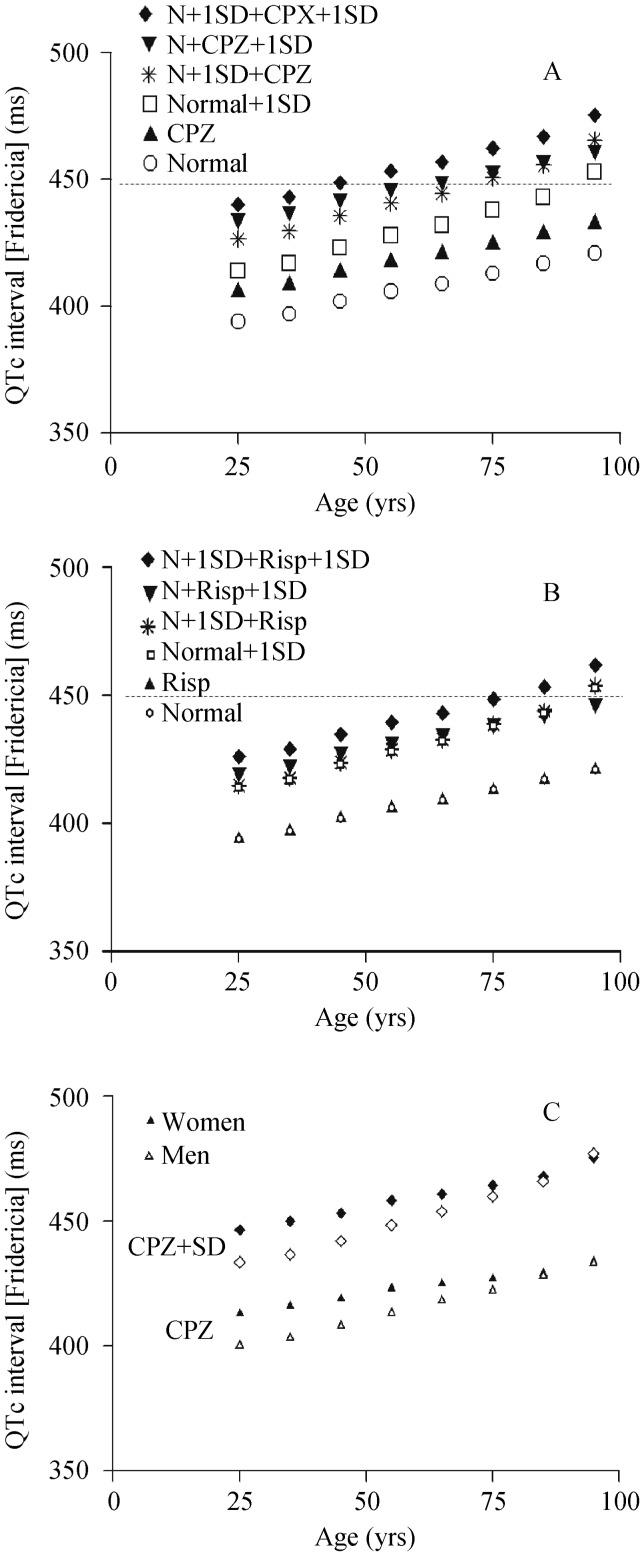
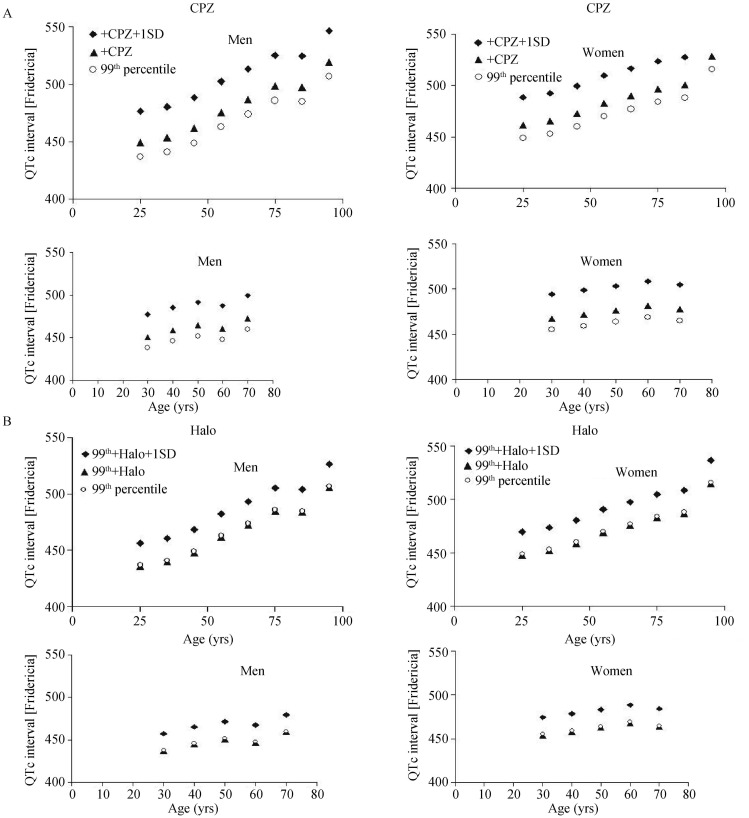
Results: QTc increased in duration with increasing age. Considering a modest one SD increment in QTc in the normal population, the addition of Chlorpromazine produced a QTc on average greater than 450 ms for ages 70 years and older. Risperidone, that did not on average alter QTc, would be expected to produce a QTc of 450 ms in persons in their mid 70 years under some circumstances. QTc prolongation > 500 ms with antipsychotic drugs is more likely for persons with QTc initially at the 99(th) percentile. It may occur with Haloperidol which does not on average alter QTc.
Conclusions: The range of values for the QT interval in apparently normal older men or women, when combined with the range of expected QT interval changes induced by antipsychotic drugs, can readily be associated with prolonged QTc. Individuals with QTc at the 99(th) percentile may have serious QTc prolongation with antipsychotic drugs even those that are not usually associated with QTc prolongation.
Keywords: Aging; Antipsychotic drugs; Cardiac safety; Psychotropic drugs; QT interval.
Figures
References
-
- Rabkin SW. Electrocardiographic abnormalities in apparently healthy men and the risk of sudden death. Drugs. 1984;28:28–45. - PubMed
-
- Elming H, Holm E, Jun L, et al. The prognostic value of the QT interval and QT interval dispersion in all-cause and cardiac mortality and morbidity in a population of Danish citizens. Eur Heart J. 1998;19:1391–1400. - PubMed
-
- Okin PM, Devereux RB, Howard B V, et al. Assessment of QT interval and QT dispersion for prediction of all-cause and cardiovascular mortality in American Indians: The Strong Heart Study. Circulation. 2000;101:61–66. - PubMed
LinkOut - more resources
Full Text Sources