Esophageal pH and Combined Impedance-pH Monitoring in Children
- PMID: 24749083
- PMCID: PMC3990778
- DOI: 10.5223/pghn.2014.17.1.13
Esophageal pH and Combined Impedance-pH Monitoring in Children
Abstract
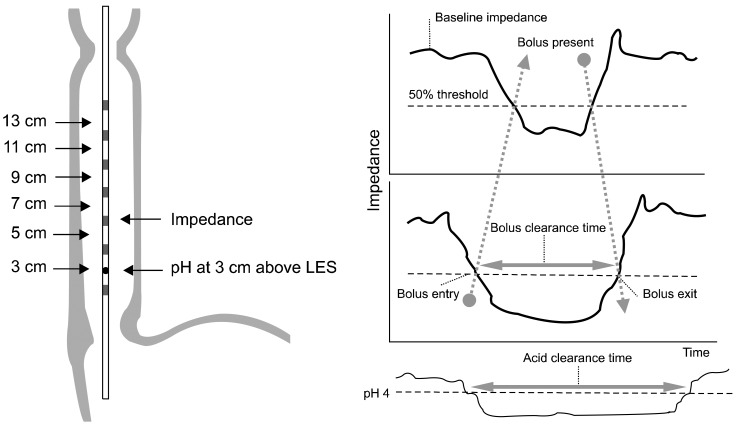
Esophageal pH monitoring is considered the gold standard for the diagnosis of gastroesophageal reflux disease because of the normal ranges across the pediatric age range. However, this method can only detect acid reflux. Multichannel intraluminal impedance-pH (MII-pH) monitoring has recently been used for the detection of bolus reflux in infants and children. This method allows for the detection of liquid, gas or mixed reflux in addition to acid, weakly acidic or weakly alkaline reflux. MII-pH monitoring can record the direction of flow and the height of reflux, which are useful parameters to identify an association between symptoms and reflux. However, the technique is limited by its high cost and the lack of normative data of MII-pH in the pediatric population. Despite certain limitations, MII-pH monitoring will become more common and gradually replace pH monitoring in the future, because pH monitoring is part of MII-pH.
Keywords: Child; Esophageal pH monitoring; Gastroesophageal reflux; Impedance-pH monitoring; Infant.
Figures
References
-
- Vandenplas Y, Rudolph CD, Di Lorenzo C, Hassall E, Liptak G, Mazur L, et al. Pediatric gastroesophageal reflux clinical practice guidelines: joint recommendations of the North American Society for Pediatric Gastroenterology, Hepatology, and Nutrition (NASPGHAN) and the European Society for Pediatric Gastroenterology, Hepatology, and Nutrition (ESPGHAN) J Pediatr Gastroenterol Nutr. 2009;49:498–547. - PubMed
-
- Sherman PM, Hassall E, Fagundes-Neto U, Gold BD, Kato S, Koletzko S, et al. A global, evidence-based consensus on the definition of gastroesophageal reflux disease in the pediatric population. Am J Gastroenterol. 2009;104:1278–1295. quiz 1296. - PubMed
-
- Spencer J. Prolonged pH recording in the study of gastro-oesophageal reflux. Br J Surg. 1969;56:912–914. - PubMed
-
- Rudolph CD, Mazur LJ, Liptak GS, Baker RD, Boyle JT, Colletti RB, et al. North American Society for Pediatric Gastroenterology and Nutrition. Guidelines for evaluation and treatment of gastroesophageal reflux in infants and children: recommendations of the North American Society for Pediatric Gastroenterology and Nutrition. J Pediatr Gastroenterol Nutr. 2001;32(Suppl 2):S1–S31. - PubMed
-
- Silny J. Intraluminal multiple electric impedance procedure for measurement of gastrointestinal motility. Neurogastroenterol Motil. 1991;3:151–162.
Publication types
LinkOut - more resources
Full Text Sources
Other Literature Sources