


Biological evaluation of liposome-encapsulated hemoglobin surface-modified with a novel PEGylated nonphospholipid amphiphile
- PMID: 24749870
- PMCID: PMC4146621
- DOI: 10.1111/aor.12304
Biological evaluation of liposome-encapsulated hemoglobin surface-modified with a novel PEGylated nonphospholipid amphiphile
Abstract
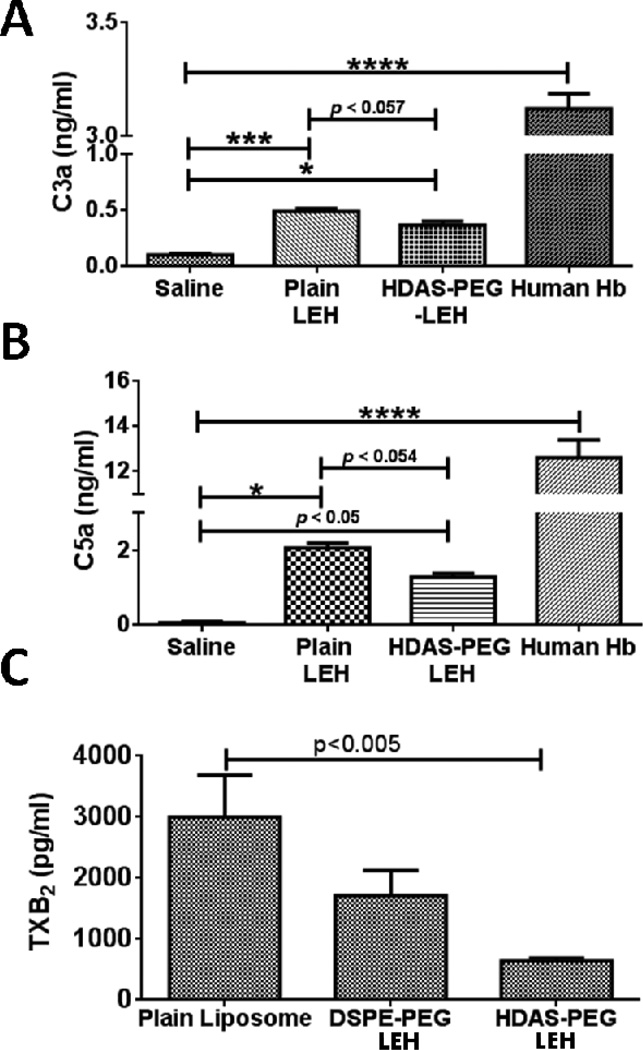
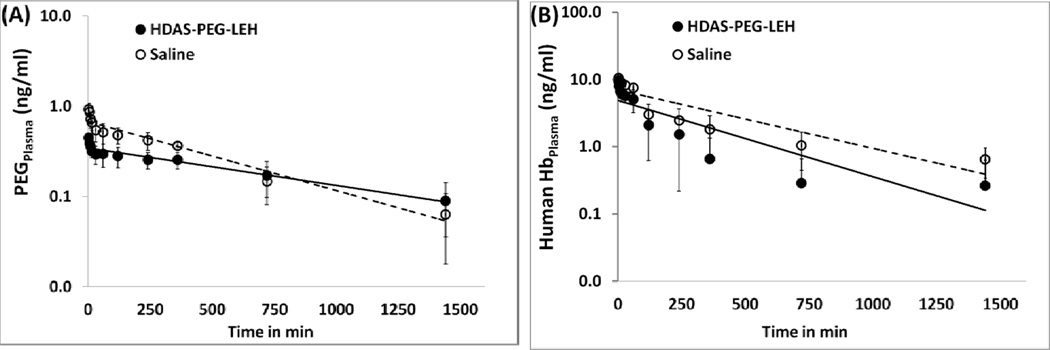
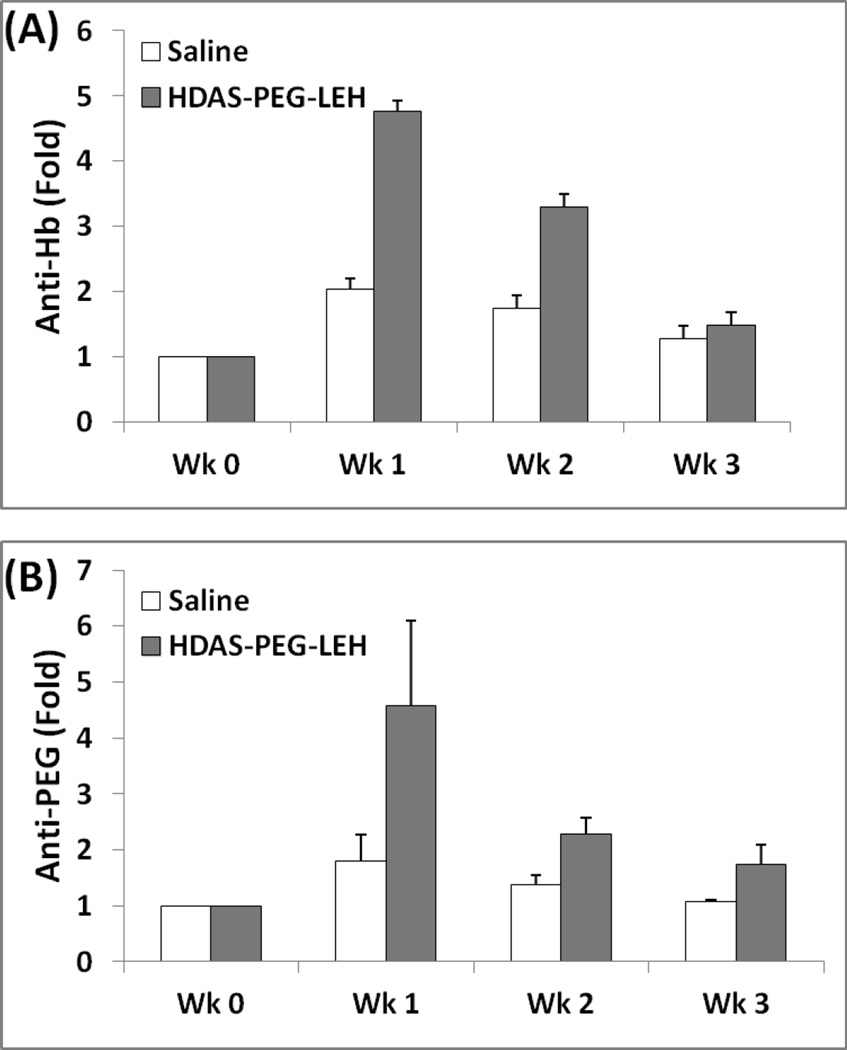
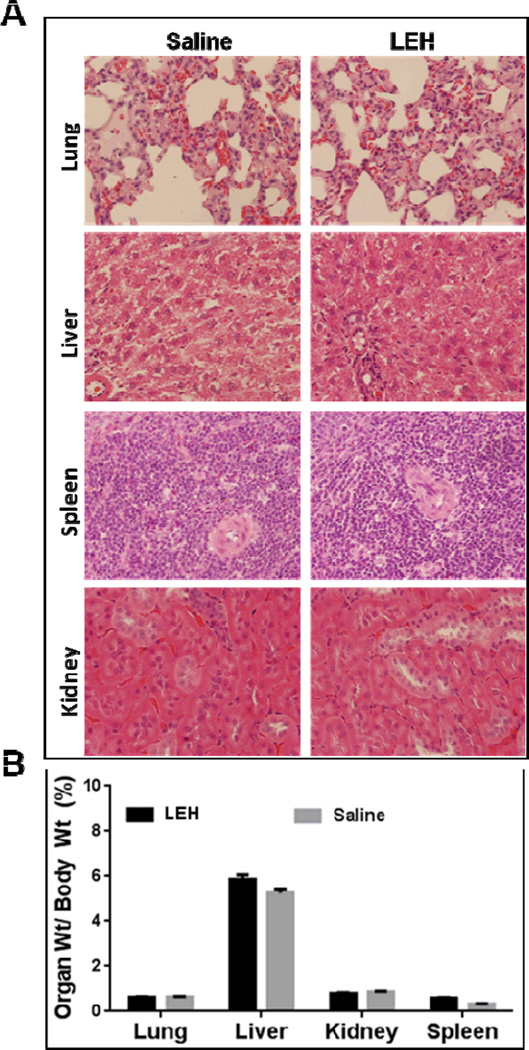
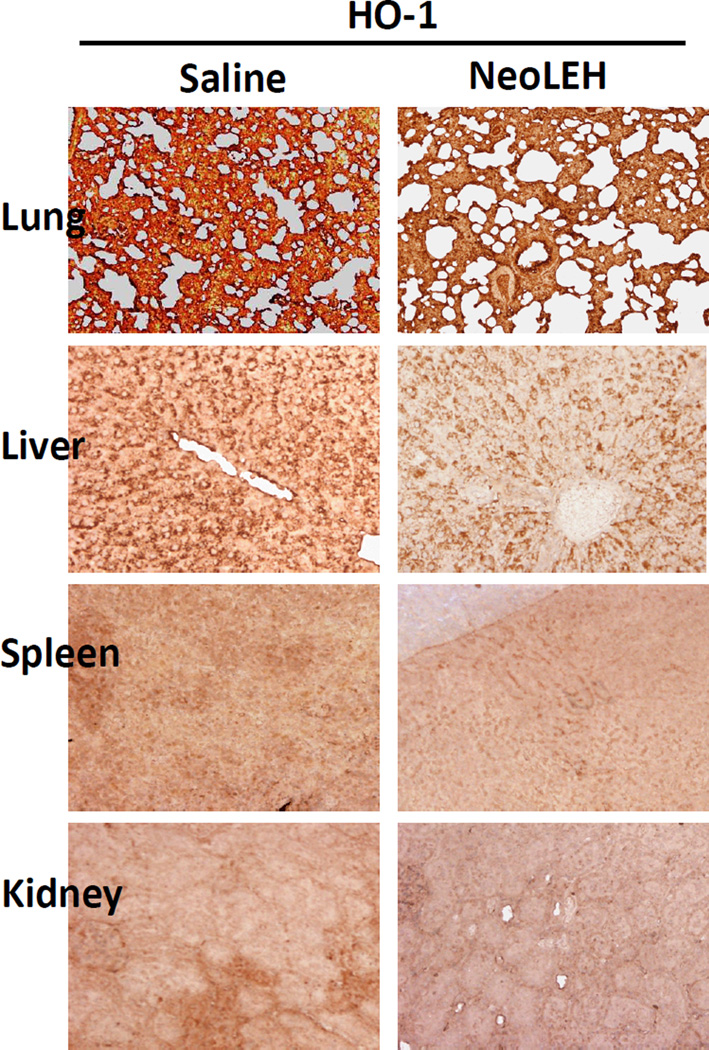
Traumatic injury is often associated with hemorrhagic shock. Liposome-encapsulated hemoglobin (LEH) is being developed as an artificial oxygen carrier to address post-hemorrhage oxygen and volume deficit. Here, we report a new composition of LEH based on the use of polyethylene glycol (PEG2K ) conjugated with nonphospholipid hexadecylcarbamoylmethylhexadecanoate (HDAS) to modify the surface of LEH particles. LEH was manufactured by the high-pressure homogenization method using dipalmitoylphosphatidylcholine (∼38 mol%), cholesterol (∼38 mol%), HDAS (∼20 mol%), and highly purified stroma-free human hemoglobin. HDAS-PEG2K was postinserted into the resultant LEH to generate HDAS-PEG2K -LEH. We investigated the potential immune response to HDAS-PEG2K -LEH in a mice model. At the same time, the preparation was tested in a rat model to study the effect of repeated HDAS-PEG2K -LEH injection over 4 weeks. We found that HDAS-PEG2K modification substantially reduced the circulating levels of anaphylatoxins C3a and C5a, as well as plasma levels of thromboxane B2, in mice. Repeated injections of HDAS-PEG2K -LEH in rats did not appear to alter its clearance profile after 4 weeks of treatment. No antibody response against human hemoglobin or PEG was detected in rat plasma. Histological observations of lung, liver, spleen, and kidney were not significantly different between saline-treated rats and HDAS-PEG2K -LEH-treated rats. Immunohistochemical staining for rat heme oxygenase-1 (HO-1) did not show induced expression of HO-1 in these organs. These results suggest that the new surface modification of LEH is immune-neutral and does not adversely affect histology even after repeated administration.
Keywords: Complement; Liposome-encapsulated hemoglobin; Oxygen delivery.
Copyright © 2014 International Center for Artificial Organs and Transplantation and Wiley Periodicals, Inc.
Figures
References
-
- Kauvar DS, Lefering R, Wade CE. Impact of hemorrhage on trauma outcome: an overview of epidemiology, clinical presentations, and therapeutic considerations. J Trauma. 2006;60:S3–S11. - PubMed
-
- Awasthi V. Pharmaceutical aspects of hemoglobin-based oxygen carriers. Curr Drug Deliv. 2005;2:133–142. - PubMed
-
- Phillips WT, Klipper RW, Awasthi VD, Rudolph AS, Cliff R, Kwasiborski V, et al. Polyethylene glycol-modified liposome-encapsulated hemoglobin: a long circulating red cell substitute. J Pharmacol Exp Ther. 1999;288:665–670. - PubMed
-
- Takaori M, Fukui A. Treatment of massive hemorrhage with liposome encapsulated human hemoglobin (NRC) and hydroxyethyl starch (HES) in beagles. Artif Cells Blood Substit Immobil Biotechnol. 1996;24:643–653. - PubMed
-
- Usuba A, Motoki R, Sakaguchi K, Suzuki K, Kamitani T. Effect of neo red cells on hemodynamics and blood gas transport in canine hemorrhagic shock and its safety for vital organs. Artif Cells Blood Substit Immobil Biotechnol. 1994;22:503–516. - PubMed
Publication types
MeSH terms
Substances
Grants and funding
LinkOut - more resources
Full Text Sources
Other Literature Sources
