Regression of atherosclerosis: insights from animal and clinical studies
- PMID: 24751561
- PMCID: PMC4262135
- DOI: 10.1016/j.aogh.2013.12.001
Regression of atherosclerosis: insights from animal and clinical studies
Abstract
Background: Based on studies that date back to the 1920s, regression and stabilization of atherosclerosis in humans has gone from just a dream to one that is achievable. Review of the literature indicates that the successful attempts at regression generally applied robust measures to improve plasma lipoprotein profiles. Examples include extensive lowering of plasma concentrations of atherogenic apolipoprotein B and enhancement of reverse cholesterol transport from atheromata to the liver.
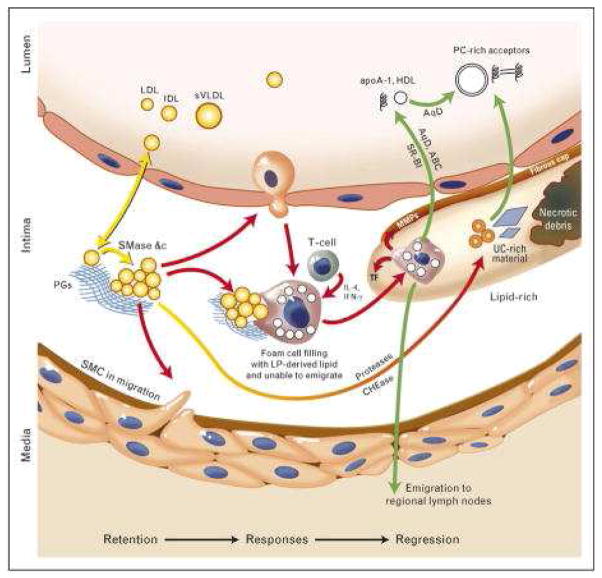
Findings: Possible mechanisms responsible for lesion shrinkage include decreased retention of atherogenic apolipoprotein B within the arterial wall, efflux of cholesterol and other toxic lipids from plaques, emigration of lesional foam cells out of the arterial wall, and influx of healthy phagocytes that remove necrotic debris as well as other components of the plaque. This review will highlight the role key players such as LXR, HDL and CCR7 have in mediating regression.
Conclusion: Although much progress has been made, there are many unanswered questions. There is, therefore, a clear need for preclinical and clinical testing of new agents expected to facilitate atherosclerosis regression with the hope that additional mechanistic insights will allow further progress.
Keywords: CCR7; HDL; atherosclerosis; macrophages; regression.
Copyright © 2014 Icahn School of Medicine at Mount Sinai. Published by Elsevier Inc. All rights reserved.
Figures
References
-
- Blankenhorn DH, Hodis HN. George Lyman Duff Memorial Lecture. Arterial imaging and atherosclerosis reversal. Arterioscler Thromb. 1994;14:177–92. - PubMed
-
- Schell WD, Myers JN. Regression of atherosclerosis: a review. Prog Cardiovasc Dis. 1997;39:483–96. - PubMed
-
- Stein Y, Stein O. Does therapeutic intervention achieve slowing of progression or bona fide regression of atherosclerotic lesions? Arterioscler Thromb Vasc Biol. 2001;21:183–8. - PubMed
-
- Williams KJ, et al. Intravenously administered lecithin liposomes: a synthetic antiatherogenic lipid particle. Perspect Biol Med. 1984;27:417–31. - PubMed
Publication types
MeSH terms
Substances
Grants and funding
LinkOut - more resources
Full Text Sources
Other Literature Sources
Medical