


Gram negative wound infection in hospitalised adult burn patients--systematic review and metanalysis-
- PMID: 24751699
- PMCID: PMC3994014
- DOI: 10.1371/journal.pone.0095042
Gram negative wound infection in hospitalised adult burn patients--systematic review and metanalysis-
Abstract
Background: Gram negative infection is a major determinant of morbidity and survival. Traditional teaching suggests that burn wound infections in different centres are caused by differing sets of causative organisms. This study established whether Gram-negative burn wound isolates associated to clinical wound infection differ between burn centres.
Methods: Studies investigating adult hospitalised patients (2000-2010) were critically appraised and qualified to a levels of evidence hierarchy. The contribution of bacterial pathogen type, and burn centre to the variance in standardised incidence of Gram-negative burn wound infection was analysed using two-way analysis of variance.
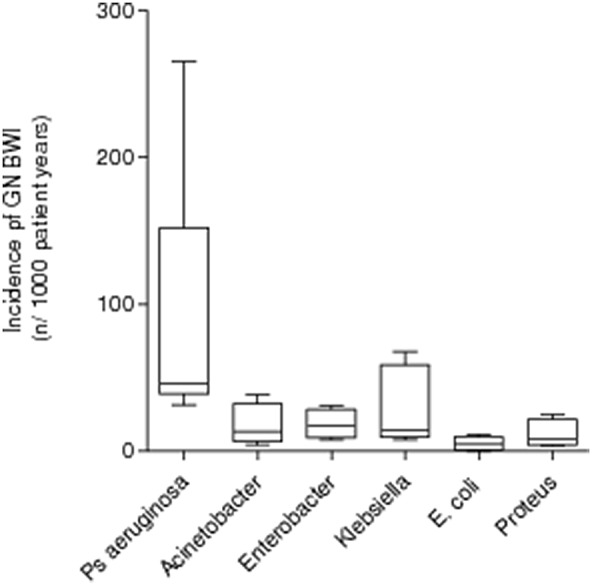
Primary findings: Pseudomonas aeruginosa, Klebsiella pneumoniae, Acinetobacter baumanni, Enterobacter spp., Proteus spp. and Escherichia coli emerged as the commonest Gram-negative burn wound pathogens. Individual pathogens' incidence did not differ significantly between burn centres (F (4, 20) = 1.1, p = 0.3797; r2 = 9.84).
Interpretation: Gram-negative infections predominate in burn surgery. This study is the first to establish that burn wound infections do not differ significantly between burn centres. It is the first study to report the pathogens responsible for the majority of Gram-negative infections in these patients. Whilst burn wound infection is not exclusive to these bacteria, it is hoped that reporting the presence of this group of common Gram-negative "target organisms" facilitate clinical practice and target research towards a defined clinical demand.
Conflict of interest statement
Figures
References
-
- Boucher HW, Talbot GH, Bradley JS, Edwards JE, Gilbert D, et al. (2009) Bad bugs, no drugs: no ESKAPE! An update from the Infectious Diseases Society of America. Clinical Infectious Diseases 48: 1–12. - PubMed
-
- Herndon DN (2007) Total burn care: Elsevier Health Sciences.
-
- Ipaktchi K, Mattar A, Niederbichler AD, Hoesel LM, Vollmannshauser S, et al. (2006) Attenuating burn wound inflammatory signaling reduces systemic inflammation and acute lung injury. Journal of Immunology 177: 8065–8071. - PubMed
Publication types
MeSH terms
LinkOut - more resources
Full Text Sources
Other Literature Sources
Medical
Miscellaneous
