A survey of psychological support provision for people with inflammatory arthritis in secondary care in England
- PMID: 24753071
- PMCID: PMC4282402
- DOI: 10.1002/msc.1071
A survey of psychological support provision for people with inflammatory arthritis in secondary care in England
Abstract
Objectives: The consequences of inflammatory arthritis can include depression, anxiety and low mood, reducing patients' quality of life and increasing pressure on the healthcare system. Treatment guidelines recommend psychological support, but data are lacking on the provision available.
Methods: A postal survey concerning psychological support provision was sent to rheumatology units in 143 acute trusts across England. Nurses from 73 rheumatology units (51%) responded.
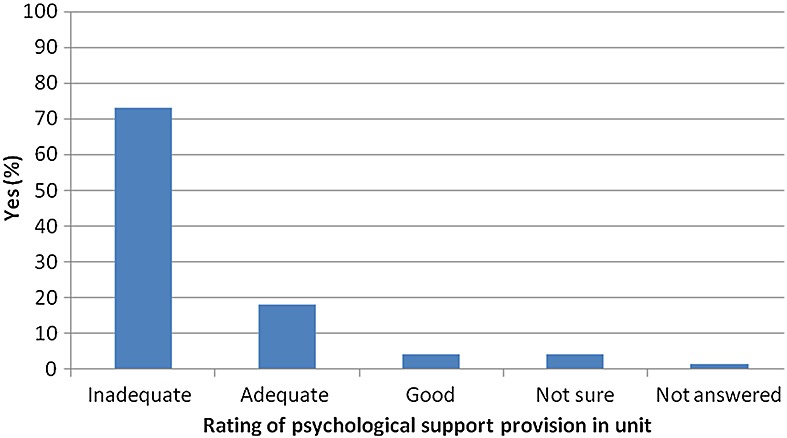
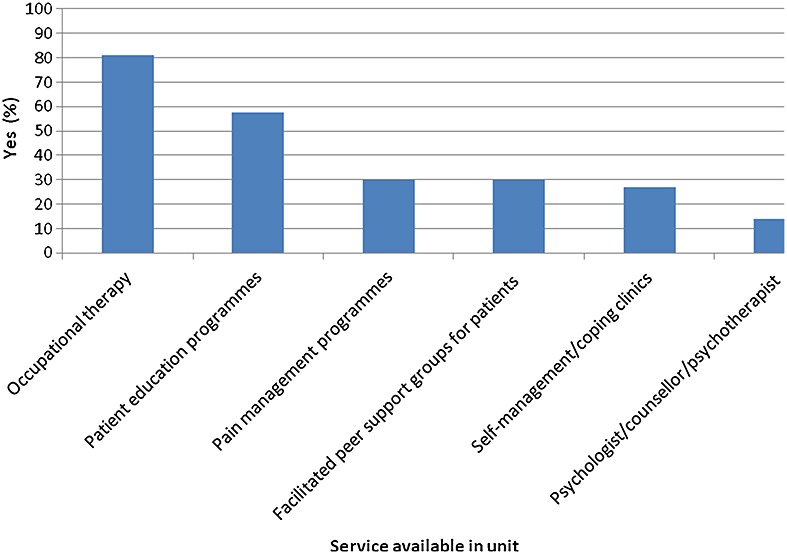
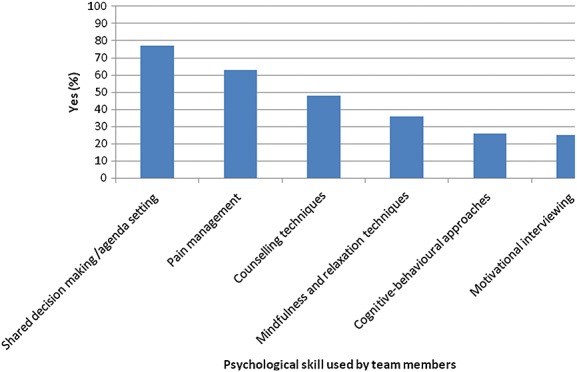
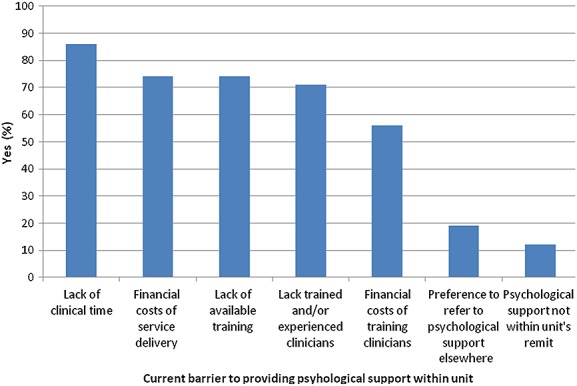
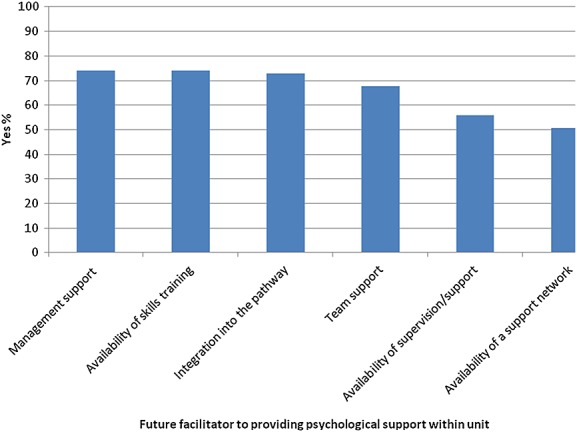
Results: Overall, 73% rated their unit's psychological support provision as 'inadequate' and only 4% rated it as 'good'. Few units believed that psychological support did not fall within their remit (12%), yet only 8% had a psychologist in the team. Most units (68%) did not routinely screen patients to identify psychological difficulties. Referral to other service providers was reported in 42% of units, with 3% very satisfied with this provision. Within units, services containing elements of psychological support ranged from occupational therapy (81%) to psychology/counselling (14%). Psychological approaches used by team members ranged from shared decision making (77%) to cognitive-behavioural approaches (26%). The current barriers to providing psychological support were lack of clinical time and available training (86% and 74%, respectively), and delivery costs (74%). Future facilitators included management support (74%) and availability of skills training (74%).
Conclusions: Rheumatology units viewed psychological support provision as part of their remit but rated their overall provision as inadequate, despite some team members using psychological skills. To improve provision, clinicians' training needs must be addressed and organizational support generated, and further research needs to define adequate psychological support provision from the patient perspective.
Keywords: Barriers and facilitators; inflammatory arthritis; psychological support provision; resources.
© 2014 The Authors. Musculoskeletal Care published by John Wiley & Sons Ltd.
Figures
References
-
- Abelson B, Rupel A, Pincus T. Limitations of a biomedical model to explain socioeconomic disparities in mortality of rheumatic and cardiovascular diseases. Clinical and Experimental Rheumatology. 2008;26(Suppl. 51):S25–S34. - PubMed
-
- Arthritis Care. Arthritis hurts: The emotional impact of arthritis. London: Arthritis Care; 2011.
-
- Arthritis Research UK. Twice as likely: Putting long term conditions and depression on the agenda. 2012. Available at http://www.arthritisresearchuk.org/news/press-releases/2012/april/twice-... [Accessed 19 March 2014]
-
- Astin J, Beckner W, Soeken K, Hochberg M, Berman B. Psychological interventions for rheumatoid arthritis: A meta-analysis of randomized controlled trials. Arthritis and Rheumatology. 2002;47:291–302. - PubMed
-
- Bower P, Gilbody S. Stepped care in psychological therapies: Access, effectiveness and efficiency. British Journal of Psychiatry. 2005;186:11–17. - PubMed
Publication types
MeSH terms
Grants and funding
LinkOut - more resources
Full Text Sources
Other Literature Sources
Medical