


Medicare readmission rates showed meaningful decline in 2012
- PMID: 24753966
- PMCID: PMC3983725
- DOI: 10.5600/mmrr.003.02.b01
Medicare readmission rates showed meaningful decline in 2012
Abstract
Objective: Descriptive analysis of 30-day, all-cause hospital readmission rate patterns from 2007-2012.
Population: Medicare FFS beneficiaries experiencing at least one acute inpatient hospital stay.
Methods: Using Chronic Condition Data Warehouse claims, we estimate unadjusted, monthly, readmission rates for the nation, within the Dartmouth Hospital Referral Regions (HRR), and compare participating and non-participating hospitals in the Partnership for Patients (P4P) program (overall and by number of inpatient beds at each facility).
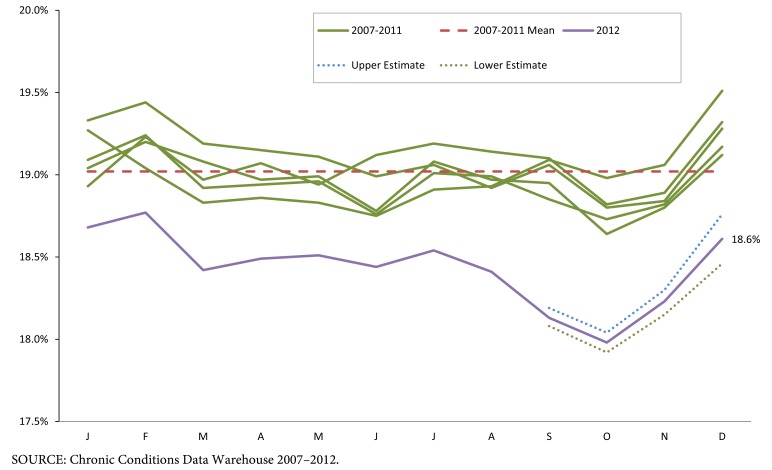
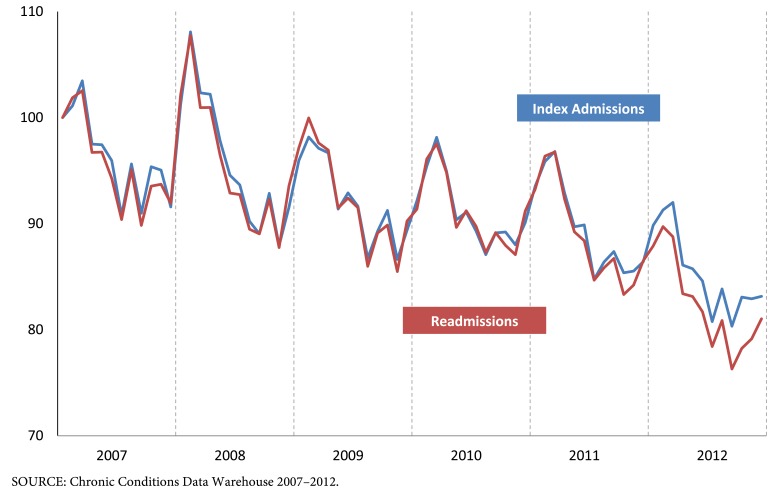
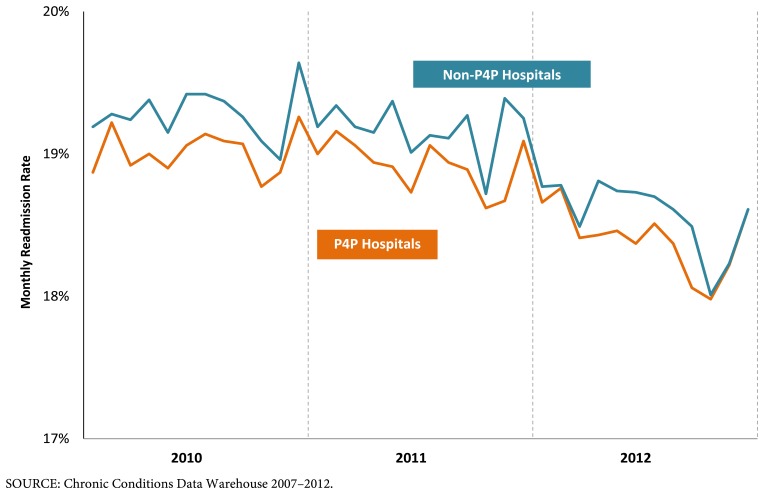
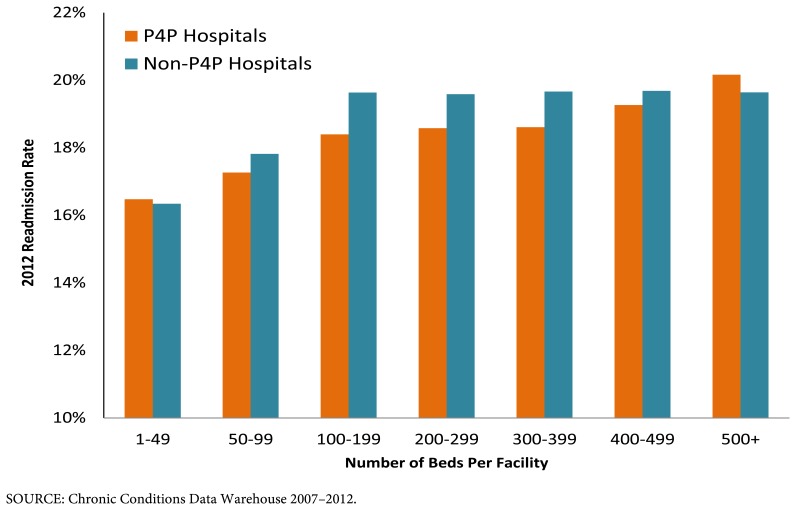
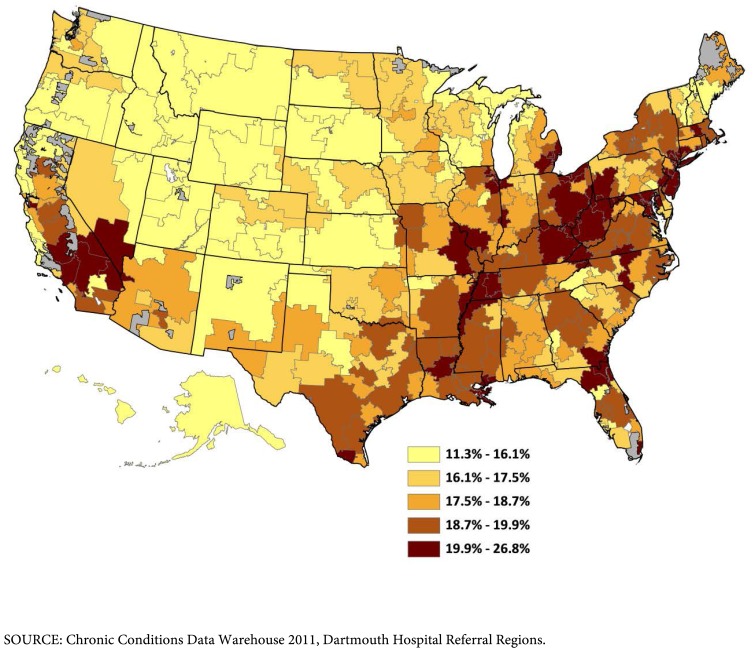
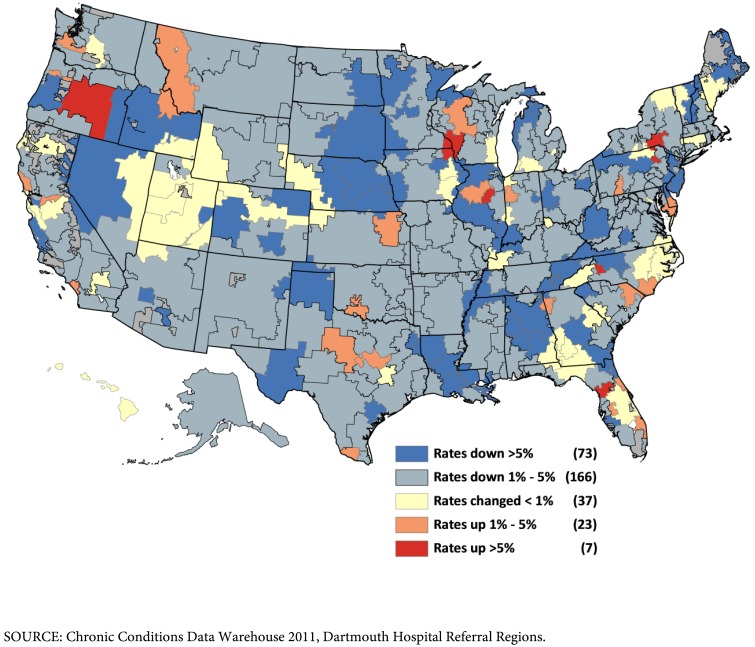
Results: From 2007 through 2011, the national 30-day, all-cause, hospital readmission rate averaged 19 percent. During calendar year 2012, the readmission rate averaged 18.4 percent. Of the 306 HRRs, rates in 166 HRRs fell by between 1 and 5 percent, while rates dropped by more than 5 percent in 73 HRRs, with the largest reduction in Longview, Texas. Rates increased by more than 1 percent in only 30 HRRs, with the largest increase in Bloomington, Illinois. Readmission rates at hospitals participating in the P4P program have been, on average, consistently lower than the rates at non-participating hospitals within all size categories except for the very smallest and largest hospitals, but rates at both participant and non-participant hospitals fell in 2012.
Discussion: Although claims data are not yet final for 2012, our analysis indicates that hospital readmission rates for all Medicare FFS beneficiaries dropped noticeably during the year. The reasons behind the apparent reduction are not yet clear and merit further investigation.
Keywords: Health Policy; Hospitals; Law; Medicare; Politics; Regulation.
Figures
References
-
- CMS (Centers for Medicare & Medicaid Services) Hospital Compare [Online comparison tool] 2013a Retrieved from http://www.medicare.gov/hospitalcompare/
-
- CMS (Centers for Medicare & Medicaid Services) Hospital Readmission Reduction Program. 2013b Retrieved from http://www.cms.gov/Medicare/Medicare-Fee-for-Service-Payment/AcuteInpati....
-
- CMS (Centers for Medicare & Medicaid Services) Accountable Care Organization. 2013c Retrieved from: http://www.cms.gov/Medicare/Medicare-Fee-for-Service-Payment/ACO/index.html.
-
- CCW (Chronic Condition Data Warehouse) 2013 [Research database]. Retrieved from http://www.ccwdata.org/
MeSH terms
LinkOut - more resources
Full Text Sources
Other Literature Sources
Medical