


Primary care physicians' familiarity, beliefs, and perceived barriers to practice guidelines in non-diabetic CKD: a survey study
- PMID: 24755164
- PMCID: PMC4021215
- DOI: 10.1186/1471-2369-15-64
Primary care physicians' familiarity, beliefs, and perceived barriers to practice guidelines in non-diabetic CKD: a survey study
Abstract
Background: Most non-dialysis dependent chronic kidney disease (CKD) patients are cared for by their primary care physicians (PCPs). Studies suggest many CKD patients receive suboptimal care. Recently, CKD clinical practice guidelines were updated with additional emphasis on albuminuria.
Methods: We performed an internet-based, cross-sectional survey of active PCPs in the United States using the American Medical Association Physician Masterfile. We explored CKD guideline familiarity, self-reported practice behaviors, and attitudinal and external barriers to implementing guideline recommendations, including albuminuria testing.
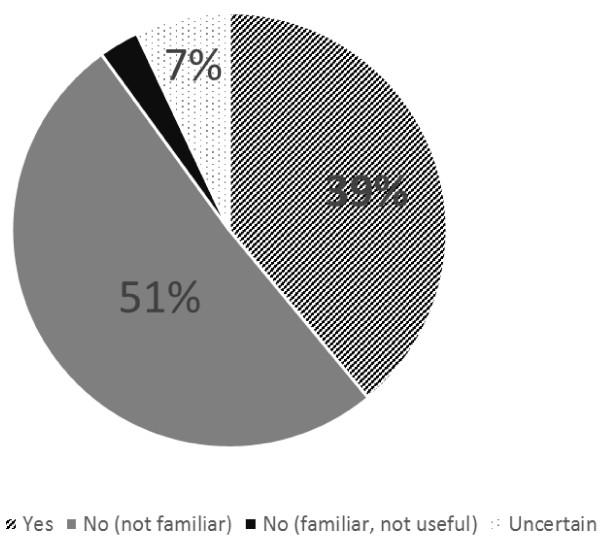
Results: Of 12,034 PCPs targeted, 848 opened a study email, 165 (19.5%) responded. Most respondents (88%) spent ≥50% of their time in clinical care. Respondents were generally in private practice (46%). Most PCPs (96%) felt that eGFR values were helpful. Approximately, 75% and 91% of PCPs reported testing for albuminuria in non-diabetic hypertensive patients with an eGFR > 60 ml/min/1.73 m2 and < 60 ml/min/1.73 m2, respectively. Barriers to albuminuria testing included a lack of effect on management, limited time, and the perceived absence of guidelines recommending testing. While PCPs expressed high levels of agreement with the definition of CKD, 30% were concerned with overdiagnosis in older adults with an eGFR in the CKD stage 3a range. Most PCPs felt that angiotensin converting enzyme inhibitor (ACEi)/ angiotensin II receptor blockers (ARBs) improved outcomes in CKD, though agreement was lower with severe vs. moderate albuminuria (78% vs. 85%, respectively, p = 0.03). Many PCPs (51%) reported being unfamiliar with CKD guidelines, but were receptive to systematic interventions to improve their CKD care.
Conclusions: PCPs generally agree with CKD clinical practice guidelines regarding CKD definition and albuminuria testing. However, future interventions are necessary to improve PCPs' familiarity with CKD guidelines, overcome barriers to albuminuria testing and, assist PCPs in targeting ACEi/ARBs to the patients most likely to benefit.
Figures
References
-
- Stevens LA, Fares G, Fleming J, Martin D, Murthy K, Qiu J, Stark PC, Uhlig K, Van Lente F, Levey AS. Low rates of testing and diagnostic codes usage in a commercial clinical laboratory: evidence for lack of physician awareness of chronic kidney disease. J Am Soc Nephrol. 2005;16(8):2439–2448. doi: 10.1681/ASN.2005020192. - DOI - PubMed
-
- Minutolo R, De Nicola L, Mazzaglia G, Postorino M, Cricelli C, Mantovani LG, Conte G, Cianciaruso B. Detection and awareness of moderate to advanced CKD by primary care practitioners: a cross-sectional study from Italy. Am J Kidney Dis. 2008;52(3):444–453. doi: 10.1053/j.ajkd.2008.03.002. - DOI - PubMed
Publication types
MeSH terms
Grants and funding
LinkOut - more resources
Full Text Sources
Other Literature Sources
Medical
Molecular Biology Databases
Research Materials
Miscellaneous
