


HAGE (DDX43) is a biomarker for poor prognosis and a predictor of chemotherapy response in breast cancer
- PMID: 24755885
- PMCID: PMC4021517
- DOI: 10.1038/bjc.2014.168
HAGE (DDX43) is a biomarker for poor prognosis and a predictor of chemotherapy response in breast cancer
Abstract
Background: HAGE protein is a known immunogenic cancer-specific antigen.
Methods: The biological, prognostic and predictive values of HAGE expression was studied using immunohistochemistry in three cohorts of patients with BC (n=2147): early primary (EP-BC; n=1676); primary oestrogen receptor-negative (PER-BC; n=275) treated with adjuvant anthracycline-combination therapies (Adjuvant-ACT); and primary locally advanced disease (PLA-BC) who received neo-adjuvant anthracycline-combination therapies (Neo-adjuvant-ACT; n=196). The relationship between HAGE expression and the tumour-infiltrating lymphocytes (TILs) in matched prechemotherapy and postchemotherapy samples were investigated.
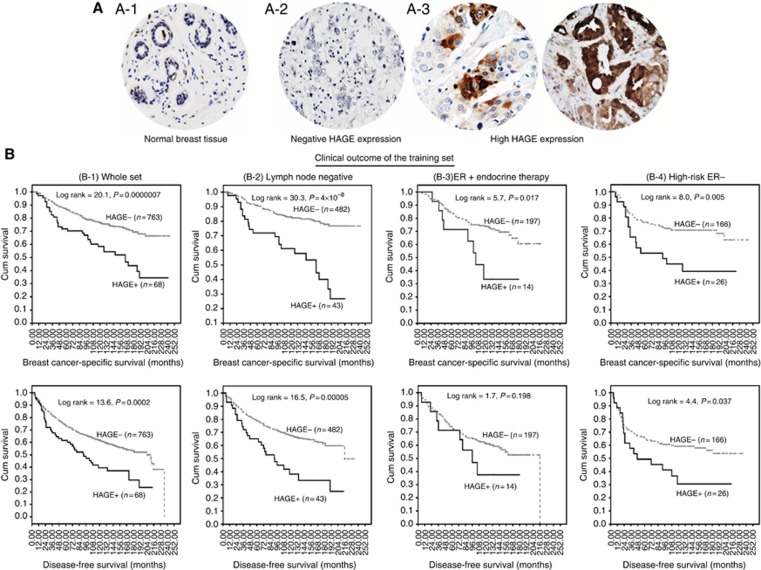
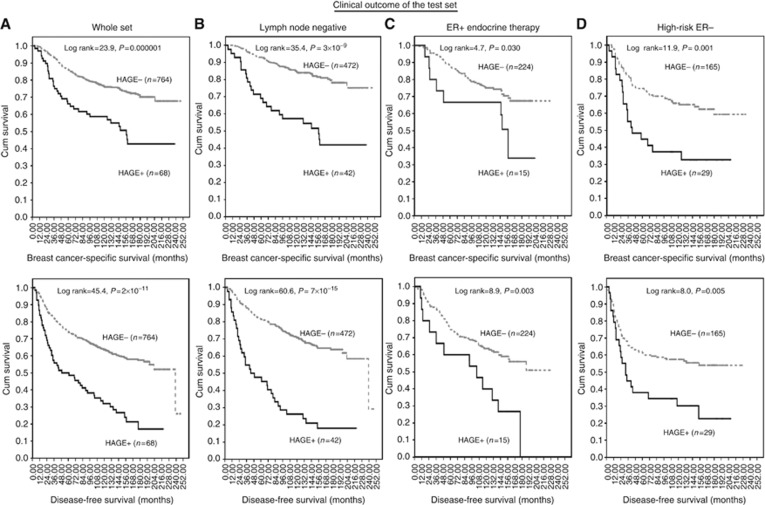
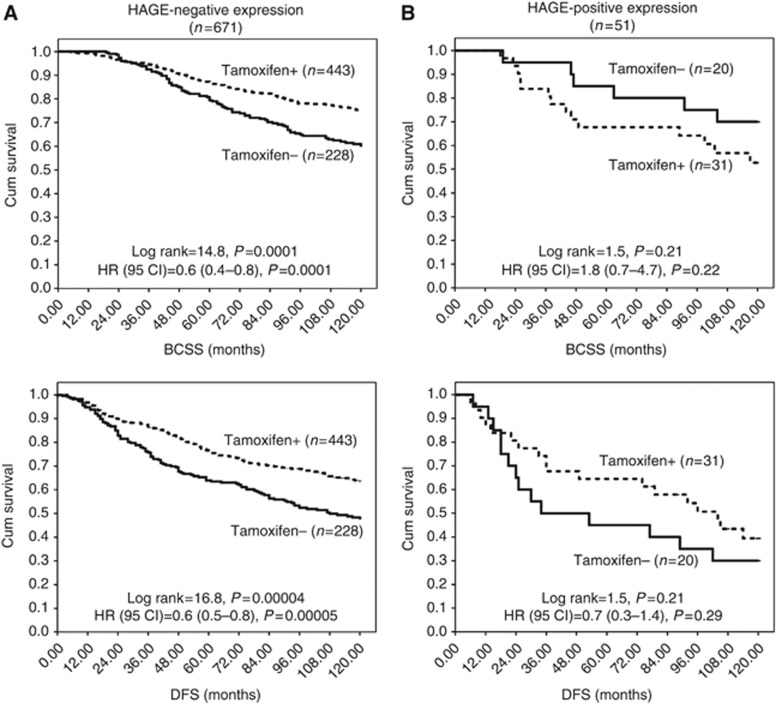
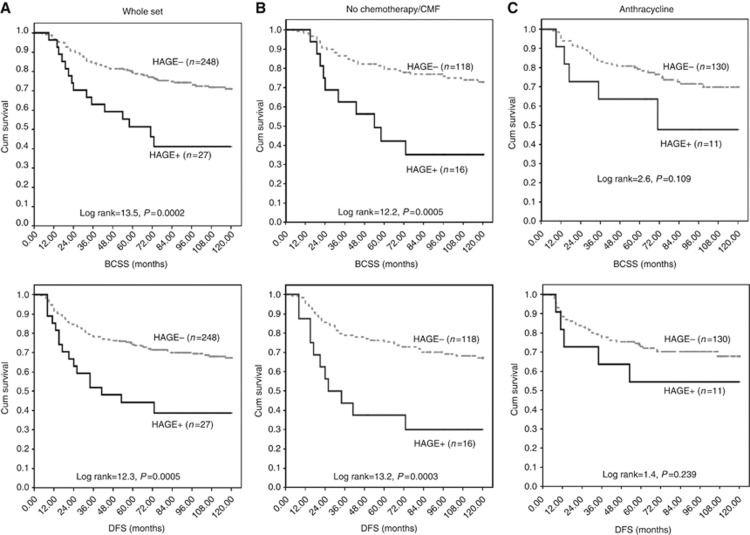
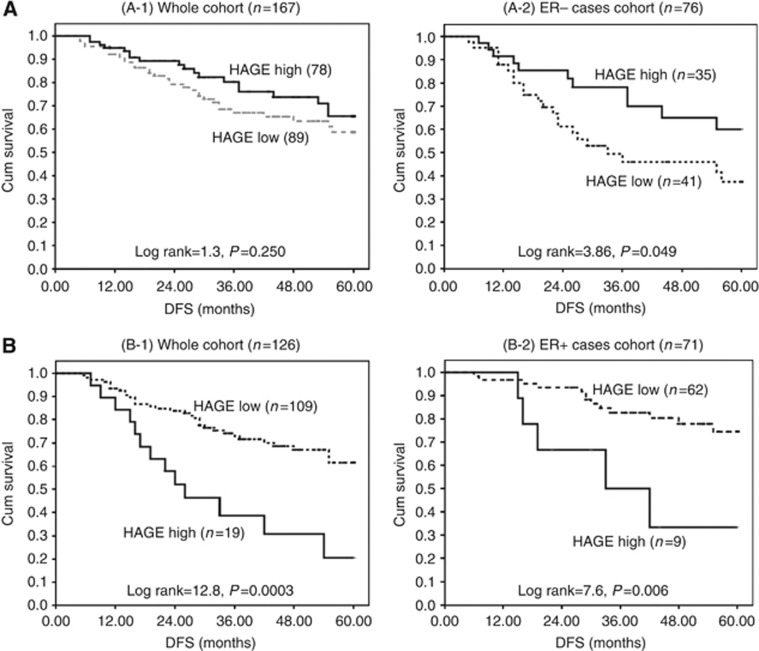
Results: Eight percent of patients with EP-BC exhibited high HAGE expression (HAGE+) and was associated with aggressive clinico-pathological features (Ps<0.01). Furthermore, HAGE+expression was associated with poor prognosis in both univariate and multivariate analysis (Ps<0.001). Patients with HAGE+did not benefit from hormonal therapy in high-risk ER-positive disease. HAGE+and TILs were found to be independent predictors for pathological complete response to neoadjuvant-ACT; P<0.001. A statistically significant loss of HAGE expression following neoadjuvant-ACT was found (P=0.000001), and progression-free survival was worse in those patients who had HAGE+residual disease (P=0.0003).
Conclusions: This is the first report to show HAGE to be a potential prognostic marker and a predictor of response to ACT in patients with BC.
Figures
References
-
- Abdel-Fatah TM, Powe DG, Agboola J, Adamowicz-Brice M, Blamey RW, Lopez-Garcia MA, Green AR, Reis-Filho JS, Ellis IO. The biological, clinical and prognostic implications of p53 transcriptional pathways in breast cancers. J Pathol. 2010;220 (4:419–434. - PubMed
-
- Abdel-Fatah TM, Powe DG, Ball G, Lopez-Garcia MA, Habashy HO, Green AR, Reis-Filho JS, Ellis IO. Proposal for a modified grading system based on mitotic index and Bcl2 provides objective determination of clinical outcome for patients with breast cancer. J Pathol. 2010;222 (4:388–399. - PubMed
-
- Adams SP, Sahota SS, Mijovic A, Czepulkowski B, Padua RA, Mufti GJ, Guinn BA. Frequent expression of HAGE in presentation chronic myeloid leukaemias. Leukemia. 2002;16 (11:2238–2242. - PubMed
-
- Chen Q, Lin J, Qian J, Yao DM, Qian W, Li Y, Chai HY, Yang J, Wang CZ, Zhang M, Xiao GF. Gene expression of helicase antigen in patients with acute and chronic myeloid leukemia. Zhongguo Shi Yan Xue Ye Xue Za Zhi. 2011;19 (5:1171–1175. - PubMed
MeSH terms
Substances
Supplementary concepts
LinkOut - more resources
Full Text Sources
Other Literature Sources
Medical
Research Materials
Miscellaneous
