Closed-loop artificial pancreas systems: engineering the algorithms
- PMID: 24757226
- PMCID: PMC3994938
- DOI: 10.2337/dc13-2108
Closed-loop artificial pancreas systems: engineering the algorithms
Abstract
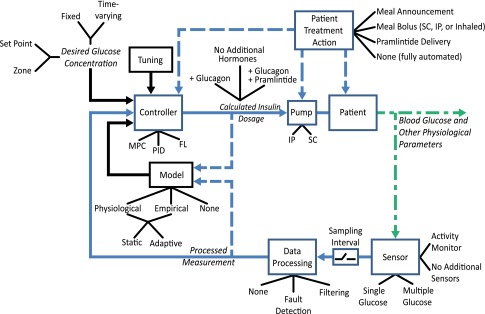
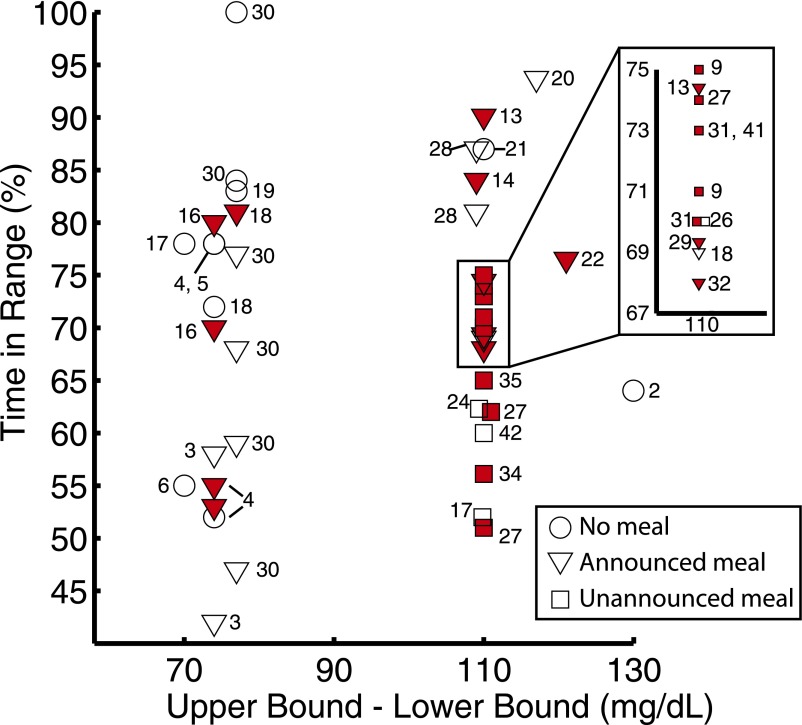
In this two-part Bench to Clinic narrative, recent advances in both the preclinical and clinical aspects of artificial pancreas (AP) development are described. In the preceding Bench narrative, Kudva and colleagues provide an in-depth understanding of the modified glucoregulatory physiology of type 1 diabetes that will help refine future AP algorithms. In the Clinic narrative presented here, we compare and evaluate AP technology to gain further momentum toward outpatient trials and eventual approval for widespread use. We enumerate the design objectives, variables, and challenges involved in AP development, concluding with a discussion of recent clinical advancements. Thanks to the effective integration of engineering and medicine, the dream of automated glucose regulation is nearing reality. Consistent and methodical presentation of results will accelerate this success, allowing head-to-head comparisons that will facilitate adoption of the AP as a standard therapy for type 1 diabetes.
Figures
Comment in
-
Comment on Doyle et al. Closed-loop artificial pancreas systems: engineering the algorithms. Diabetes Care 2014;37:1191-1197.Diabetes Care. 2014 Oct;37(10):e226-7. doi: 10.2337/dc14-1499. Diabetes Care. 2014. PMID: 25249686 No abstract available.
-
Response to comment on Doyle et al. Closed-loop artificial pancreas systems: engineering the algorithms. Diabetes Care 2014;37:1191-1197.Diabetes Care. 2014 Oct;37(10):e228. doi: 10.2337/dc14-1693. Diabetes Care. 2014. PMID: 25249687 Free PMC article. No abstract available.
References
-
- Marliss EB, Murray FT, Stokes EF, et al. Normalization of glycemia in diabetics during meals with insulin and glucagon delivery by the artificial pancreas. Diabetes 1977;26:663–672 - PubMed
-
- Elleri D, Allen JM, Nodale M, et al. Automated overnight closed-loop glucose control in young children with type 1 diabetes. Diabetes Technol Ther 2011;13:419–424 - PubMed
-
- Hovorka R, Allen JM, Elleri D, et al. Manual closed-loop insulin delivery in children and adolescents with type 1 diabetes: a phase 2 randomised crossover trial. Lancet 2010;375:743–751 - PubMed
Publication types
MeSH terms
Substances
Grants and funding
LinkOut - more resources
Full Text Sources
Other Literature Sources
Medical