. 2014 Apr 23;16(1):26.
doi: 10.1186/1532-429X-16-26.

Long term effects of cocaine on the heart assessed by cardiovascular magnetic resonance at 3T

Affiliations

Long term effects of cocaine on the heart assessed by cardiovascular magnetic resonance at 3T

Alicia M Maceira et al. J Cardiovasc Magn Reson. .

Abstract

Background: Cocaine is an addictive, sympathomimetic drug with potentially lethal effects. The prevalence and features of cocaine cardiotoxicity are not well known. We aimed to assess these effects using a comprehensive cardiovascular magnetic resonance (CMR) protocol in a large group of asymptomatic cocaine users.

Methods: Consecutive (n = 94, 81 males, 36.6 ±7 years), non-selected, cocaine abusers were recruited and had a medical history, examination, ECG, blood test and CMR. The CMR study included measurement of left and right ventricular (LV, RV) dimensions and ejection fraction (EF), sequences for detection of myocardial oedema and late gadolinium enhancement (LGE). Images were compared to a cohort of healthy controls.

Results: Years of regular cocaine use were 13.9 ± 9. When compared to the age-matched healthy cohort, the cocaine abusers had increased LV end-systolic volume, LV mass index and RV end-systolic volume, with decreased LVEF and RVEF. No subject had myocardial oedema, but 30% had myocardial LGE indicating myocardial damage.

Conclusions: CMR detected cardiovascular disease in 71% of this cohort of consecutive asymptomatic cocaine abusers and mean duration of abuse was related to probability of LV systolic dysfunction.


Figures
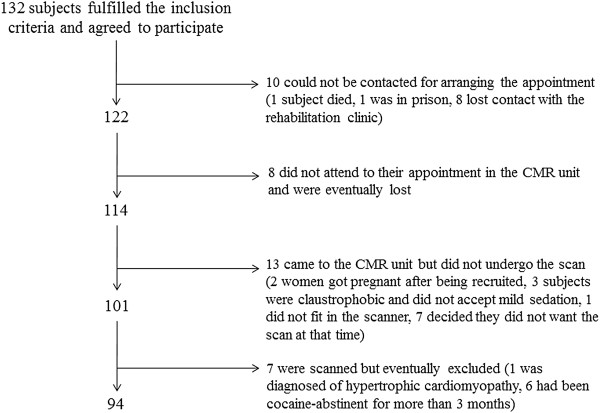
Figure 1
Figure 1
Patient recruitment and final participation in the study.
Figure 2
Figure 2
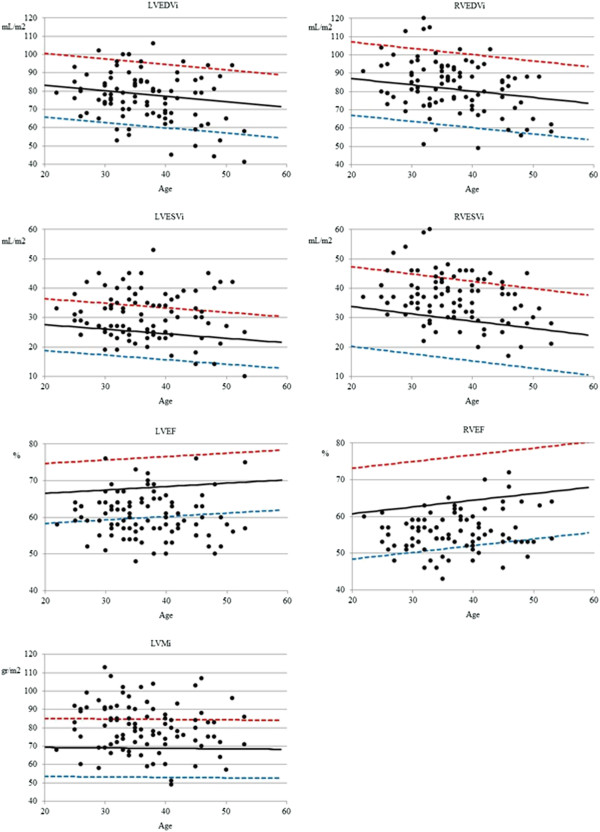
Per-patient analysis of LV and RV parameters in cocaine abusers (black dots) compared to reference values (mean: black line, red: upper limit of normal, blue: lower limit of normal) showing that a substantial number of asymptomatic cocaine abusers show mild biventricular dilatation and systolic dysfunction, as well as LV hypertrophy. LV left ventricle; RV right ventricle; EDVi end-diastolic volume index; ESVi, end-diastolic volume index; EF ventricular ejection fraction; LVMi, left ventricular mass index.
Figure 3
Figure 3
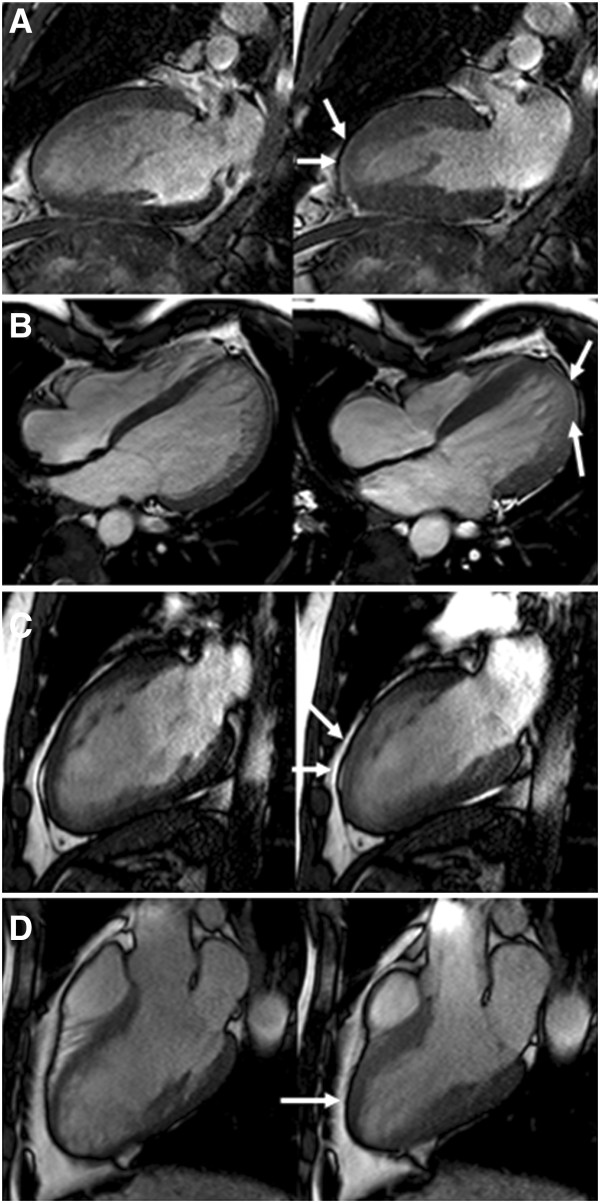
Regional wall motion abnormalities (arrows) were found in 4 subjects. A) and C) mild anteroapical hypokinesia; B) Apicolateral hypokinesia; D) distal septum hypokinesia.
Figure 4
Figure 4
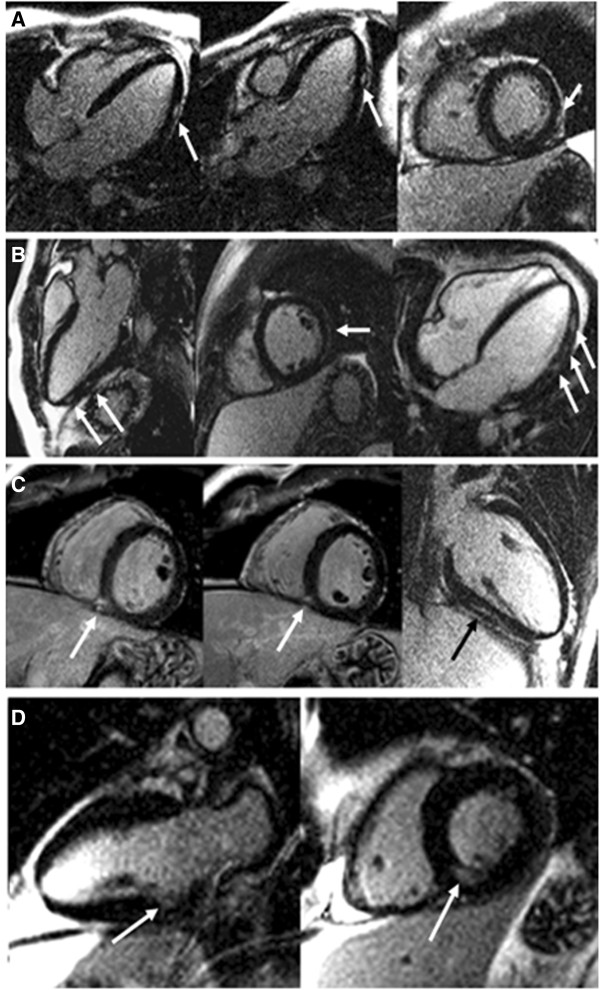
Late gadolinium enhancement (LGE) in 4 cocaine abusers (arrows). A) focal subepicardial LGE at the distal mid-lateral wall. B) several intramyocardial foci of LGE in the inferolateral and lateral wall. C) focal LGE in the mid inferior ventricular junction. D) limited subendocardial LGE in the basal inferior wall.

References

    1. Kloner RA, Rezkalla SH. Cocaine and the heart. N Engl J Med. 2003;348:487–488. doi: 10.1056/NEJMp020174. - DOI - PubMed
    1. Lucena J, Blanco M, Jurado C, Rico A, Salguero M, Vázquez R, Thiene G, Basso C. Cocaine-related sudden death: a prospective investigation in South-west Spain. Eur Heart J. 2010;31:318–329. doi: 10.1093/eurheartj/ehp557. - DOI - PubMed
    1. UNODC. World Drug Report. 2012. United Nations publication, Sales No. E.12.XI.1.
    1. Degenhardt L, Singleton J, Calabria B, McLaren J, Kerr T, Mehta S, Kirk G, Hall WD. Mortality among cocaine users: a systematic review of cohort studies. Drug Alcohol Depend. 2011;113:88–95. doi: 10.1016/j.drugalcdep.2010.07.026. - DOI - PubMed
    1. Carrillo X, Curós A, Muga R, Serra J, Sanvisens A, Bayés-Genís A. Acute coronary syndrome and cocaine use: 8-year prevalence and inhospital outcomes. Eur Heart J. 2011;32:1244–1250. doi: 10.1093/eurheartj/ehq504. - DOI - PubMed

Publication types

MeSH terms