


Survival motor neuron protein deficiency impairs myotube formation by altering myogenic gene expression and focal adhesion dynamics
- PMID: 24760765
- PMCID: PMC4140458
- DOI: 10.1093/hmg/ddu189
Survival motor neuron protein deficiency impairs myotube formation by altering myogenic gene expression and focal adhesion dynamics
Abstract
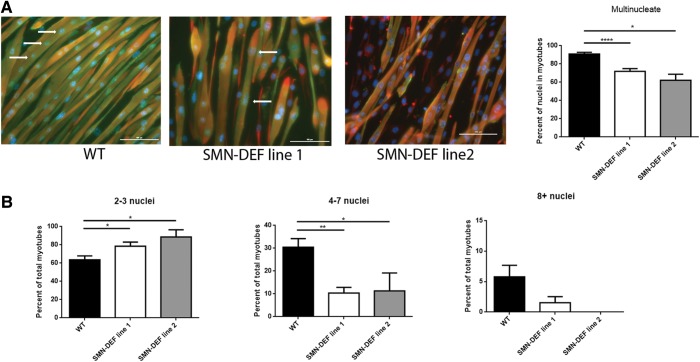
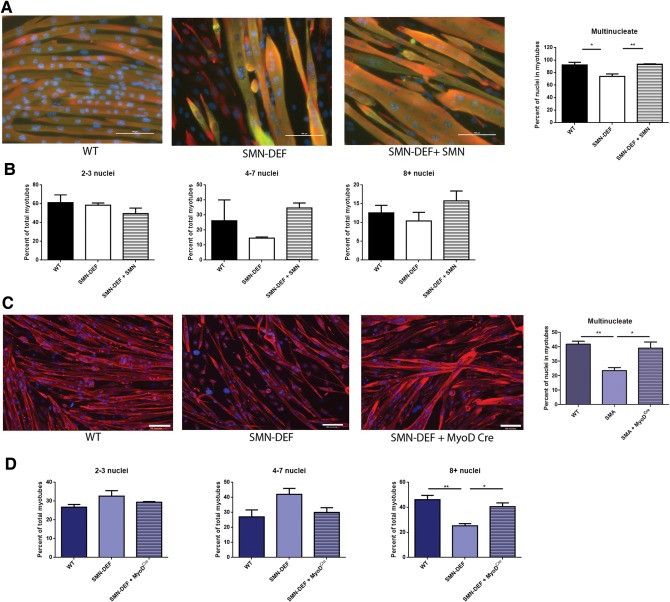
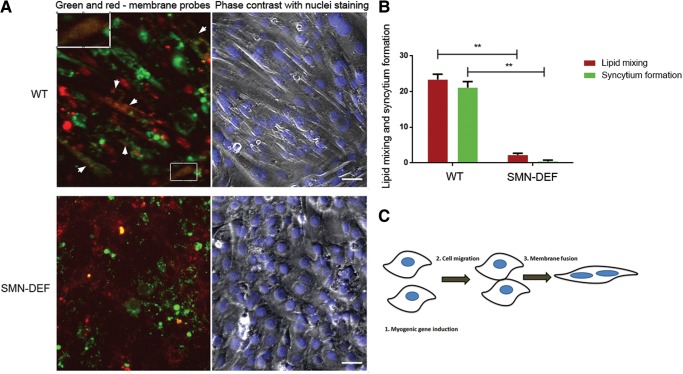
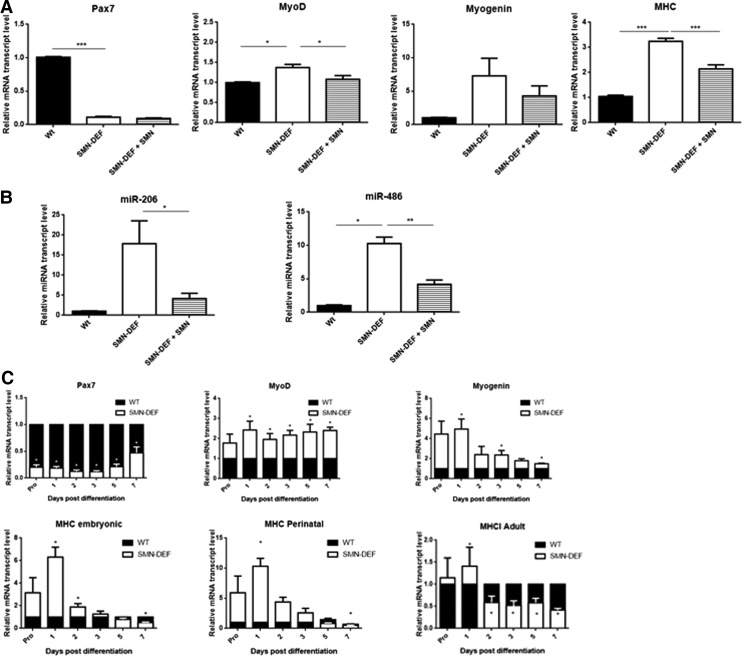
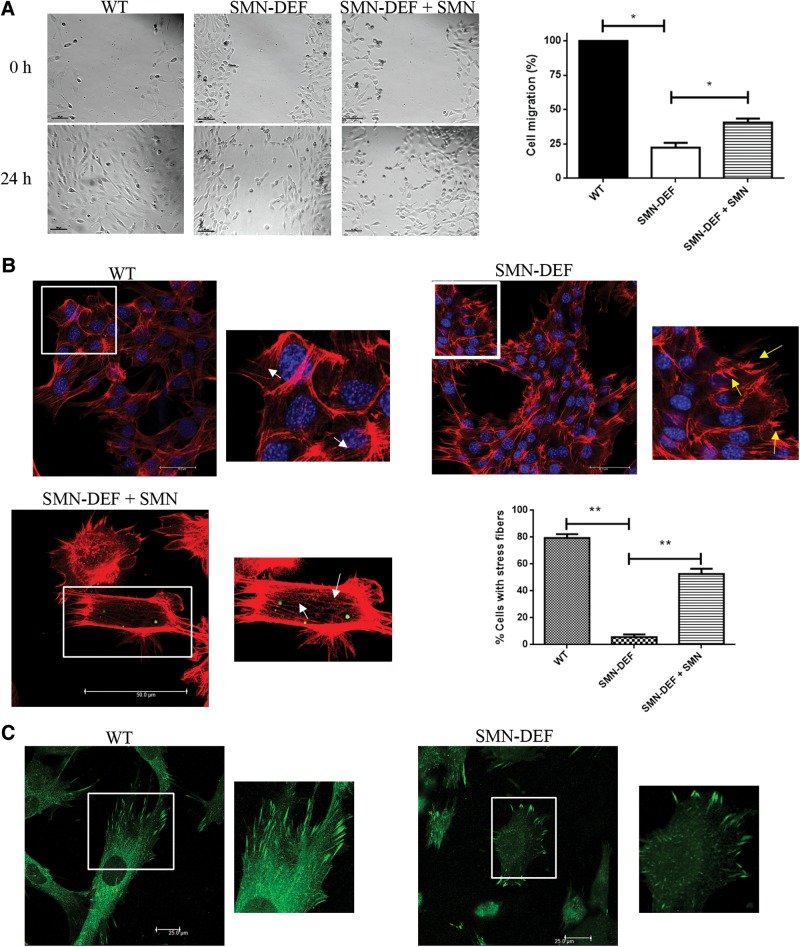
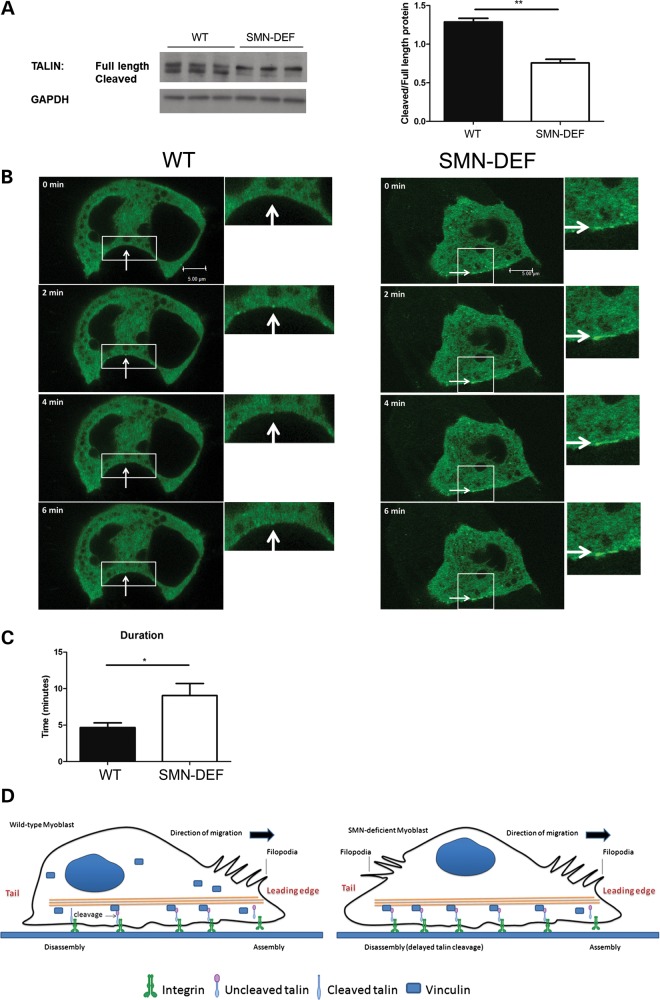
While spinal muscular atrophy (SMA) is characterized by motor neuron degeneration, it is unclear whether and how much survival motor neuron (SMN) protein deficiency in muscle contributes to the pathophysiology of the disease. There is increasing evidence from patients and SMA model organisms that SMN deficiency causes intrinsic muscle defects. Here we investigated the role of SMN in muscle development using muscle cell lines and primary myoblasts. Formation of multinucleate myotubes by SMN-deficient muscle cells is inhibited at a stage preceding plasma membrane fusion. We found increased expression and reduced induction of key muscle development factors, such as MyoD and myogenin, with differentiation of SMN-deficient cells. In addition, SMN-deficient muscle cells had impaired cell migration and altered organization of focal adhesions and the actin cytoskeleton. Partially restoring SMN inhibited the premature expression of muscle differentiation markers, corrected the cytoskeletal abnormalities and improved myoblast fusion. These findings are consistent with a role for SMN in myotube formation through effects on muscle differentiation and cell motility.
Published by Oxford University Press 2014. This work is written by (a) US Government employee(s) and is in the public domain in the US.
Figures
References
-
- Lefebvre S., Burglen L., Reboullet S., Clermont O., Burlet P., Viollet L., Benichou B., Cruaud C., Millasseau P., Zeviani M., et al. Identification and characterization of a spinal muscular atrophy-determining gene. Cell. 1995;80:155–165. - PubMed
-
- Shafey D., Cote P.D., Kothary R. Hypomorphic Smn knockdown C2C12 myoblasts reveal intrinsic defects in myoblast fusion and myotube morphology. Exp. Cell Res. 2005;311:49–61. - PubMed
Publication types
MeSH terms
Substances
Grants and funding
LinkOut - more resources
Full Text Sources
Other Literature Sources
Molecular Biology Databases
