


Paraxanthine: Connecting Caffeine to Nitric Oxide Neurotransmission
- PMID: 24761277
- PMCID: PMC3680978
- DOI: 10.1089/jcr.2013.0006
Paraxanthine: Connecting Caffeine to Nitric Oxide Neurotransmission
Abstract
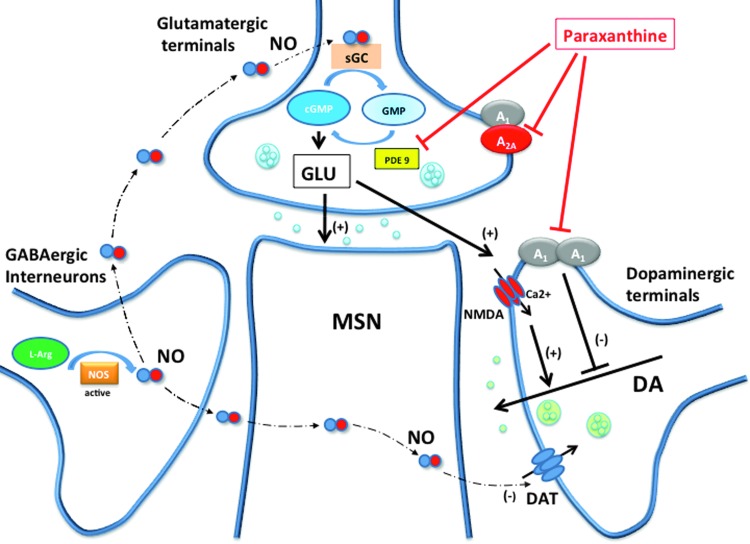
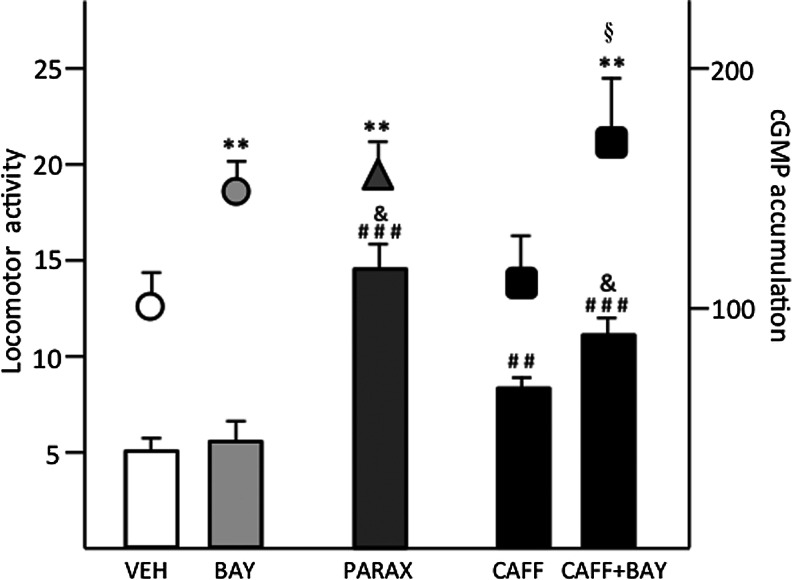
Recent results obtained in our laboratory indicate that paraxanthine, the main metabolite of caffeine in humans, produces a significantly stronger locomotor activation in rats than caffeine. Furthermore, paraxanthine also produced a very significant increase in striatal extracellular concentrations of dopamine. Searching for an additional mechanism other than adenosine antagonism responsible for these psychostimulant-like effects, it was found that paraxanthine, but not caffeine, inhibited cGMP-preferring phosphodiesterases. Furthermore, interrupting nitric oxide neurotransmision (inhibiting nitric oxide synthase) significantly decreased both the locomotor-activating and the dopamine-releasing effects of paraxanthine. These results open up some obvious questions about the role of paraxanthine in the pharmacological effects of caffeine.
Figures
References
-
- Palmer RM. Ferrige AG. Moncada S. Nitric oxide release accounts for the biological activity of endothelium-derived relaxing factor. Nature. 1987;27:524–526. - PubMed
-
- Snyder SH. Ferris CD. Novel neurotransmitters and their neuropsychiatric relevance. Am J Psychiatry. 2000;157:1738–1751. - PubMed
-
- Zhou L. Zhu DY. Neuronal nitric oxide synthase: structure, subcellular localization, regulation, and clinical implications. Nitric Oxide. 2009;20:223–230. - PubMed
-
- Sattler R. Xiong Z. Lu WY. Hafner M. MacDonald JF. Tymianski M. Specific coupling of NMDA receptor activation to nitric oxide neurotoxicity by PSD-95 protein. Science. 1999;284:1845–1848. - PubMed
LinkOut - more resources
Full Text Sources
Other Literature Sources