


Perceptions of a Videogame-Based Dance Exercise Program Among Individuals with Parkinson's Disease
- PMID: 24761325
- PMCID: PMC3833379
- DOI: 10.1089/g4h.2013.0011
Perceptions of a Videogame-Based Dance Exercise Program Among Individuals with Parkinson's Disease
Abstract
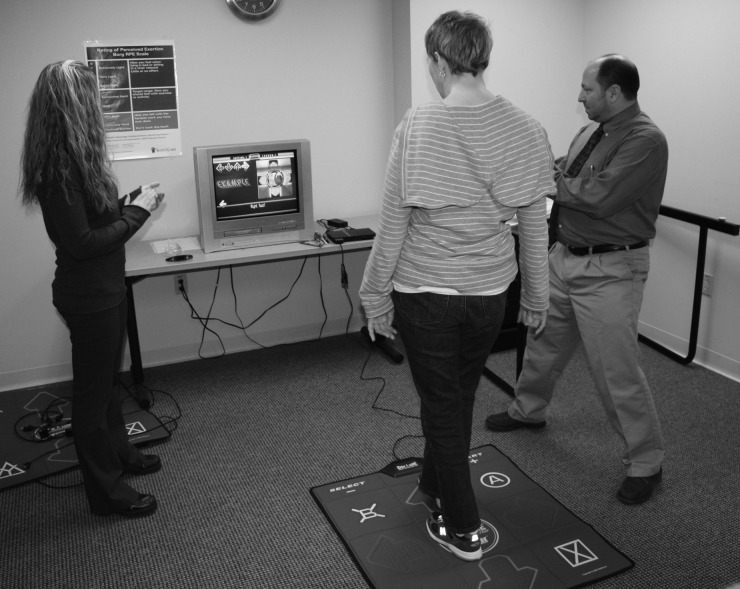
Objective: Physical therapy, including exercise, improves gait and quality of life in Parkinson's disease (PD). Many programs promoting physical activity have generated significant short-term gains, but adherence has been a problem. A recent evidence-based analysis of clinical trials using physical therapy in PD patients produced four key treatment recommendations: cognitive movement strategies, physical capacity, balance training, and cueing. We have attempted to incorporate all four of these features together through a dance exercise program using the dance videogame "Dance Dance Revolution" (DDR) (Konami Digital Entertainment, El Segundo, CA).
Subjects and methods: Sixteen medically stable participants with mild to moderate PD were given the opportunity to try DDR with supervision by a research staff member. Feedback about the advantages and disadvantages of DDR as a form of physical activity was elicited through focus groups using the nominal group technique.
Results: Of 21 advantages and 17 disadvantages elicited, the most frequently cited advantages were "fun" and "easy to use," followed by "improves balance or coordination," "challenging," and "full body aerobic activity." Common concerns were the distracting or confusing interface, cost, and possible technical issues.
Discussion: Interactive dance exercise was appealing to participants with PD and may help promote adherence to physical activity. Concerns regarding familiarity with the technology may be addressed with simplification of the interface or additional training for participants. Results support a larger longitudinal study of DDR in PD.
Figures
References
-
- Allen NE. Sherrington C. Suriyarachchi GD, et al. Exercise and motor training in people with Parkinson's diseaseA systematic review of participant characteristics, intervention delivery, retention rates, adherence, and adverse events in clinical trials. Parkinsons Dis. 2012;2012:85432. - PMC - PubMed
-
- Booth ML. Bauman A. Owen N. Gore CJ. Physical activity preferences, preferred sources of assistance, and perceived barriers to increased activity among physically inactive Australians. Prev Med. 1997;26:131–137. - PubMed
-
- Keus SH. Bloem BR. Hendriks EJ, et al. Evidence-based analysis of physical therapy in Parkinson's disease with recommendations for practice and research. Mov Disord. 2007;22:451–460. - PubMed
-
- de la Fuente-Fernandez R. Schulzer M. Stoessl AJ. Placebo mechanisms and reward circuitry: Clues from Parkinson's disease. Biol Psychiatry. 2004;56:67–71. - PubMed
LinkOut - more resources
Full Text Sources
Other Literature Sources
Miscellaneous
