


Successes and challenges in phenotype-based lead discovery for prion diseases
- PMID: 24762293
- PMCID: PMC4148153
- DOI: 10.1021/jm5001425
Successes and challenges in phenotype-based lead discovery for prion diseases
Abstract
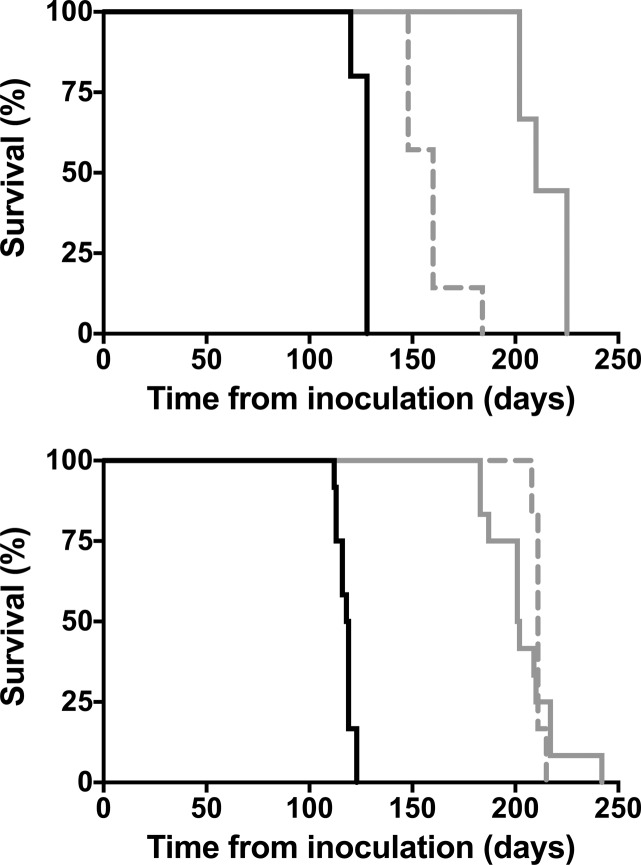
Creutzfeldt-Jakob disease (CJD) is a rare but invariably fatal neurodegenerative disease caused by misfolding of an endogenous protein into an alternative pathogenic conformation. The details of protein misfolding and aggregation are not well understood nor are the mechanism(s) by which the aggregated protein confers cellular toxicity. While there is as yet no clear consensus about how best to intervene therapeutically in CJD, prion infections can be propagated in cell culture and in experimental animals, affording both in vitro and in vivo models of disease. Here we review recent lead discovery efforts for CJD, with a focus on our own efforts to optimize 2-aminothiazole analogues for anti-prion potency in cells and for brain exposure in mice. The compounds that emerged from this effort were found to be efficacious in multiple animal models of prion disease even as they revealed new challenges for the field, including the emergence of resistant prion strains.
Figures
References
-
- Prusiner S. B. Novel proteinaceous infectious particles cause scrapie. Science 1982, 216, 136–144. - PubMed
-
- Prusiner S. B. Shattuck lecture—neurodegenerative diseases and prions. N. Engl. J. Med. 2001, 344, 1516–1526. - PubMed
-
- Brown P.; Cathala F.; Castaigne P.; Gajdusek D. C. Creutzfeldt–Jakob disease: clinical analysis of a consecutive series of 230 neuropathologically verified cases. Ann. Neurol. 1986, 20, 597–602. - PubMed
-
- Roos R.; Gajdusek D. C.; Gibbs C. J. Jr. The clinical characteristics of transmissible Creutzfeldt–Jakob disease. Brain 1973, 96, 1–20. - PubMed
Publication types
MeSH terms
Substances
LinkOut - more resources
Full Text Sources
Other Literature Sources
