Characterization of the early inflammatory infiltrate at the feeding site of infected sand flies in mice protected from vector-transmitted Leishmania major by exposure to uninfected bites
- PMID: 24762408
- PMCID: PMC3998922
- DOI: 10.1371/journal.pntd.0002781
Characterization of the early inflammatory infiltrate at the feeding site of infected sand flies in mice protected from vector-transmitted Leishmania major by exposure to uninfected bites
Abstract
Background: Mice exposed to sand fly saliva are protected against vector-transmitted Leishmania major. Although protection has been related to IFN-γ producing T cells, the early inflammatory response orchestrating this outcome has not been defined.
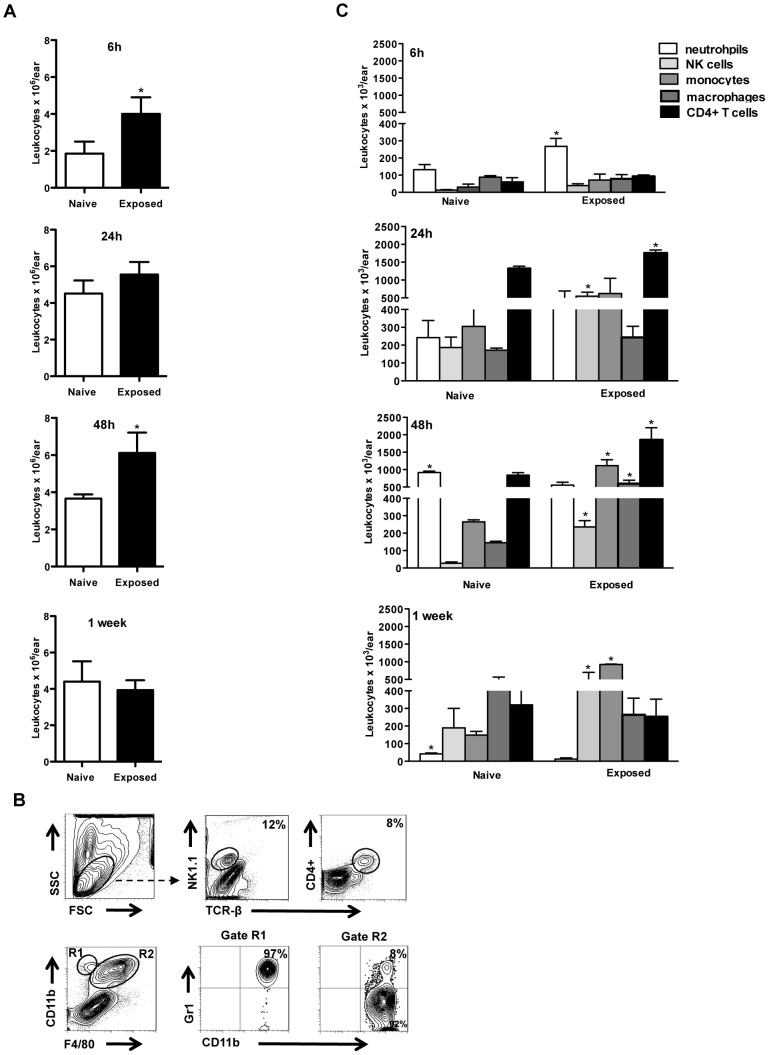
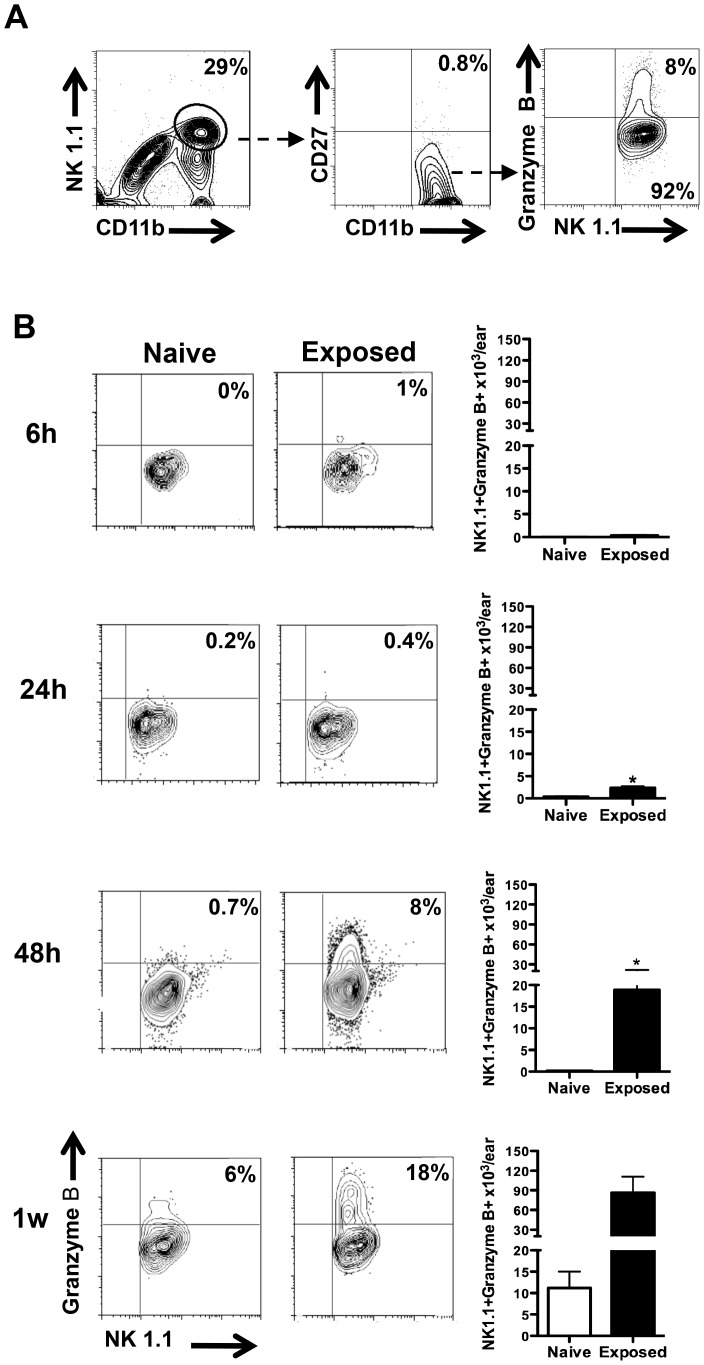
Methodology/principal findings: Mice exposed to uninfected P. duboscqi bites and naïve mice were challenged with L. major-infected flies to characterize their early immune response at the bite site. Mostly, chemokine and cytokine transcript expression post-infected bites was amplified in exposed compared to naïve mice. In exposed mice, induced chemokines were mostly involved in leukocyte recruitment and T cell and NK cell activation; IL-4 was expressed at 6 h followed by IFN-γ and iNOS2 as well as IL-5 and IL-10 expression. In naïve animals, the transcript expression following Leishmania-infected sand fly bites was suppressed. Expression profiles translated to an earlier and significantly larger recruitment of leukocytes including neutrophils, macrophages, Gr+ monocytes, NK cells and CD4+ T cells to the bite site of exposed compared to naïve mice post-infected bites. Additionally, up to 48 hours post-infected bites the number of IFN-γ-producing CD4+ T cells and NK cells arriving at the bite site was significantly higher in exposed compared to naïve mice. Thereafter, NK cells become cytolytic and persist at the bite site up to a week post-bite.
Conclusion/significance: The quiet environment induced by a Leishmania-infected sand fly bite in naïve mice was significantly altered in animals previously exposed to saliva of uninfected flies. We propose that the enhanced recruitment of Gr+ monocytes, NK cells and CD4 Th1 cells observed at the bite site of exposed mice creates an inhospitable environment that counters the establishment of L. major infection.
Conflict of interest statement
The authors have declared that no competing interests exist.
Figures
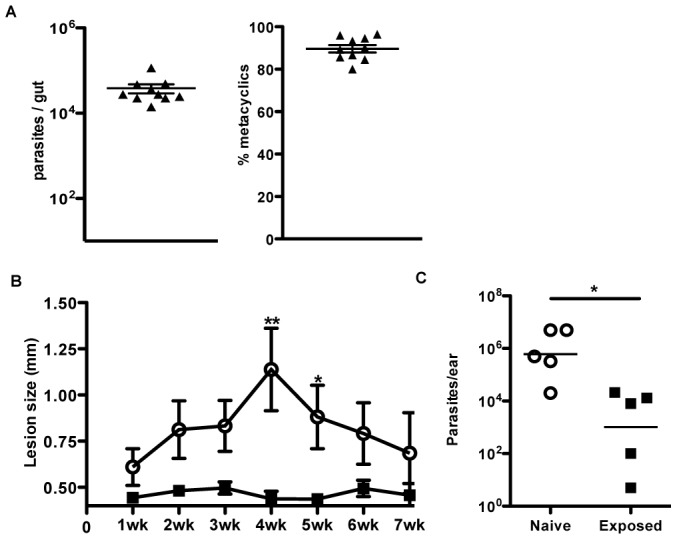
 ) were challenged with 10 L. major-infected P. duboscqi sand flies in the left ear two weeks after the last exposure. (B) Weekly measurement of ear lesions after transmission. The mean ± SEM for 10 mice per group are shown. (C) The number of parasites per ear for five mice at four weeks post-transmission determined by limiting dilution assay. The bar represents the mean parasite burden per ear. Data are representative of three independent experiments. *p<0.02; **p = 0.008.

References
-
- Belkaid Y, Kamhawi S, Modi G, Valenzuela J, Noben-Trauth N, et al. (1998) Development of a natural model of cutaneous leishmaniasis: powerful effects of vector saliva and saliva preexposure on the long-term outcome of Leishmania major infection in the mouse ear dermis. J Exp Med 188: 1941–1953. - PMC - PubMed
-
- Kamhawi S, Belkaid Y, Modi G, Rowton E, Sacks D (2000) Protection against cutaneous leishmaniasis resulting from bites of uninfected sand flies. Science 290: 1351–1354. - PubMed
Publication types
MeSH terms
Substances
Grants and funding
LinkOut - more resources
Full Text Sources
Other Literature Sources
Medical
Research Materials