Regorafenib inhibits colorectal tumor growth through PUMA-mediated apoptosis
- PMID: 24763611
- PMCID: PMC4079733
- DOI: 10.1158/1078-0432.CCR-13-2944
Regorafenib inhibits colorectal tumor growth through PUMA-mediated apoptosis
Abstract
Purpose: Regorafenib, a multikinase inhibitor targeting the Ras/Raf/MEK/ERK pathway, has recently been approved for the treatment of metastatic colorectal cancer. However, the mechanisms of action of regorafenib in colorectal cancer cells have been unclear. We investigated how regorafenib suppresses colorectal cancer cell growth and potentiates effects of other chemotherapeutic drugs.
Experimental design: We determined whether and how regorafenib induces the expression of PUMA, a p53 target and a critical mediator of apoptosis in colorectal cancer cells. We also investigated whether PUMA is necessary for the killing and chemosensitization effects of regorafenib in colorectal cancer cells. Furthermore, xenograft tumors were used to test if PUMA mediates the in vivo antitumor, antiangiogenic, and chemosensitization effects of regorafenib.
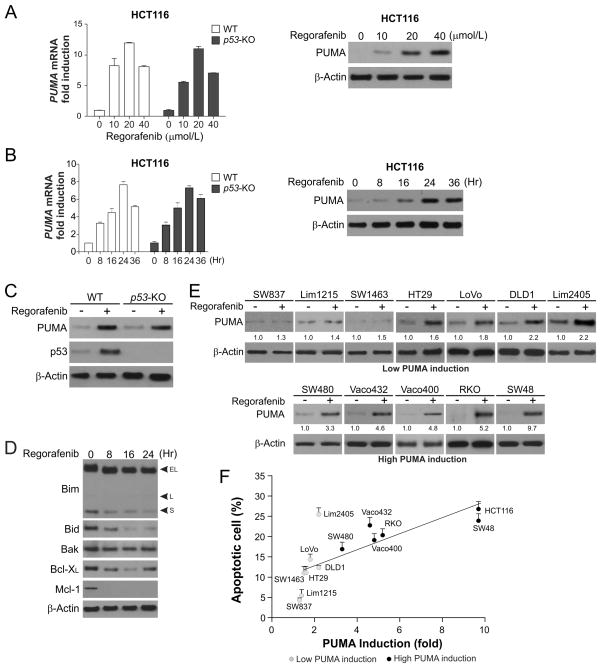
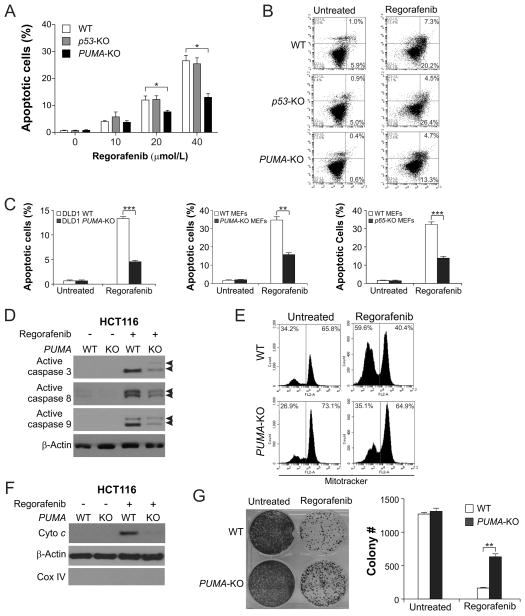
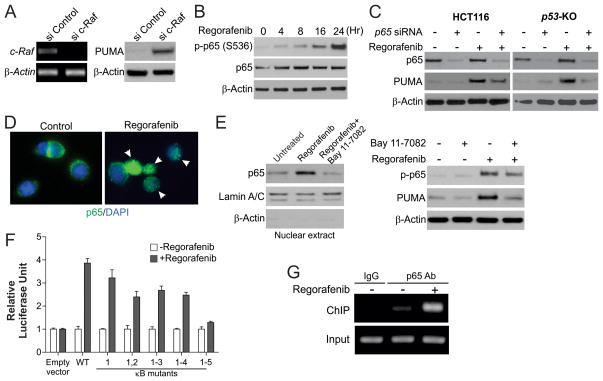
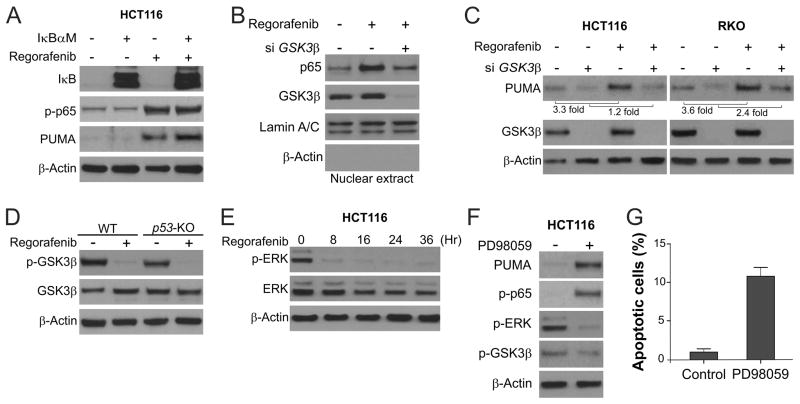
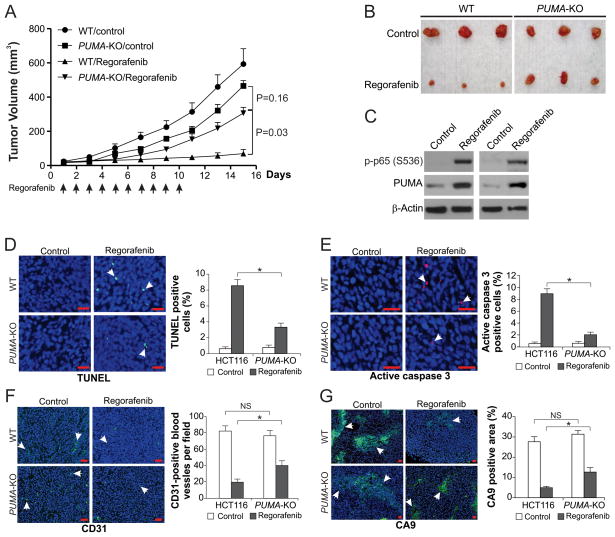
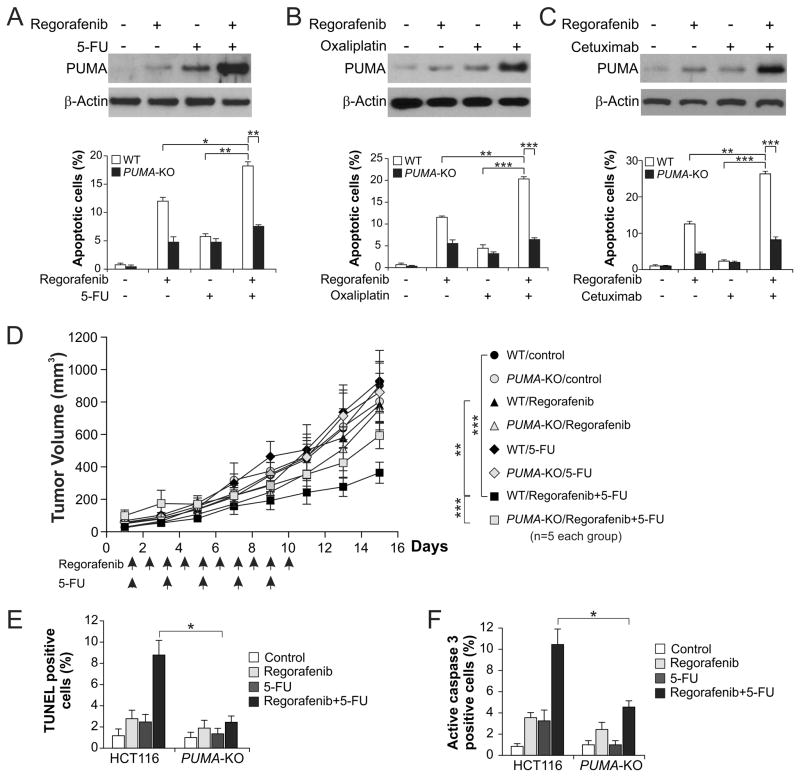
Results: We found that regorafenib treatment induces PUMA in colorectal cancer cells irrespective of p53 status through the NF-κB pathway following ERK inhibition and glycogen synthase kinase 3β activation. Upregulation of PUMA is correlated with apoptosis induction in different colorectal cancer cell lines. PUMA is necessary for regorafenib-induced apoptosis in colorectal cancer cells. Chemosensitization by regorafenib is mediated by enhanced PUMA induction through different pathways. Furthermore, deficiency in PUMA abrogates the in vivo antitumor, antiangiogenic, and chemosensitization effects of regorafenib.
Conclusions: Our results demonstrate a key role of PUMA in mediating the anticancer effects of regorafenib in colorectal cancer cells. They suggest that PUMA induction can be used as an indicator of regorafenib sensitivity, and also provide a rationale for manipulating the apoptotic machinery to improve the therapeutic efficacy of regorafenib and other targeted drugs.
©2014 American Association for Cancer Research.
Conflict of interest statement
Figures
References
-
- Siegel R, Naishadham D, Jemal A. Cancer statistics, 2012. CA Cancer J Clin. 2012;62:10–29. - PubMed
-
- Poston GJ, Figueras J, Giuliante F, Nuzzo G, Sobrero AF, Gigot JF, et al. Urgent need for a new staging system in advanced colorectal cancer. J Clin Oncol. 2008;26:4828–33. - PubMed
-
- Segal NH, Saltz LB. Evolving treatment of advanced colon cancer. Annual review of medicine. 2009;60:207–19. - PubMed
-
- Chu E. An update on the current and emerging targeted agents in metastatic colorectal cancer. Clinical colorectal cancer. 2012;11:1–13. - PubMed
-
- Martini M, Vecchione L, Siena S, Tejpar S, Bardelli A. Targeted therapies: how personal should we go? Nat Rev Clin Oncol. 2012;9:87–97. - PubMed
Publication types
MeSH terms
Substances
Grants and funding
LinkOut - more resources
Full Text Sources
Other Literature Sources
Medical
Research Materials
Miscellaneous