


Total body skeletal muscle mass: estimation by creatine (methyl-d3) dilution in humans
- PMID: 24764133
- PMCID: PMC4064374
- DOI: 10.1152/japplphysiol.00045.2014
Total body skeletal muscle mass: estimation by creatine (methyl-d3) dilution in humans
Abstract
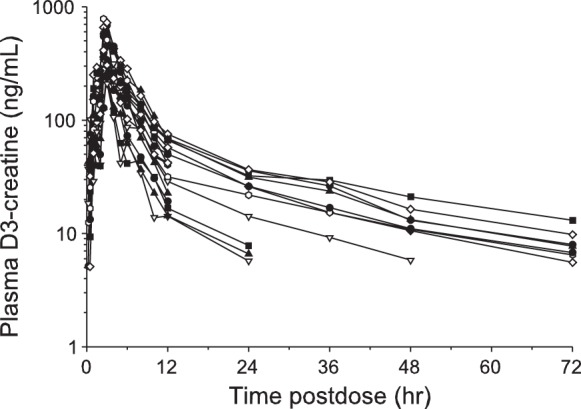
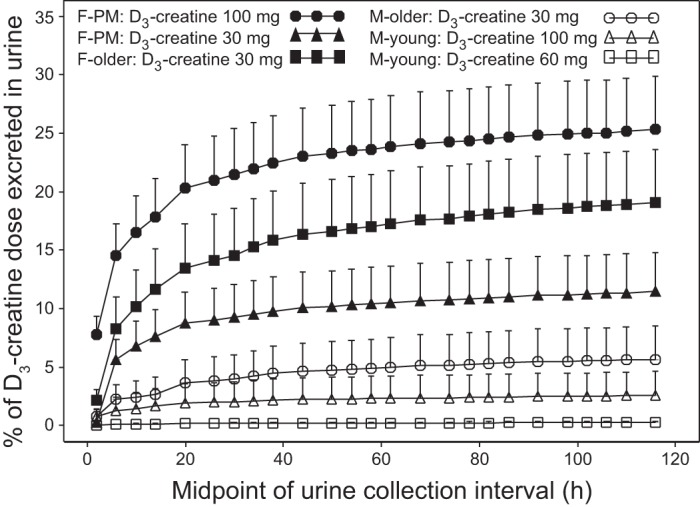
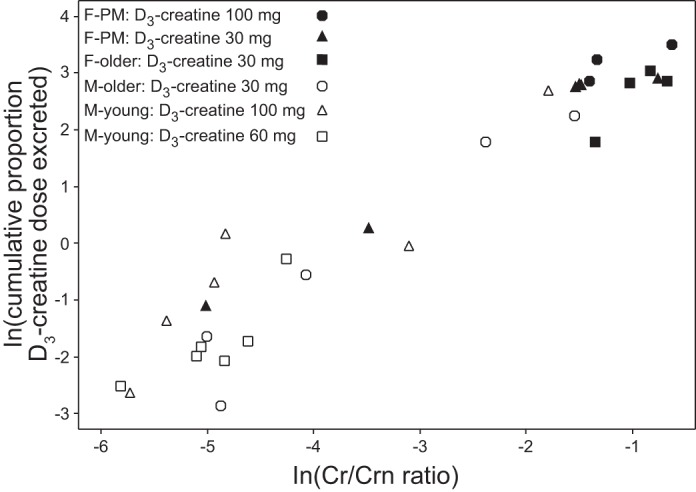
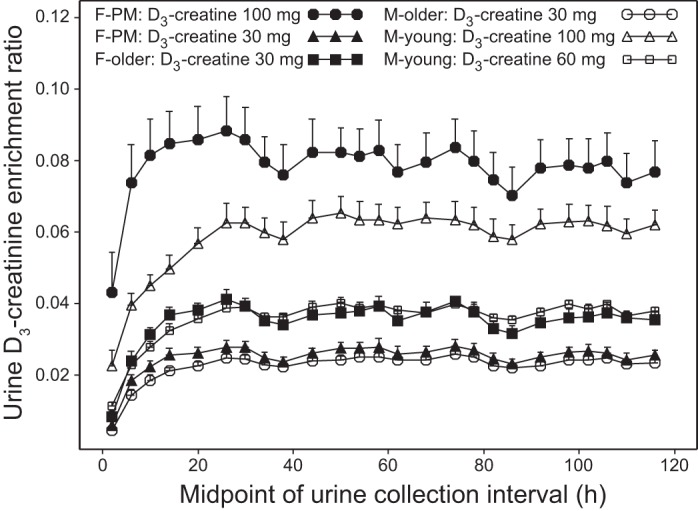
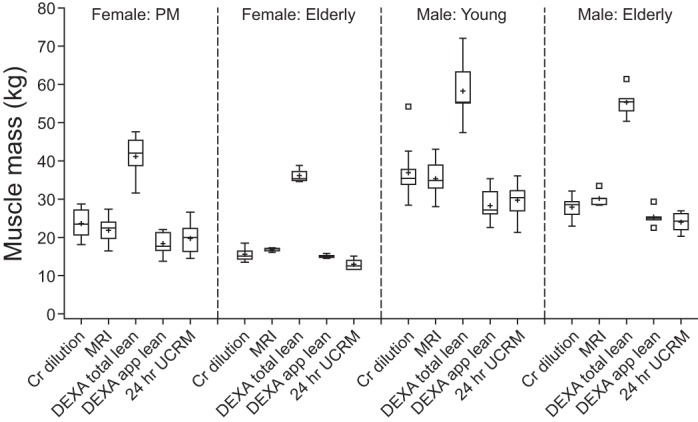
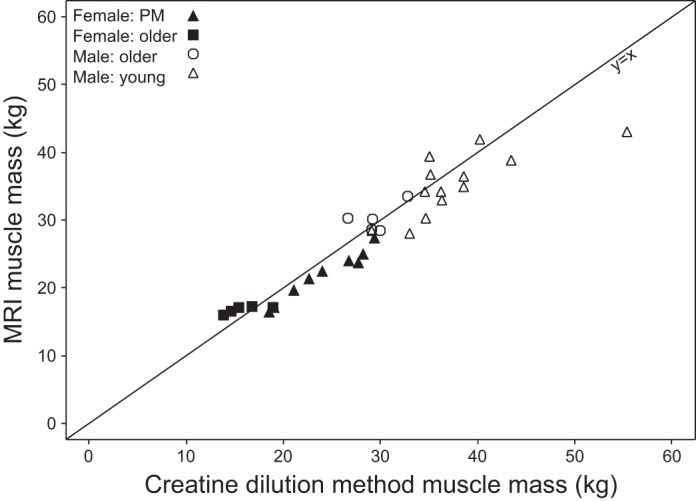
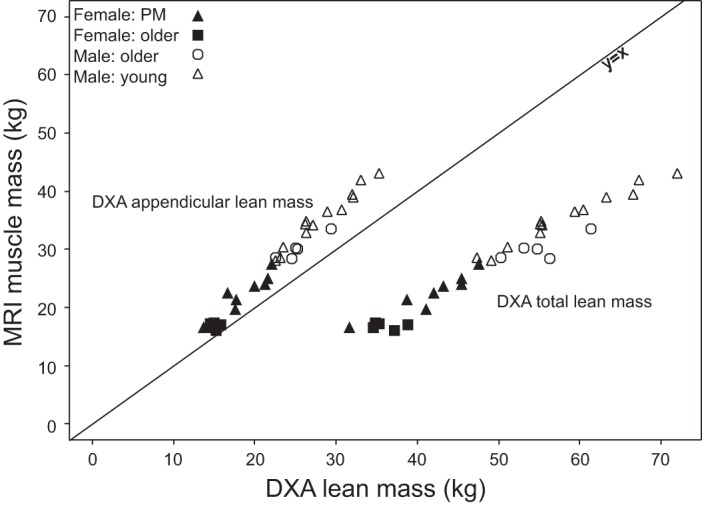
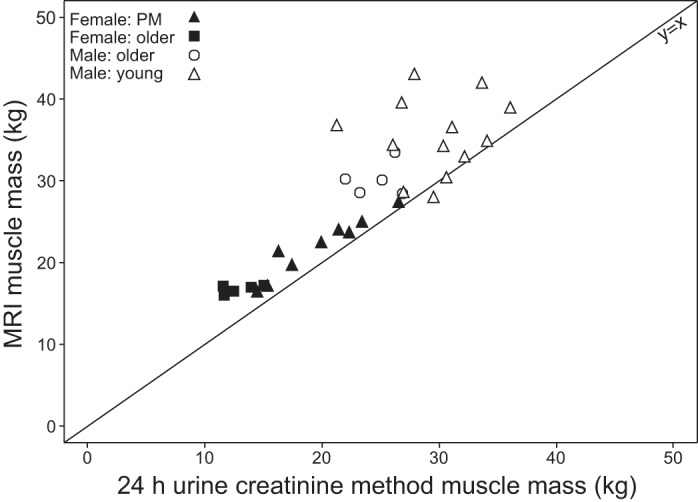
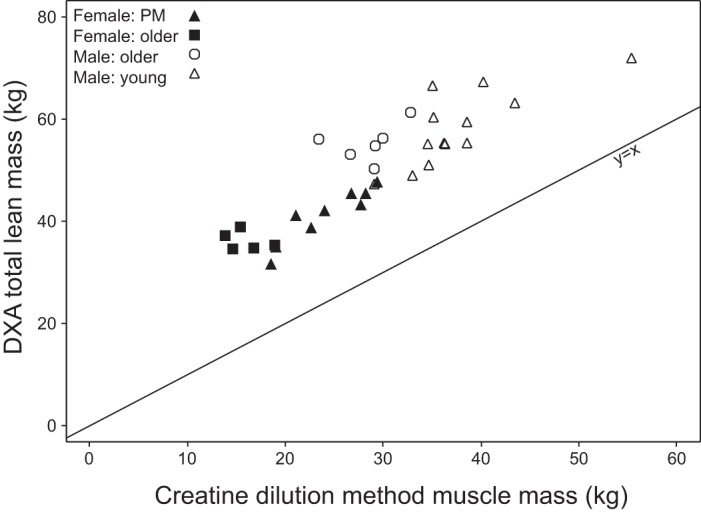
Current methods for clinical estimation of total body skeletal muscle mass have significant limitations. We tested the hypothesis that creatine (methyl-d3) dilution (D3-creatine) measured by enrichment of urine D3-creatinine reveals total body creatine pool size, providing an accurate estimate of total body skeletal muscle mass. Healthy subjects with different muscle masses [n = 35: 20 men (19-30 yr, 70-84 yr), 15 postmenopausal women (51-62 yr, 70-84 yr)] were housed for 5 days. Optimal tracer dose was explored with single oral doses of 30, 60, or 100 mg D3-creatine given on day 1. Serial plasma samples were collected for D3-creatine pharmacokinetics. All urine was collected through day 5. Creatine and creatinine (deuterated and unlabeled) were measured by liquid chromatography mass spectrometry. Total body creatine pool size and muscle mass were calculated from D3-creatinine enrichment in urine. Muscle mass was also measured by magnetic resonance imaging (MRI), dual-energy x-ray absorptiometry (DXA), and traditional 24-h urine creatinine. D3-creatine was rapidly absorbed and cleared with variable urinary excretion. Isotopic steady-state of D3-creatinine enrichment in the urine was achieved by 30.7 ± 11.2 h. Mean steady-state enrichment in urine provided muscle mass estimates that correlated well with MRI estimates for all subjects (r = 0.868, P < 0.0001), with less bias compared with lean body mass assessment by DXA, which overestimated muscle mass compared with MRI. The dilution of an oral D3-creatine dose determined by urine D3-creatinine enrichment provides an estimate of total body muscle mass strongly correlated with estimates from serial MRI with less bias than total lean body mass assessment by DXA.
Keywords: creatine; creatinine; lean body mass; muscle mass.
Copyright © 2014 the American Physiological Society.
Figures
References
-
- Balsom PD, Söderlund K, Ekblom B. Creatine in humans with special reference to creatine supplementation. Sports Med 18: 268–280, 1994 - PubMed
-
- Bland JM, Altman DG. Statistical methods for assessing agreement between two methods of clinical measurement. Lancet 1: 307–310, 1986 - PubMed
-
- Cawthon PM, Fox KM, Gandra SR, Delmonico MJ, Chiou CF, Anthony MS, Sewall A, Goodpaster B, Satterfield S, Cummings SR, Harris TB; Health, Aging, and Body Composition Study. Do muscle mass, muscle density, strength, and physical function similarly influence risk of hospitalization in older adults? J Am Geriatr Soc 57: 1411–1419, 2009 - PMC - PubMed
-
- Chumlea WC, Guo SS, Zeller CM, Reo NV, Baumgartner RN, Garry PJ, Wang J, Pierson RN, Jr, Heymsfield SB, Siervogel RM. Total body water reference values and prediction equations for adults. Kidney Int 59: 2250–2258, 2001 - PubMed
Publication types
MeSH terms
Substances
Grants and funding
LinkOut - more resources
Full Text Sources
Other Literature Sources
Medical
