


Circadian clock circuitry in colorectal cancer
- PMID: 24764658
- PMCID: PMC3989956
- DOI: 10.3748/wjg.v20.i15.4197
Circadian clock circuitry in colorectal cancer
Abstract
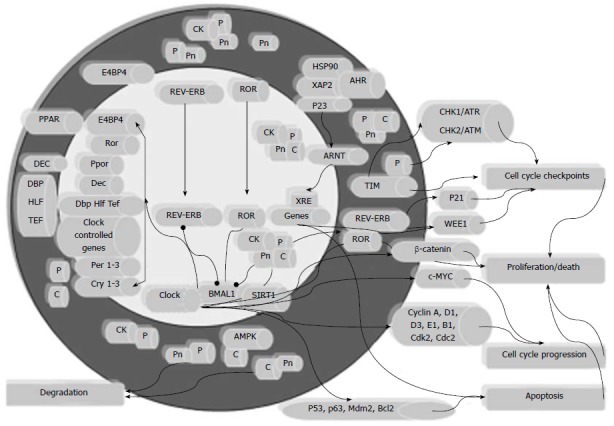
Colorectal cancer is the most prevalent among digestive system cancers. Carcinogenesis relies on disrupted control of cellular processes, such as metabolism, proliferation, DNA damage recognition and repair, and apoptosis. Cell, tissue, organ and body physiology is characterized by periodic fluctuations driven by biological clocks operating through the clock gene machinery. Dysfunction of molecular clockworks and cellular oscillators is involved in tumorigenesis, and altered expression of clock genes has been found in cancer patients. Epidemiological studies have shown that circadian disruption, that is, alteration of bodily temporal organization, is a cancer risk factor, and an increased incidence of colorectal neoplastic disease is reported in shift workers. In this review we describe the involvement of the circadian clock circuitry in colorectal carcinogenesis and the therapeutic strategies addressing temporal deregulation in colorectal cancer.
Keywords: Circadian rhythm; Clock gene; Colorectal cancer.
Figures
References
-
- Ferlay J, Shin HR, Bray F, Forman D, Mathers C, Parkin DM. Estimates of worldwide burden of cancer in 2008: GLOBOCAN 2008. Int J Cancer. 2010;127:2893–2917. - PubMed
-
- Ferlay J, Parkin DM, Curado MP, Bray F, Edwards B, Shin HR, Forman D. Cancer Incidence in Five Continents, Volumes I to IX: IARC CancerBase No. 9 [Internet] Lyon, France: International Agency for Research on Cancer; 2010. Available from: http://ci5.iarc.fr.
Publication types
MeSH terms
LinkOut - more resources
Full Text Sources
Other Literature Sources
Medical
