


Survival post surgery for malignant pericardial effusion
- PMID: 24765299
- PMCID: PMC3981241
- DOI: 10.4081/cp.2011.e38
Survival post surgery for malignant pericardial effusion
Abstract
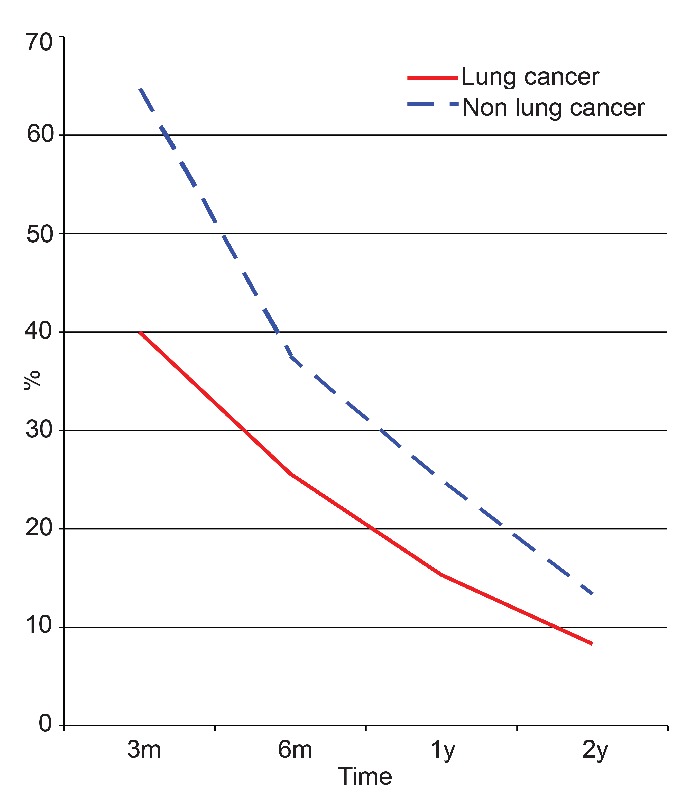
The study reviews the survival of patients with malignant pericardial effusion treated with a subxiphoid pericardial window. The medical records of 60 consecutive patients diagnosed with a malignant pericardial effusion and treated with a subxiphoid pericardial window between 1994 and 2008 were reviewed. 72% had lung cancer. Overall 30-day mortality was 31%. Survival rates at 3 months, 6 months, 1 year, and 2 years were 45%, 28%, 17%, and 9%, respectively. Overall median survival was 2.6 months. Patients with malignant pericardial effusion, especially those with primary lung cancer have poor survival rates. In advanced malignancy, the subxiphoid pericardial window procedure provides only short-term palliation of symptoms, and has no effect on long-term survival. The use of any surgical procedure in patients with malignant advanced pericardial effusion should be considered along with non-surgical options on a case-by-case basis depending on symptoms, general status, and expected survival.
Keywords: malignant disease; pericardial effusion; subxiphoid window..
Conflict of interest statement
Conflict of interest: the authors report no conflicts of interest.
Figures
References
-
- Ben-Horin S, Bank I, Guetta V, Livneh A. Large symptomatic pericardial effusion as the presentation of unrecognized cancer: a study in 173 consecutive patients undergoing pericardiocentesis. Medicine (Baltimore) 2006;85:49–53. - PubMed
-
- Corey GR, Campbell PT, Van Trigt P, et al. Etiology of large pericardial effusions. Am J Med. 1993;95:209–13. - PubMed
-
- Olson JE, Ryan MB, Blumenstock DA. Eleven years' experience with pericardial-peritoneal window in the management of malignant and benign pericardial effusions. Ann Surg Oncol. 1995;2:165–9. - PubMed
Publication types
LinkOut - more resources
Full Text Sources
