


CD34(+) stem cells from umbilical cord blood
- PMID: 24765340
- PMCID: PMC3981355
- DOI: 10.4081/cp.2011.e79
CD34(+) stem cells from umbilical cord blood
Abstract
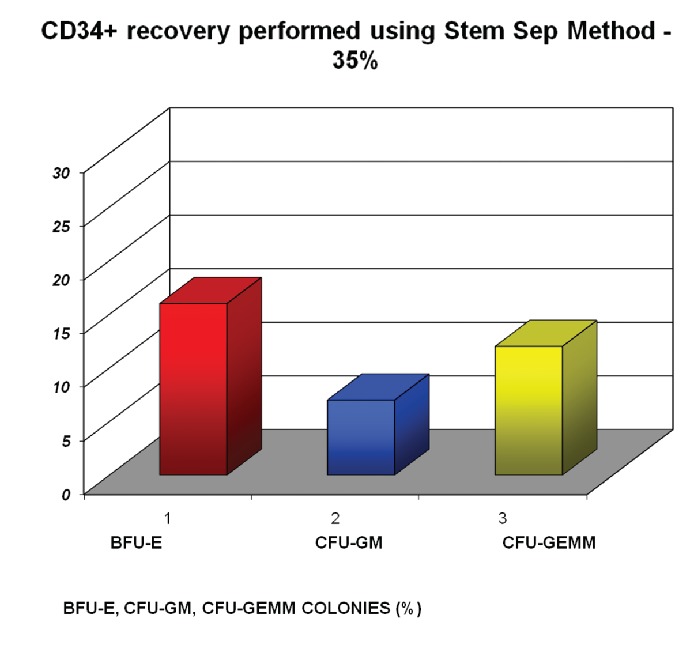
We describe the relation between umbilical cord clamping time and two different enrichment system of CD34(+) stem cells from umbilical cord blood with the proliferative ability and bone marrow reconstitution of the stem cells obtained. After an obstetrician performed the cord blood collection, the purification of stem cells was performed either with a combination of monoclonal antibodies (negative selections) using the Stem Sep method, or with a positive cells selection based on their surface CD34 antigens using the Mini Macs system. An excellent recovery of haematopoietic progenitors [Burst Forming Unit Erythroids (BFUE); Colony Forming Unit Granulocytes and Macrophages (CFU-GM); and Colony Forming Unit Granulocytes, Erythroids, Monocytes and Macrophages (CFU-GME)], inversely related to the increase in clamping time, was performed with the Mini Macs system (54% of colonies, with 90% purity). With Stem Sep method, haematopoietic progenitor's recovery was 35% (with 80% purity). By applying early clamping of umbilical cord blood we obtained a greater number of CD34(+) cells and their clonogenic activity was increased with enrichment. This is a useful technique considering that the number of CD34(+) stem cells usually contained from a unit of placental blood is enough for the transplant to a child, but not for an adult. Thus, using these methods, we can get a larger number of CD34(+) stem cells which reduces the risk of Graft versus Host Disease also in adult patients, producing survival rates similar to those obtained with transplantation of bone marrow from unrelated donors.
Keywords: CD34+ stem cells; enrichment.; recovery; umbilical cord blood.
Figures
References
-
- Morrison SJ, Shah NM, Anderson DJ. Regulatory mechanism in stem cell biology. Cell. 1997;88:287–8. - PubMed
-
- Mimiero R, Busca A, Roncarolo MG, et al. HLA-haploidentical umbilical cord blood stem cell transplantation in a child with advanced leukemia: clinical outcome and analysis of hematopoietic recovery. Bone Marrow Transplant. 1995;16:229–40. - PubMed
-
- Katzenstein HM, Morgan ER, Olsewski M, et al. Haploidentical related umbilical cord blood stem cell transplant in a child with acute nonlymphocytic leukemia. Bone Marrow Transplant. 1997;19:765–9. - PubMed
-
- Arcese W, Aversa F, Bandini G, et al. Clinical use of alligeneic hematopoietic stem cell from sources other than bone marrow. Haematologica. 1998;83:159–82. - PubMed
-
- Engelfriet CP, Reesink HW, Wagner JE, et al. Use of cord blood progenitor cells as an alternative for bone marrow transplantation. Vox Sang. 1998;75:156–72. - PubMed
Publication types
LinkOut - more resources
Full Text Sources
Other Literature Sources
Miscellaneous
