


Clinical applications of epigenetics in cardiovascular disease: the long road ahead
- PMID: 24768945
- PMCID: PMC4190107
- DOI: 10.1016/j.trsl.2014.04.004
Clinical applications of epigenetics in cardiovascular disease: the long road ahead
Abstract
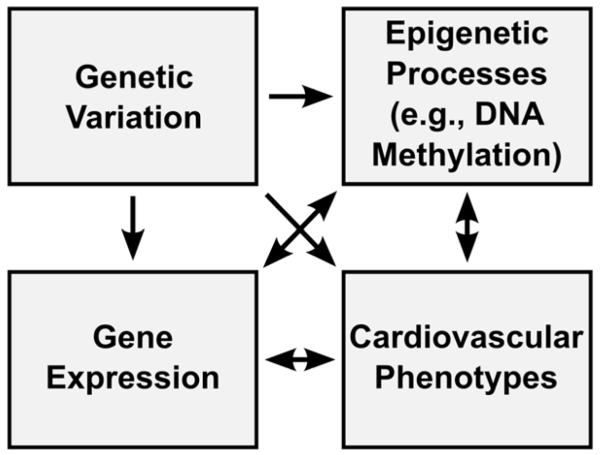
Epigenetic processes, defined as heritable changes in gene expression that occur without changes to the DNA sequence, have emerged as a promising area of cardiovascular disease research. Epigenetic information transcends that of the genotype alone and provides for an integrated etiologic picture of cardiovascular disease pathogenesis because of the interaction of the epigenome with the environment. Epigenetic biomarkers, which include DNA methylation, histone modifications, and RNA-based mechanisms, are both modifiable and cell-type specific, which makes them not only responsive to the environment, but also an attractive target for drug development. However, the enthusiasm surrounding possible applications of cardiovascular epigenetics currently outpaces available evidence. In this review, the authors synthesize the evidence linking epigenetic changes with cardiovascular disease, emphasizing the gap between the translational potential and the clinical reality of cardiovascular epigenetics.
Copyright © 2015 Elsevier Inc. All rights reserved.
Figures
References
-
- Di Angelantonio E, Butterworth AS. Clinical utility of genetic variants for cardiovascular risk prediction: a futile exercise or insufficient data? Circ Cardiovasc Genet. 2012;5:387–90. - PubMed
-
- Egger G, Liang G, Aparicio A, et al. Epigenetics in human disease and prospects for epigenetic therapy. Nature. 2004;429:457–63. - PubMed
-
- Udali S, Guarini P, Moruzzi S, et al. Cardiovascular epigenetics: from DNA methylation to microRNAs. Mol Aspects Med. 2013;34:883–901. - PubMed
Publication types
MeSH terms
Substances
Grants and funding
LinkOut - more resources
Full Text Sources
Other Literature Sources
Molecular Biology Databases
Miscellaneous
