


Cutaneous melanoma: new advances in treatment
- PMID: 24770508
- PMCID: PMC4008062
- DOI: 10.1590/abd1806-4841.20142540
Cutaneous melanoma: new advances in treatment
Abstract
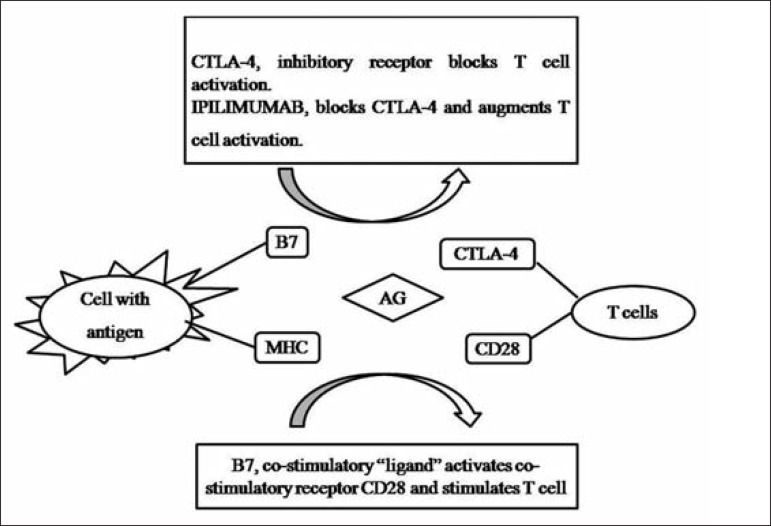
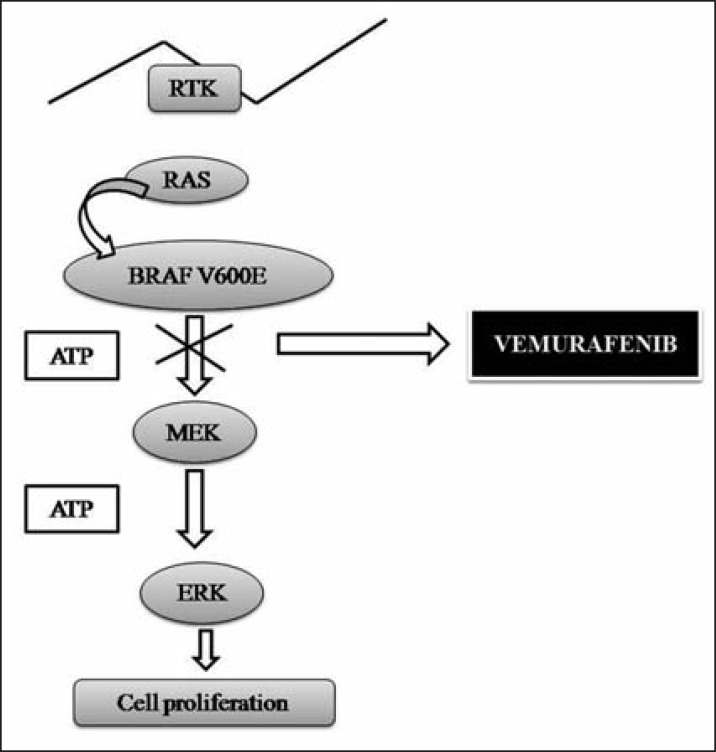
Cutaneous melanoma is a challenge to treat. Over the last 30 years, no drug or combination of drugs demonstrated significant impact to improve patient survival. From 1995 to 2000, the use of cytokines such as interferon and interleukin become treatment options. In 2011, new drugs were approved by the U.S. Food and Drug Administration, including peginterferon alfa-2b for patients with stage III disease, vemurafenib for patients with metastatic melanoma with the BRAF V600E mutation, and ipilimumab, a monoclonal antibody directed to the CTLA-4 T lymphocyte receptor, to combat metastatic melanoma in patients who do not have the BRAF V600E mutation. Both ipilimumab and vemurafenib showed results in terms of overall survival. Other trials with inhibitors of other genes, such as the KIT gene and MEK, are underway in the search for new discoveries. The discovery of new treatments for advanced or metastatic disease aims to relieve symptoms and improve patient quality of life.
Conflict of interest statement
Conflict of interest: None
Figures
References
-
- Koch CM. Melanoma. Oncol. 2004;27:99–101.
-
- Bárzaga HOV. Caracterización clínica e histopatológica del cáncer cutáneo no melanoma. Arch Méd Camaguey. 2010;14:0.
-
- Inca.gov.br. Ministério da Saúde. Instituto Nacional do Câncer . Câncer de Pele Melanoma 2012. [acesso 22 Mar 2012]. [página na internet] Disponível em: http://www2.inca.gov.br/wps/wcm/connect/tiposdecancer/site/home/pele_mel....
-
- Souza RJ, Mattedi AP, Rezende ML, Corrêa Mde P, Duarte EM. An estimate of the cost of treating melanoma disease in the state of Sao Paulo - Brazil. An Bras Dermatol. 2009;84:237–243. - PubMed
-
- Naser N. Cutaneous melanoma - a 30-year-long epidemiological study conducted in a city in southern Brazil, from 1980-2009. An Bras Dermatol. 2011;86:932–941. - PubMed
Publication types
MeSH terms
Substances
LinkOut - more resources
Full Text Sources
Other Literature Sources
Medical
Research Materials